25+ Small Apartment Storage Ideas for Renters (No Built-Ins Needed)
Your apartment is not too small. Your stuff just has nowhere to go. These small apartment storage ideas fix that without a single screw: 25 ways to use the space under your bed, inside your closet, behind your sofa, and in the corners you walk past every day. Every idea is no-drill, deposit-safe, and cheap enough to try this weekend, and every one of them packs up clean when you move. The bathroom gets its own guide, so check our bathroom storage ideas for that room. You do not need a bigger place. You need to use the space you already have. Start with the idea that matches your worst clutter, and work from there.
Under-Bed Rolling Bins

- Turns the dead space under your bed into two or three bins of storage, no drilling.
- Clear bins with wheels slide out easily, so you can see what is inside.
- Most beds leave 6 to 8 inches of clearance, so measure before you buy.
- Keep off-season clothes and spare bedding here, not everyday items.
The space under your bed is the biggest closet your apartment already has. In a small bedroom, that strip of floor sits empty while sweaters pile on a chair and bedding crowds the closet shelf. Rolling bins change that in one move: two or three low bins slide under the frame, hold off-season clothes and sheets, and roll back out of sight in seconds. Most beds leave 6 to 8 inches of clearance, and low bins made for that gap cost 15 to 30 dollars each. Measure the gap first, because a bin one inch too tall is useless.
Dust is the only real enemy here, so pick bins with lids. Open bins under a bed collect dust in a week, and anything soft inside starts to smell stale. Lidded bins keep clothes clean for months, and clear sides mean you can find the winter sweaters without pulling every bin out. Label each bin with tape and a marker, so you know which one holds the spare sheets. Vacuum under the bed once a month, since dust gathers fast in a low gap. When you move, the bins stack in a box and the floor looks untouched.
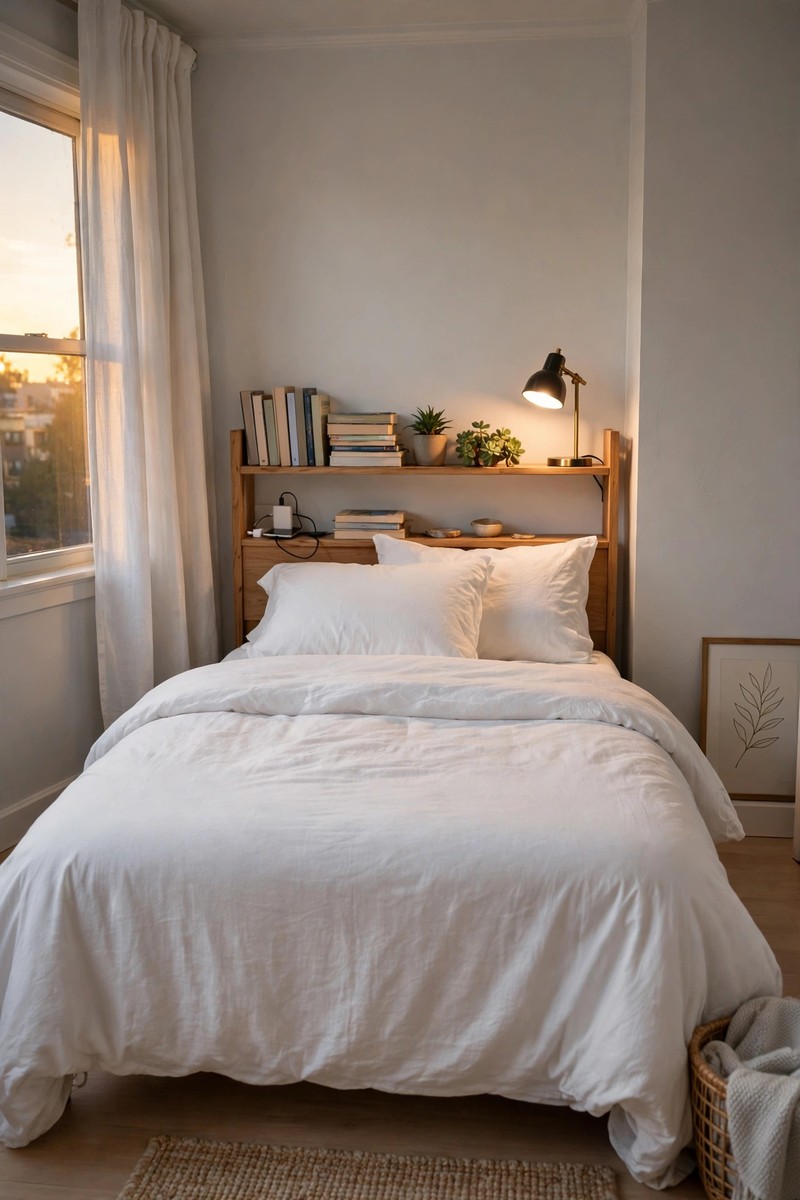
Headboard Storage Shelf
- Replaces a nightstand in a bedroom too tight for one.
- Holds a book, phone, lamp, and water glass within arm's reach.
- Freestanding units slide behind the bed, no screws in the wall.
- Pick a shelf at least 8 inches deep so books stand upright.
A bedroom too tight for a nightstand still needs a place for your phone and a book. A headboard shelf fixes that in ten minutes: a freestanding shelf unit slides behind the bed and adds two narrow ledges at pillow height, right where your hand lands when you wake up. Your phone charges there, your book stays open on the shelf, and a small lamp lights the page without waking anyone else. Most units are 8 to 10 inches deep and cost 40 to 80 dollars, and they fit any bed from a twin to a king.
Depth decides whether the shelf helps or just holds clutter. A shelf under 8 inches deep tips books forward and leaves no room for a water glass, so measure before you buy and skip the shallow ones. Keep the top shelf for the lamp and one book, and the lower shelf for the charger and a small plant. Wipe the shelves weekly, since dust settles fast at pillow height. When you move, the unit slides out from behind the bed in a minute, and the wall looks exactly as it did before.
Bedside Caddy

- Hangs over the bed frame and holds your phone, book, and remote.
- Costs 12 to 20 dollars and needs no floor space at all.
- Pick a caddy with stiff pockets so things stay upright.
- Works on any bed frame with a flat side rail.
Some bedrooms have no room for a nightstand, not even a small one. A bedside caddy solves that with six inches of fabric: it hooks over the side of the bed frame and hangs five or six pockets right where your hand drops when you lie down. Your phone, your book, your glasses, and the remote all live in one spot instead of sliding under the pillow or onto the floor. Most caddies cost 12 to 20 dollars, and the best ones have stiff pockets that hold their shape. It takes thirty seconds to hang.
Pocket stiffness is what separates a good caddy from a floppy one. Soft pockets collapse under a phone and let the remote slide to the bottom, so look for felt or canvas with a firm backing. Keep the heaviest pocket near the middle of the caddy, where the weight pulls straight down instead of tipping it sideways. Shake the caddy out weekly, since crumbs and dust collect in deep pockets fast. When you move, lift it off the frame and fold it flat, and the bed looks exactly as it did before.
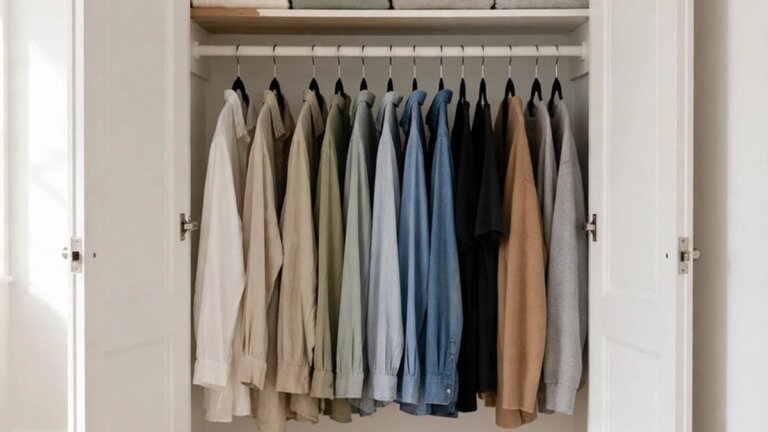
Double Hang Closet Rod
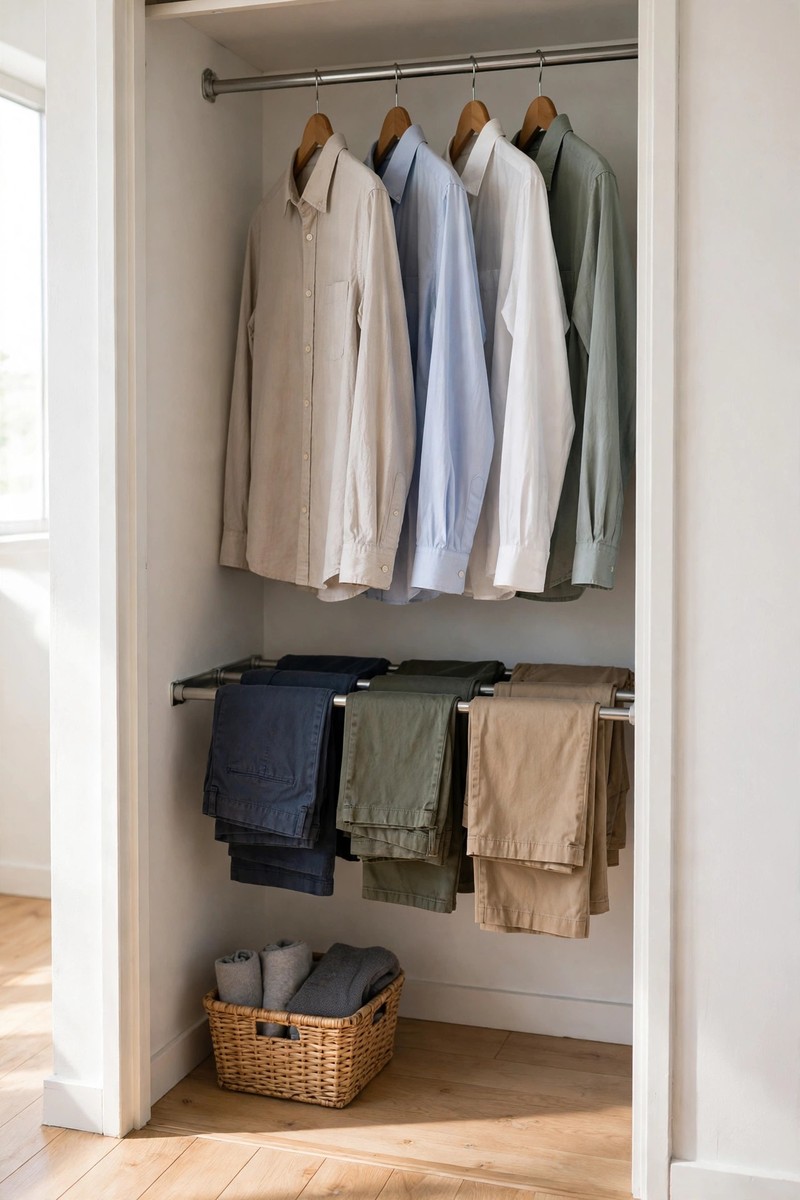
- Doubles hanging space in a closet with no tools and no screws.
- A tension rod or hanging rod hangs from the main rod in minutes.
- Short items on top, short items below: shirts above, pants below.
- Costs 10 to 25 dollars, the cheapest closet upgrade there is.
Most rental closets waste half their height on air. The rod sits high, long coats hang in the middle, and the bottom two feet hold nothing but the floor. A double hang rod fixes that in five minutes: a second rod hangs below the main one, and suddenly shirts live on top and pants live below, doubling what the closet holds. Tension rods wedge between the walls, and hanging rods hook straight onto the main rod. Either way costs 10 to 25 dollars, needs no screws, and comes down in seconds at move-out.
Short clothes are the key, so sort before you hang. Shirts, blouses, and folded pants all hang under 30 inches, which means two rows fit in a standard closet with room to spare. Long coats and dresses still need the full height, so keep one section of the closet single-hung for them. Check the rod stays level once it is loaded, since a rod that sags in the middle slides hangers to the center. When you move, lift the rod out and the closet looks exactly as it did before.
Hanging Closet Shelves
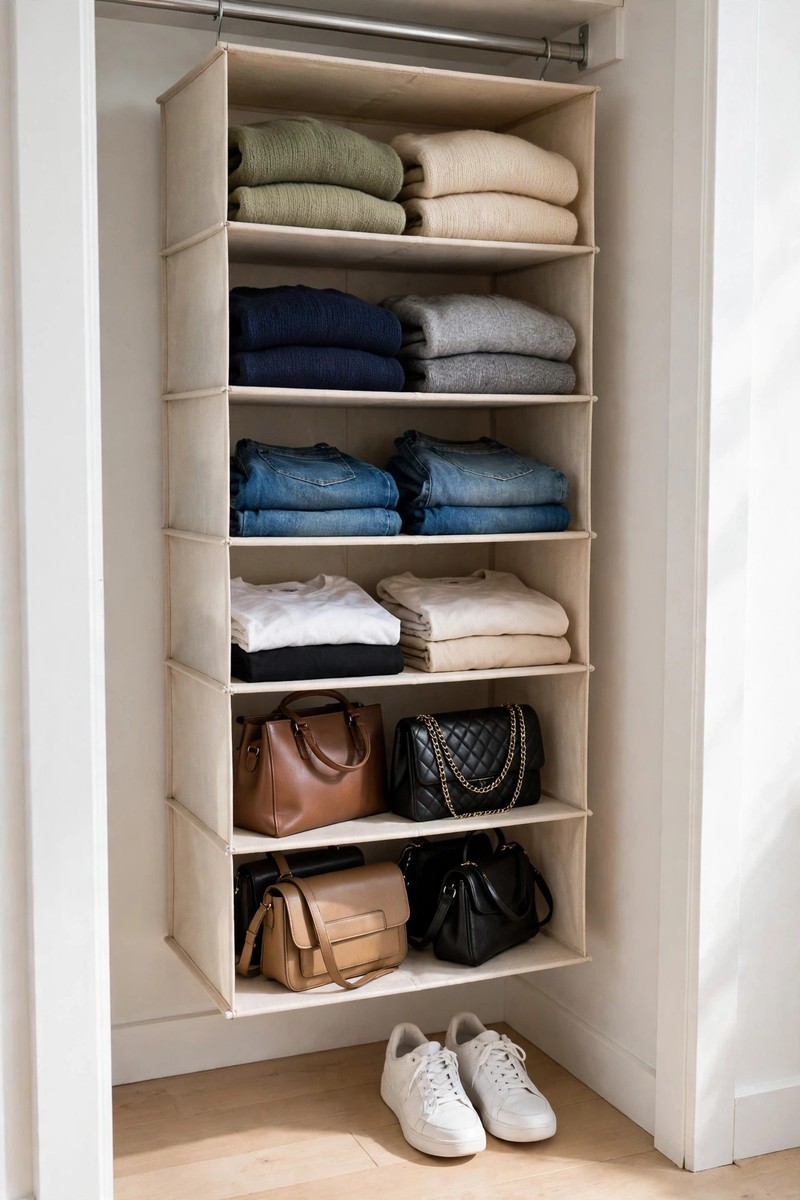
- Turns one rod of hanging space into six shelves of folded storage.
- Hangs from the rod with a hook, no screws and no tools.
- Sweaters, jeans, and T-shirts fold better than they hang.
- Costs 15 to 30 dollars and folds flat when you move.
Some clothes should never hang. Sweaters stretch on a hanger, jeans slide off the rod, and T-shirts take up twice the space hanging that they take folded. A hanging shelf organizer fixes that in a minute: it hooks over the closet rod and drops six fabric shelves down the side of the closet, turning one rod of air into a small dresser. Folded sweaters, jeans, and T-shirts stack neatly in each cubby, and the top shelf holds handbags or hats. Most organizers cost 15 to 30 dollars. Buy one with stiff sides so the shelves stay square.
Folding is what makes this work, so fold small and stack low. Each shelf holds three or four folded items before the stack tips, so keep the piles short and put the thing you wear most on top. Heavy items go on the lowest shelves, where the weight steadies the organizer instead of pulling it sideways. Wipe the fabric shelves monthly, since closet dust settles on anything left open. When you move, unhook the organizer and fold it flat in seconds, and the closet looks exactly as it did before.
Shoe Rack Tower
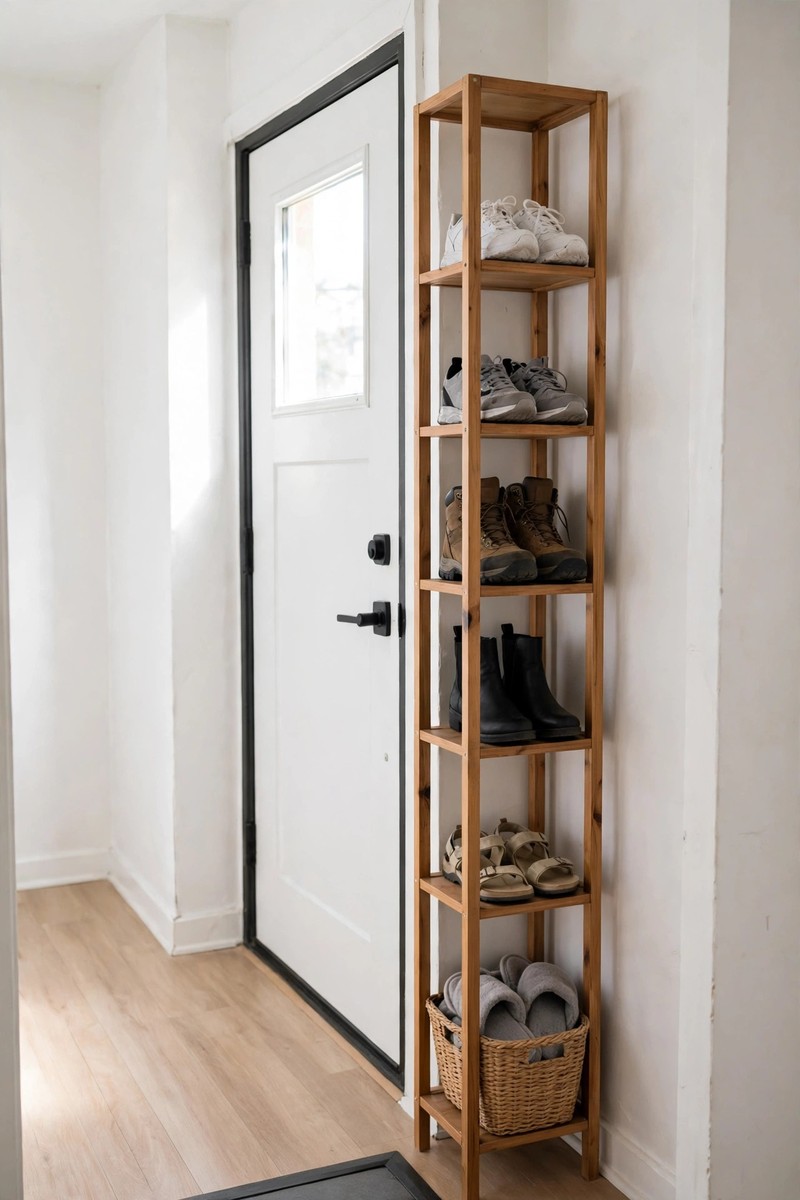
- Stacks 12 to 18 pairs of shoes in a footprint smaller than a doormat.
- Tall and narrow, so it fits beside the door or in a closet.
- Keep everyday shoes at arm level and seasonal pairs up top.
- Costs 25 to 50 dollars and assembles in under half an hour.
Shoes spread across a small apartment like they own the place. Pairs pile by the front door, sneakers migrate under the coffee table, and boots end up in the bedroom corner. A shoe rack tower fixes that in one move: a tall, narrow rack stands beside the door or inside the closet and holds 12 to 18 pairs on six shelves, in a footprint smaller than a doormat. Most towers cost 25 to 50 dollars and assemble in under half an hour with the wrench in the box. Pick one with adjustable shelves, so tall boots fit.
Stability is the only worry with a tall, narrow rack. Keep the heaviest shoes on the bottom shelf, where the weight sits near the floor, and never load the top shelf with boots, or the tower can tip when you pull a pair out. Stick felt pads under the feet so the rack never scratches the floor. Wipe the shelves monthly, since shoes track in dust and grit. When you move, the rack comes apart flat and packs into a box, and the hallway looks exactly as it did before.
Closet Shelf Dividers
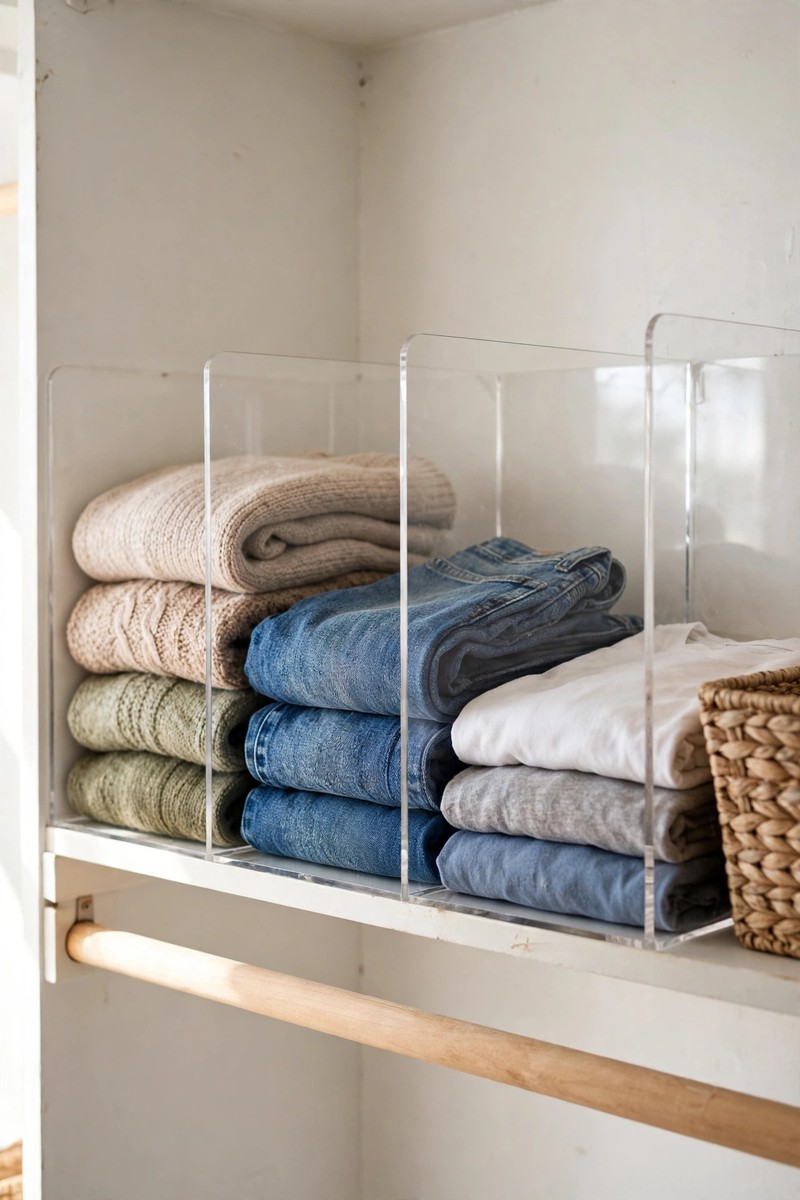
- Keep folded stacks from toppling into each other on the closet shelf.
- Clip onto the shelf or stand free, no screws and no tools.
- One divider per stack is enough; more dividers waste shelf space.
- A set of six costs 10 to 18 dollars.
A closet shelf without dividers is a slow landslide. You fold the sweaters into a neat stack, pull one out on Tuesday, and by Friday the whole shelf has slumped sideways into one big pile. Shelf dividers stop that with a simple wall: clear acrylic panels clip onto the shelf or stand free, and each stack stays upright in its own lane. One divider per stack is enough, and a set of six costs 10 to 18 dollars. Measure the shelf depth first, since dividers need to match it exactly.
Stack height matters as much as the dividers. Keep each pile to five or six folded items, because a taller stack leans no matter how good the divider is. Put the items you grab every day at the front of the shelf, where your hand lands first, and the off-season stack at the back. Wipe the dividers monthly, since closet shelves collect dust fast. When you move, the dividers lift off the shelf and pack flat, and the closet looks exactly as it did before. No holes, no marks, no landlord call.
Vacuum Storage Bags
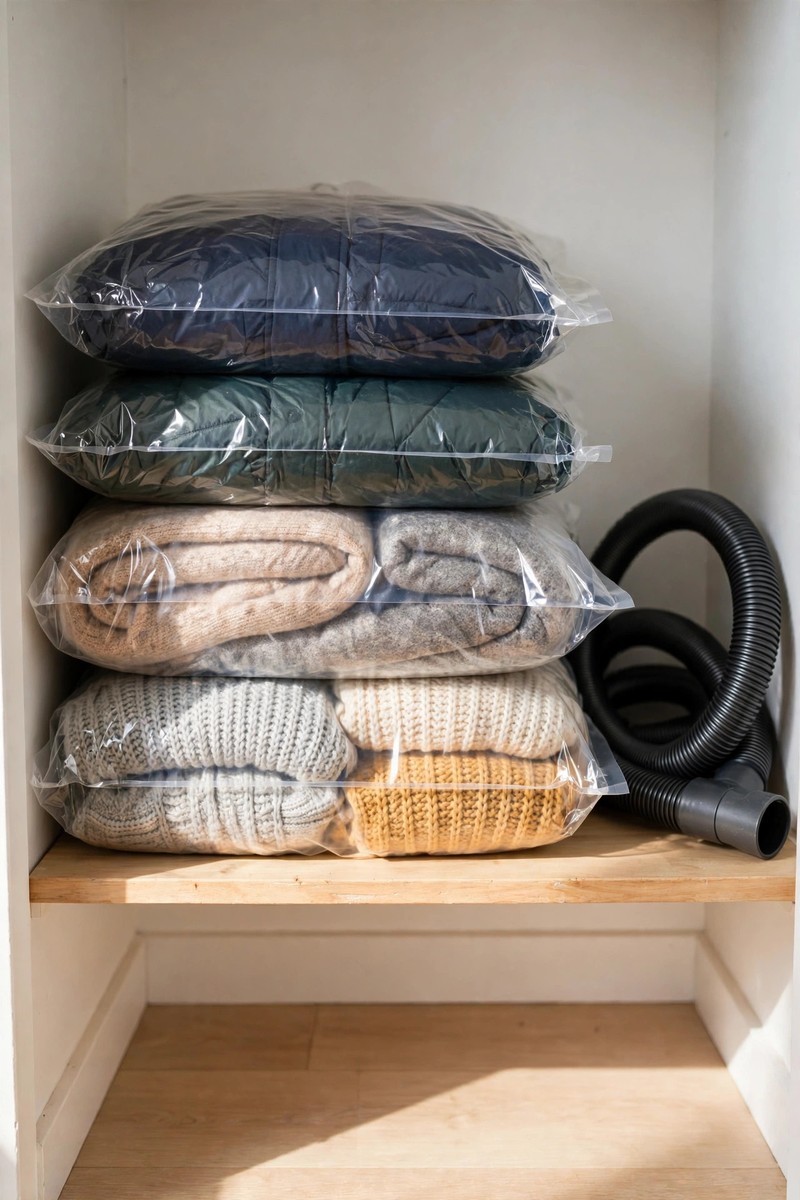
- Shrink bulky winter coats and blankets to a third of their size.
- Seal with a vacuum, then slide the flat bags under the bed or onto a shelf.
- A pack of six costs 15 to 25 dollars and lasts for years.
- Do not use them on down jackets or leather, which need air.
Winter coats eat your closet alive. Three bulky coats and two thick blankets fill a whole shelf, and they sit there untouched from April to October. Vacuum storage bags fix that in an afternoon: stuff the bag, seal it, run the vacuum hose over the valve, and watch a puffy coat shrink to a third of its size. The flat bags slide under the bed or stack on a high shelf, and a pack of six costs 15 to 25 dollars. Skip them for down and leather, which need air to stay in shape.
Dry clothes only, or you will regret it. Anything damp sealed in a vacuum bag grows a musty smell within weeks, and the smell is hard to wash out. Wash and dry everything first, then fold it flat so the bag seals evenly. Check the seal after a day, since a slow leak lets the bag puff back up. Label each bag with tape and a marker, so you can find the winter coats without opening all six. When you move, the flat bags pack into a suitcase, and the closet looks untouched.
Rolling Laundry Sorter
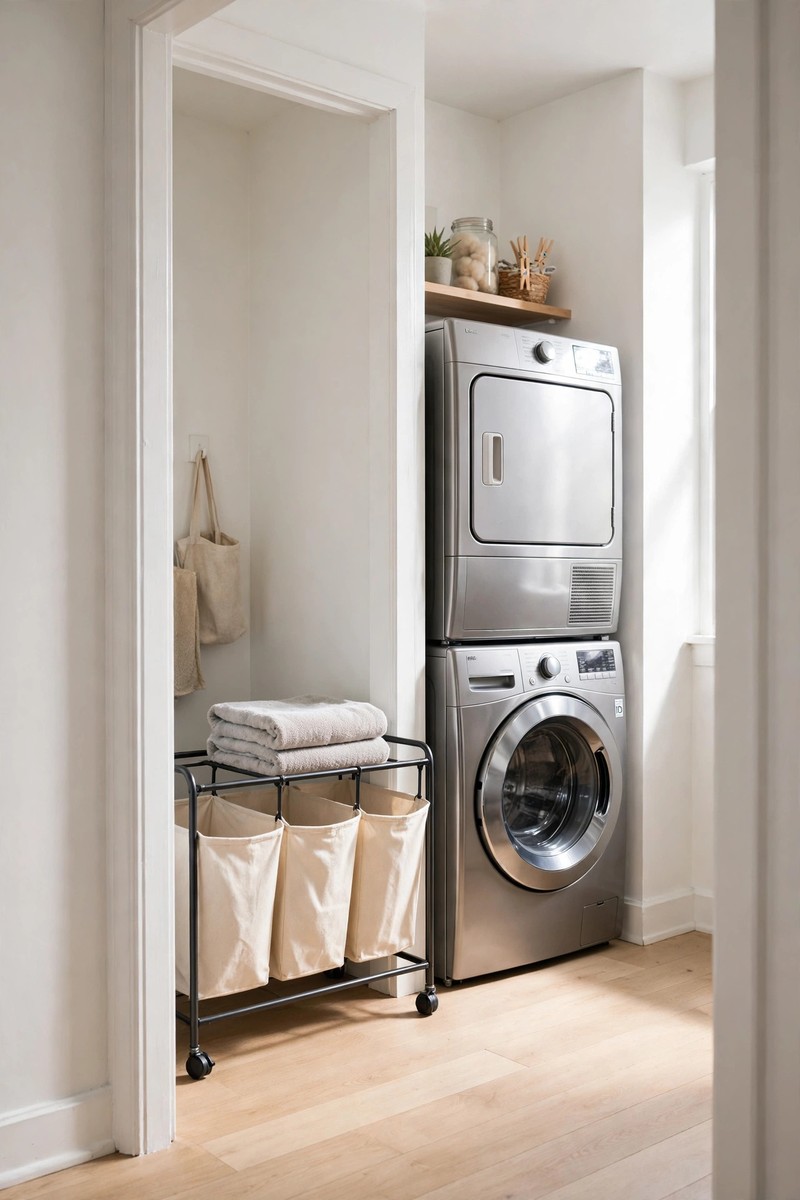
- Sorts laundry as it piles up, so wash day starts sorted.
- Three bags on wheels roll to the washer and back.
- Removable canvas bags lift out and carry to the machine.
- Costs 30 to 60 dollars and fits a closet or hallway corner.
Laundry day starts with a sorting job nobody wants. The pile on the bedroom floor mixes lights, darks, and delicates, and sorting it takes ten minutes you would rather skip. A rolling laundry sorter fixes that for good: three canvas bags on a wheeled frame sit in the closet or hallway, and every item lands in the right bag the moment it comes off. On wash day, lift the bag out and carry it to the machine. Most sorters cost 30 to 60 dollars and roll on smooth casters that lock.
Bag size decides whether the sorter works or overflows. A sorter with three small bags fills up by Thursday in a two-person apartment, so buy the largest bags your space allows. Wash the canvas bags monthly, since damp clothes leave a musty smell in fabric that never airs out. Keep the sorter where the clothes actually come off, not in a far corner nobody walks to. It takes ten minutes to set up. When you move, the frame folds flat and the bags pack into a box, and the hallway looks untouched.
Storage Ottoman
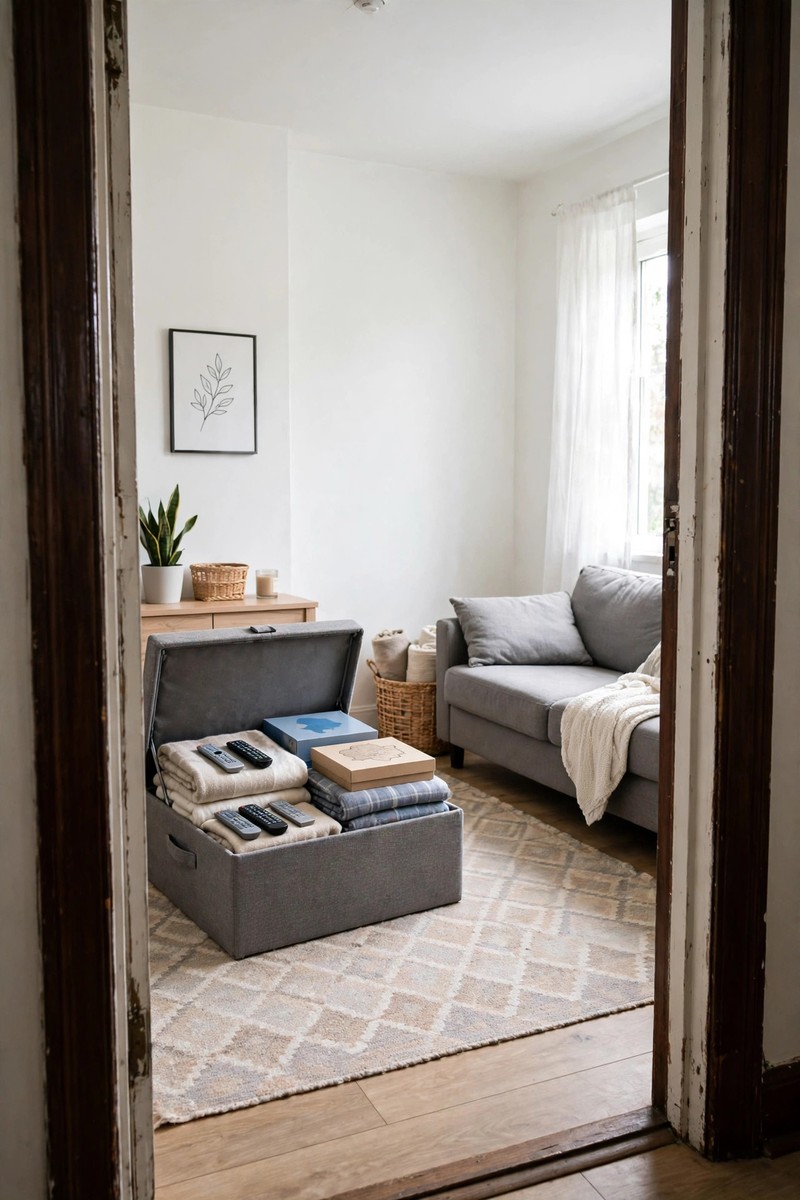
- Hides blankets, games, and remotes inside a seat you already use.
- Doubles as a footrest, extra seat, or coffee table with a tray.
- Pick a hinged lid that stays open while you dig inside.
- Costs 40 to 90 dollars, less than a separate storage bench.
A living room with no storage hides clutter in plain sight. Blankets drape over the sofa arm, board games stack on the floor, and remotes vanish into the cushions. A storage ottoman fixes all of that at once: the lid lifts to reveal a deep bin for blankets, games, and chargers, and the closed ottoman works as a footrest, an extra seat, or a coffee table with a tray on top. Most ottomans cost 40 to 90 dollars and hold more than a whole shelf of baskets. Buy one with a hinged lid that stays open.
The lid is what makes or breaks an ottoman. A loose lid slides off every time you lift it, and a lid that slams shut pinches fingers and scares the cat. Pick a hinged lid with a soft close, and test it in the store if you can. Keep the heaviest items at the bottom, so the ottoman stays steady when someone sits on it. Vacuum the fabric monthly, since an ottoman doubles as a footrest and collects dust fast. When you move, it carries its own contents to the next place.
Coffee Table With Storage
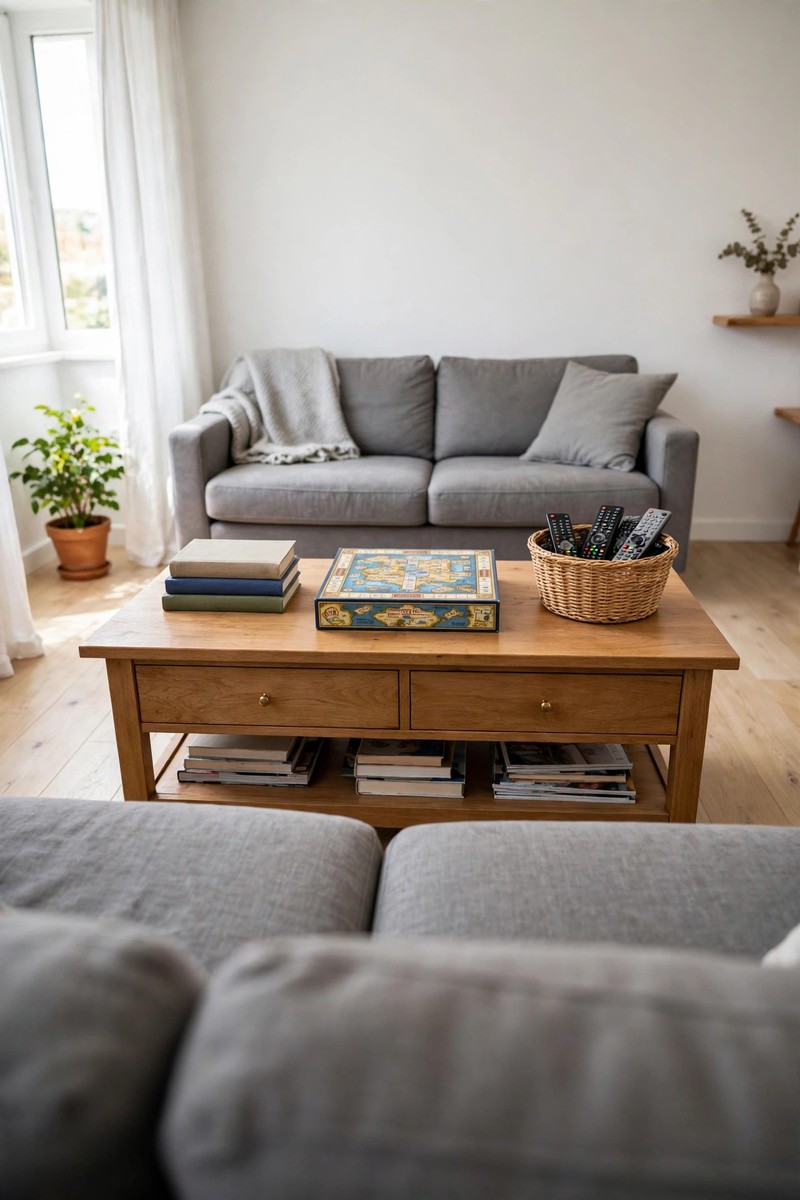
- Shelves and drawers hide remotes, chargers, and games under the tabletop.
- A lift-top version adds a work surface and a deep bin inside.
- Pick a table 16 to 18 inches high so it matches your sofa seat.
- Costs 60 to 150 dollars, cheaper than a separate storage unit.
A plain coffee table is a flat surface with nothing underneath. Remotes, chargers, and magazines pile on top, and the space below the tabletop holds nothing but air. A coffee table with storage fixes that: shelves and drawers under the top hide the remotes, the chargers, and the board games, so the surface stays clear for a coffee and a book. Lift-top versions go further, with a deep bin inside and a top that rises to laptop height. Most tables cost 60 to 150 dollars. Measure your sofa seat height before you buy.
Height decides whether the table works or annoys you. A table two inches too tall blocks the TV remote reach, and one two inches too low makes you hunch for your coffee. Aim for 16 to 18 inches high, about the height of your sofa seat, so everything sits within easy reach. Keep the drawers for small items only, since a drawer full of books gets heavy fast. Wipe the top weekly, because a coffee table collects rings and crumbs. When you move, the drawers pack with their contents inside.
Sofa Side Caddy
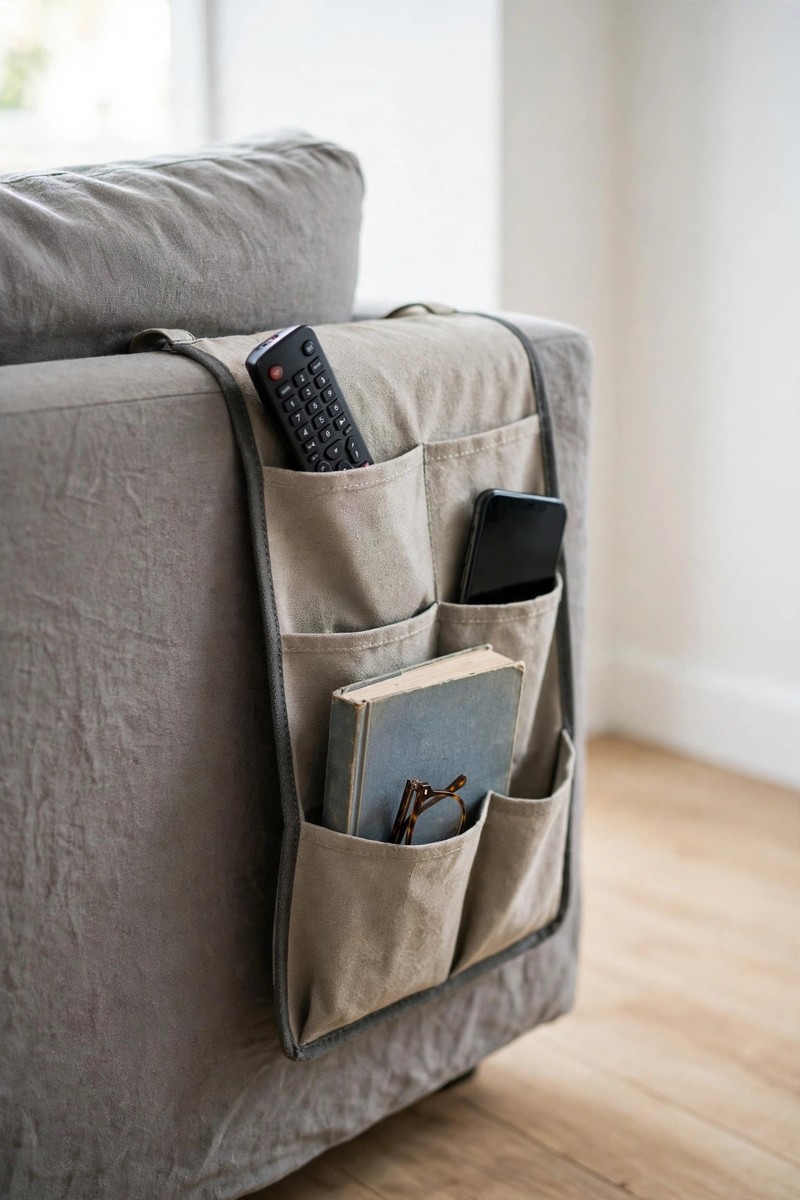
- Hangs over the sofa arm and holds the remote, phone, and book.
- Costs 10 to 18 dollars and needs no table or floor space.
- Pick stiff pockets so the remote stays upright and easy to grab.
- Works on any sofa with a flat arm at least 6 inches wide.
The remote always vanishes at the worst moment. It slides between the cushions, falls behind the sofa, or ends up under a blanket, and you spend five minutes digging for it every evening. A sofa side caddy ends that hunt: a strip of fabric drapes over the sofa arm, and four or five pockets hold the remote, your phone, your glasses, and the book you are reading. Most caddies cost 10 to 18 dollars, and they work on any sofa with a flat arm. It takes ten seconds to hang.
Arm width is the only thing to check. A caddy needs a flat sofa arm at least 6 inches wide, so it drapes evenly and the pockets hang straight. On a narrow or rounded arm, the caddy slides off the moment you reach for the remote. Keep the heaviest pocket near the front, where the weight pulls the fabric down instead of tipping it. Shake the caddy out weekly, since crumbs collect in deep pockets fast. When you move, lift it off the arm and fold it flat, and the sofa looks untouched.
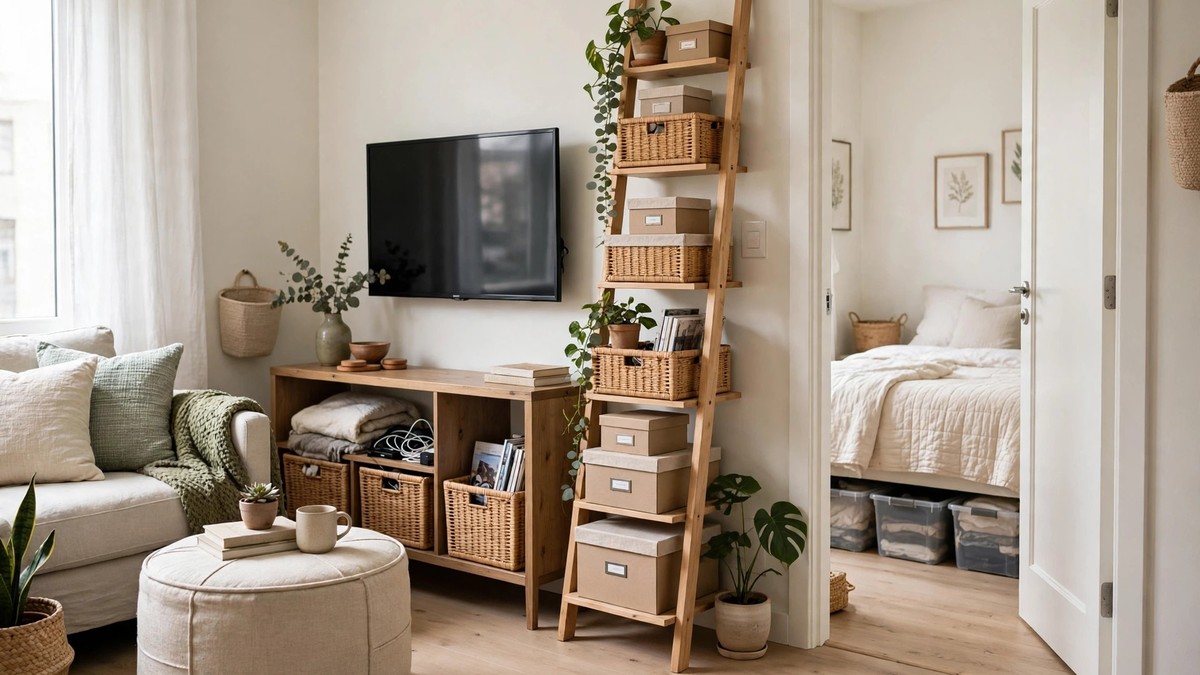
Media Console Baskets
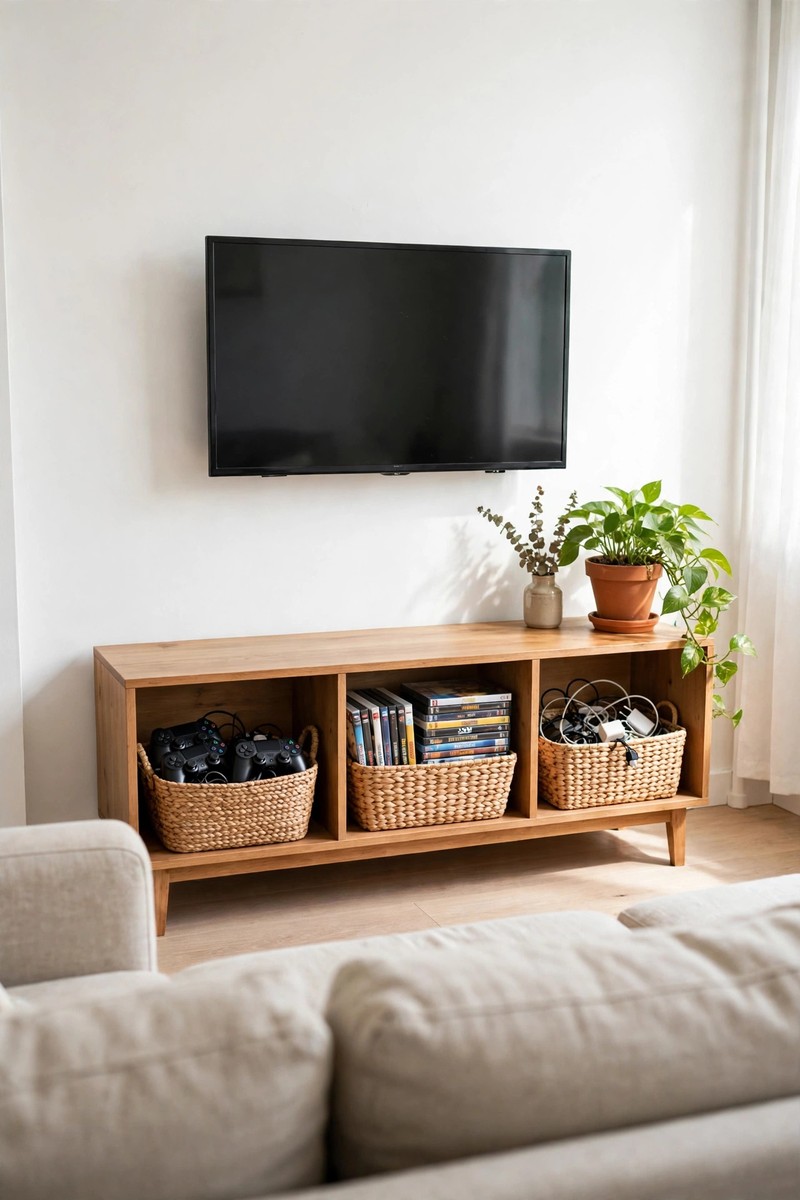
- Baskets turn open console cubbies into hidden storage for cables and controllers.
- Measure each cubby before you buy, since basket sizes vary.
- Label the baskets so everyone puts things back in the right one.
- Woven baskets cost 8 to 15 dollars each and look like decor.
Open media console cubbies are a mess in waiting. Game controllers, charging cables, and DVDs pile up in plain sight, and the TV wall looks cluttered no matter how tidy the rest of the room is. Baskets fix that in an afternoon: woven baskets slide into each cubby and hide the cables, controllers, and discs behind a neat front. Measure each cubby before you buy, since basket sizes vary by an inch or two. Woven baskets cost 8 to 15 dollars each, and they look like decor, not storage at all.
One basket per job keeps the system working. Skip lids, since open baskets are faster to use. Controllers go in one basket, cables in another, and DVDs in a third, so you never dig through a mixed pile to find one charger. Label each basket with a small tag, so everyone in the apartment puts things back in the right place. Dust the baskets monthly, since woven fibers trap dust fast. When you move, the baskets lift out and pack with their contents inside, and the console looks exactly as it did before.
Behind-Sofa Console Table
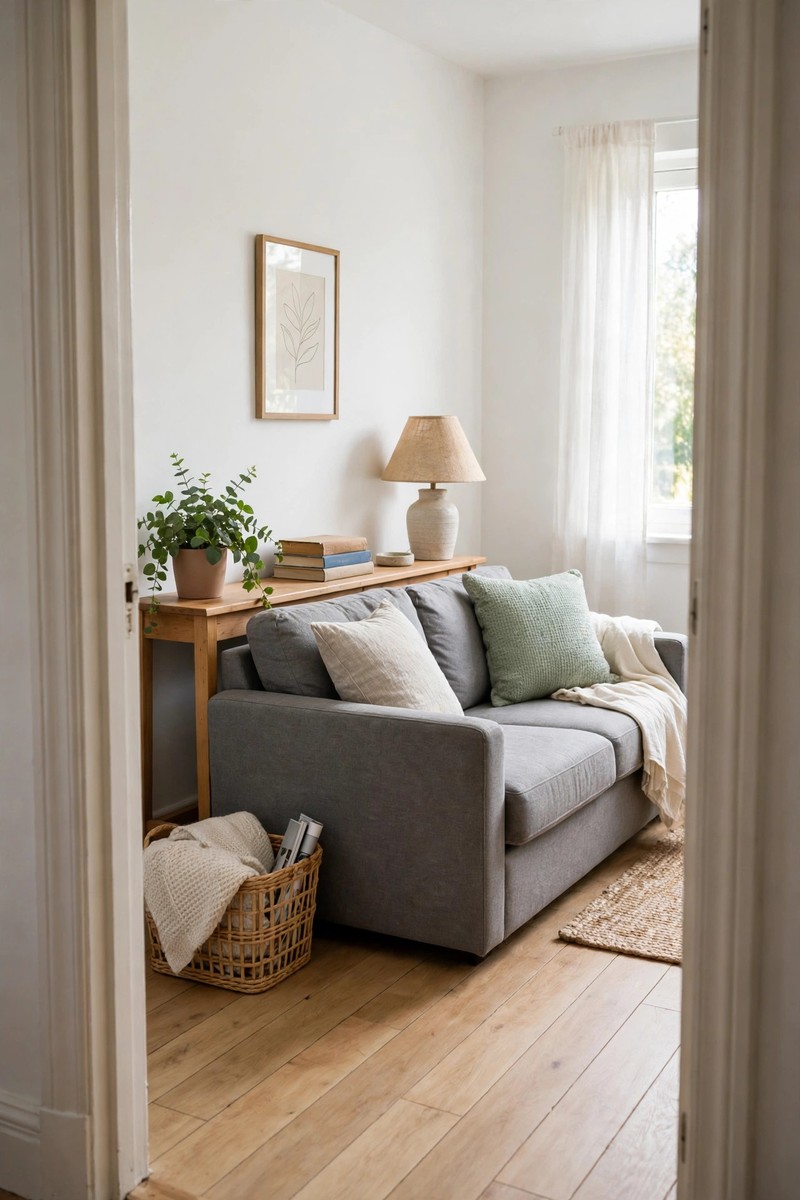
- Turns the dead gap behind the sofa into a shelf for lamps and books.
- A narrow table, 10 to 12 inches deep, fits where nothing else does.
- Baskets below hold blankets and chargers out of sight.
- Costs 40 to 90 dollars and works as a room divider in a studio.
The gap behind your sofa is a hallway for dust and lost remotes. In most small apartments, the sofa sits a few inches off the wall, and that strip of floor holds nothing but a dead remote and a dust bunny. A narrow console table fills it in one move: at 10 to 12 inches deep, it slides behind the sofa and holds a lamp, a stack of books, and a charging station, with baskets below for blankets. Most tables cost 40 to 90 dollars, and they double as a room divider in a studio.
Depth is everything here, so measure the gap before you buy. A table one inch too deep pushes the sofa forward and eats floor space you cannot spare, and one inch too shallow wobbles when you reach for a book. Keep the lamp at the end nearest the outlet, so the cord runs straight down instead of across the floor. Wipe the table weekly, since the gap behind a sofa collects dust fast. When you move, the table slides out and works in a hallway or behind a bed too.
Leaning Ladder Shelf
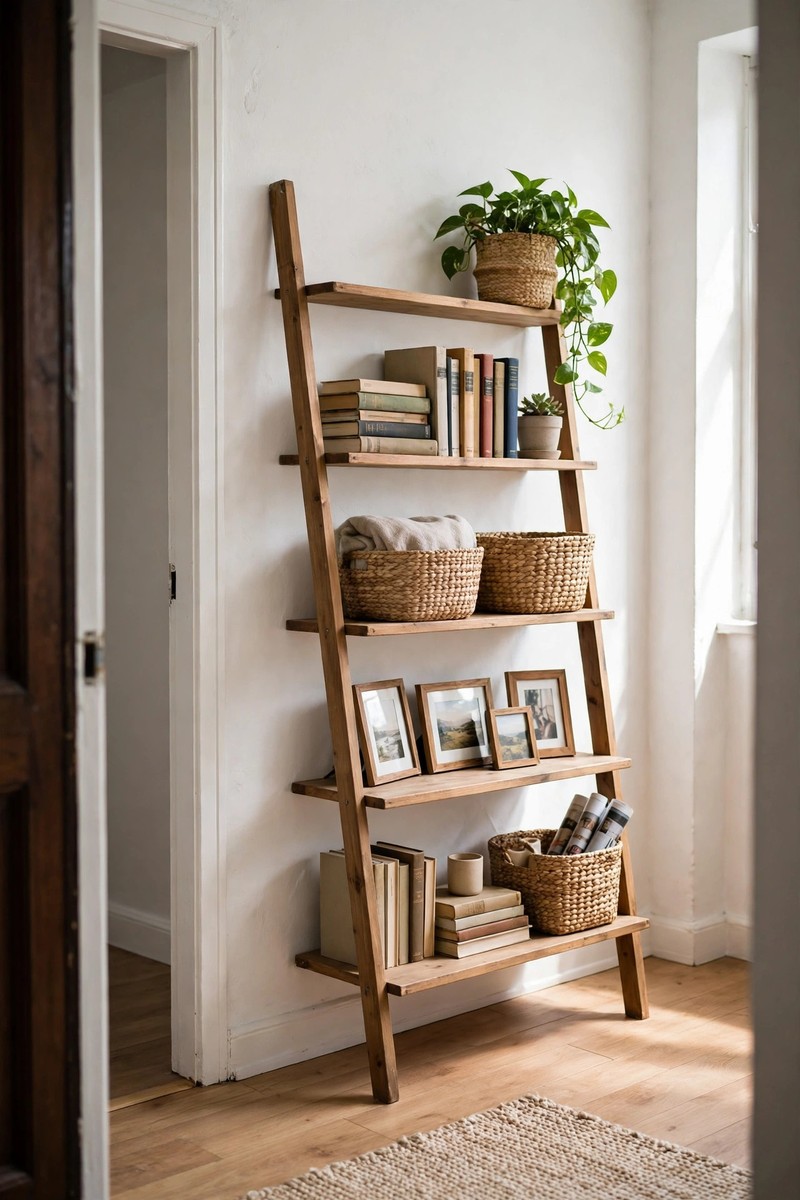
- Leans against the wall and holds books, baskets, and plants on five shelves.
- Needs no screws, no brackets, and no holes in the wall.
- Deep shelves at the bottom, shallow at the top, so it stays steady.
- Costs 50 to 120 dollars and folds flat for the move.
A bare living room corner is storage waiting for a ladder. Every small apartment has a corner too narrow for a bookcase and too awkward for a chair, so it sits empty while books pile on the coffee table. A leaning ladder shelf fills it in minutes: five shelves lean against the wall, deep at the bottom and shallow at the top, holding books, baskets, a plant, and framed photos. Most shelves cost 50 to 120 dollars, need no screws, and fold flat when you move. Stick felt pads on the feet and top rail.
The lean is what keeps it safe, so set the angle right. The feet should sit about a foot out from the wall, which gives the shelf a stable slope that will not tip when you pull a book off. Keep the heaviest books on the bottom shelf, where the weight sits near the floor, and the lightest items up top. Check the shelf monthly, since a ladder shelf can creep forward on smooth floors. When you move, fold it flat and carry it out, and the wall looks untouched.
Freestanding Coat Rack
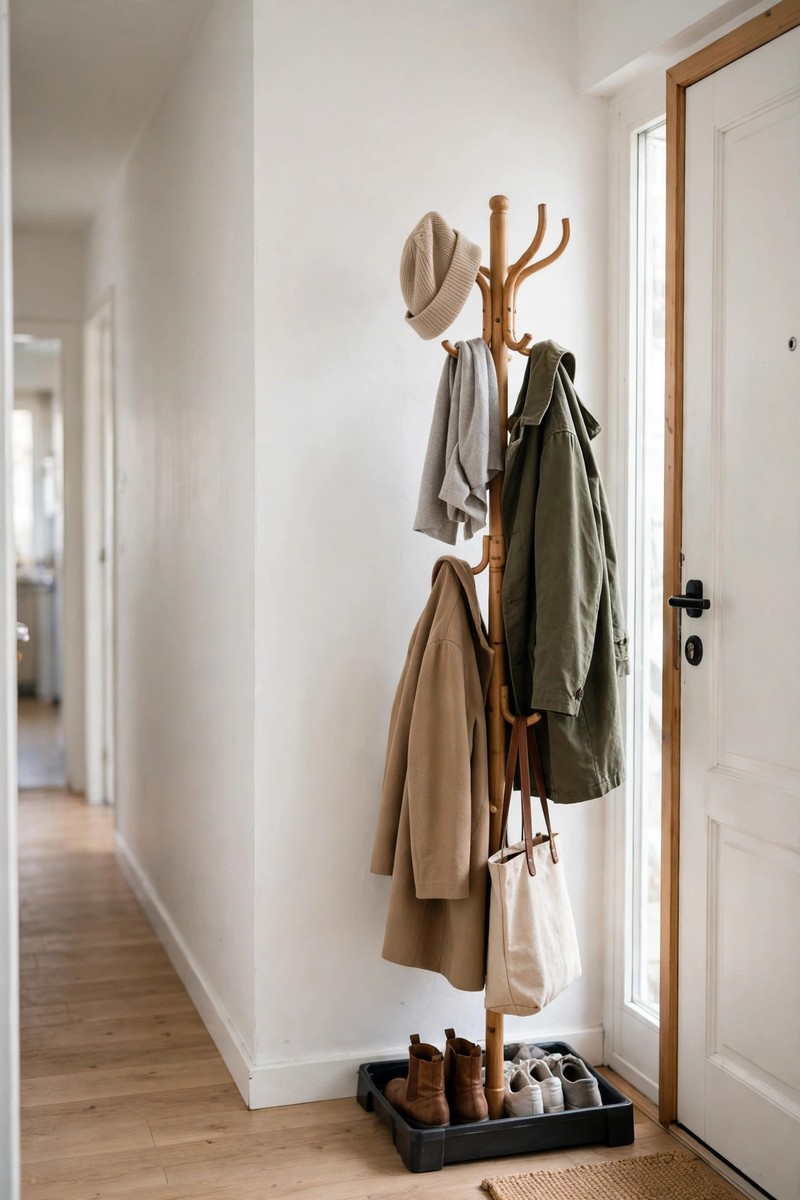
- Holds coats, scarves, hats, and bags in a footprint under one square foot.
- Needs no wall hooks and no screws, so the landlord never sees a mark.
- Pick a rack with a heavy base so it never tips when loaded.
- Costs 30 to 70 dollars and moves to any room you need.
Coats without a home end up on every chair in the apartment. The jacket lands on the dining chair, the scarf drapes over the sofa arm, and the tote bag slides to the floor by the door. A freestanding coat rack fixes that in two minutes: it stands beside the front door, holds coats, scarves, hats, and bags on curved hooks, and takes up less than one square foot of floor. Most racks cost 30 to 70 dollars and need no screws, no brackets, and no wall damage at all.
Base weight is what separates a good rack from a tipping hazard. A light rack topples the moment you hang two winter coats on one side, so pick a rack with a heavy base or a wide tripod foot. Test it loaded before you trust it. Spread the coats evenly around the hooks, and keep the heaviest coat on the lowest hook. Wipe the hooks monthly, since entryway dust settles on anything near the door. When you move, the rack comes apart in minutes and packs flat, and the hallway looks untouched.
Entryway Bench With Storage
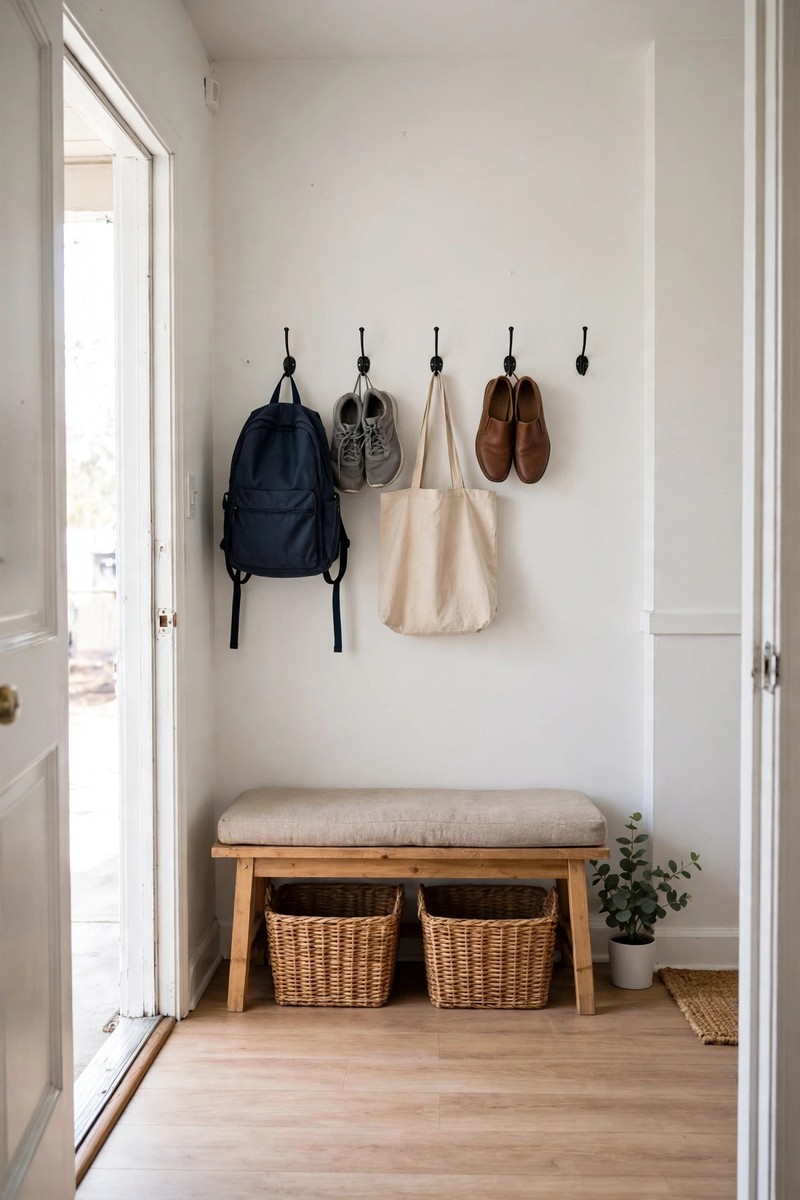
- A seat to put shoes on, with baskets below for shoes and bags.
- Hooks above hold coats and keys where you grab them on the way out.
- Pick a bench 36 to 48 inches wide so it fits a narrow hallway.
- Costs 60 to 130 dollars and anchors the whole entryway.
Every entryway needs a seat, and most small apartments skip it. You balance on one foot to pull a boot on, the bag slides off the chair, and the keys vanish into a coat pocket. An entryway bench with storage fixes all of that: you sit to put shoes on, baskets below hold the shoes and bags, and hooks above hold the coat and keys where you grab them on the way out. Most benches cost 60 to 130 dollars and run 36 to 48 inches wide. Buy one with a cushioned top for comfort.
A bench with hooks above it does double duty. Basket size decides what actually fits below the bench. Measure the opening before you buy baskets, since a basket one inch too tall will not slide in. Keep everyday shoes in the front basket and the spare pair in the back, so the morning routine takes seconds. Wipe the bench weekly, because entryways collect dust and grit faster than any other room. When you move, the bench carries its baskets to the next place, and the hallway looks exactly as it did before.
Entryway Shoe Tray
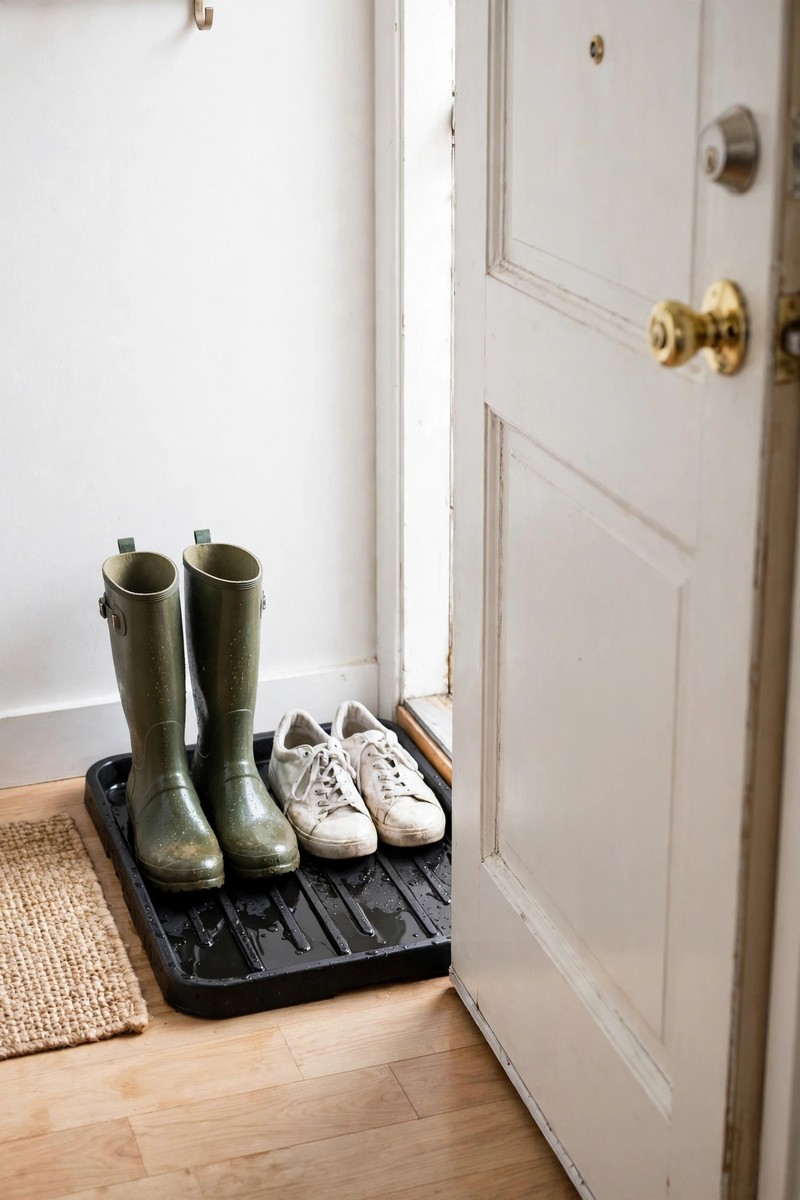
- Catches mud, rain, and snow before it hits your floors.
- A raised edge keeps water on the tray, not on the wood.
- Costs 10 to 20 dollars and protects your deposit from floor damage.
- Rinse it weekly so grit never builds up under the shoes.
Wet shoes ruin floors faster than almost anything else in a rental. Rain drips off boots, snow melts into puddles, and mud grinds into the wood, and every mark comes out of your deposit at move-out. A shoe tray stops that for 10 to 20 dollars: a rubber tray with a raised edge sits by the front door, and every pair lands on it instead of the floor. Pick a tray big enough for two pairs, about 30 inches wide, and rinse it weekly so grit never builds up under the shoes.
Size is the only decision that matters here. It takes five minutes to set up. A tray too small holds one pair while the second pair lands on the floor beside it, which defeats the whole point. Measure the space by the door, then buy the widest tray that fits without blocking the swing. Keep a small rug beside the tray for dry days, so shoes have a clean spot too. When you move, rinse the tray, stack it in a box, and the floor by the door looks exactly as it did before.
Stackable Storage Cubes

- Cubes stack into any shape, so they fit corners, closets, and shelves.
- Each cube holds books, toys, or folded clothes out of sight.
- Fabric cubes fold flat when you move; plastic ones stack empty.
- A set of six costs 20 to 40 dollars.
Rigid furniture fights small rooms, and stackable cubes do not. A bookcase only fits where it fits, but six fabric cubes stack into a pyramid in a corner, a row under a window, or a tower in a closet, and you can rearrange them in five minutes when the room changes. Each cube holds books, toys, craft supplies, or folded clothes behind a neat fabric front. A set of six costs 20 to 40 dollars, and fabric cubes fold flat when you move. Measure your shelf openings first, since cubes run 11 to 13 inches square.
Weight goes low, always. Books and craft supplies belong in the bottom cubes, where the weight sits near the floor and steadies the whole stack. Light items like folded clothes and toys go up top, where a wobble costs nothing. Label the front cubes so everyone finds things fast. Do not stack higher than three cubes without a wall behind them, since a tall tower tips when you pull a cube out. When you move, the cubes fold flat or nest inside each other, and the corner looks exactly as it did before.
Portable Garment Rack

- Adds a whole closet to a bedroom with no closet at all.
- Wheels let you roll it to the window for light or out of the way.
- Pick a rack rated for at least 50 pounds so it never sags.
- Costs 25 to 60 dollars and folds flat when you move.
Some rental bedrooms have no closet at all. The clothes live on a chair, the chair becomes a mountain, and getting dressed means digging through a pile every morning. A portable garment rack fixes that in ten minutes: a metal rack on wheels stands in the corner, holds coats, dresses, and shirts on proper hangers, and rolls to the window when you need light. Most racks cost 25 to 60 dollars and fold flat when you move. Pick one rated for at least 50 pounds, so it never sags under a full load.
Hanger space is the limit, so curate what goes on the rack. Keep the outfits you wear this week on the rack, and the off-season clothes in bins under the bed, so the rack never turns into a second mountain. Spread the weight evenly across the bar, since a rack loaded on one side tips when you roll it. Wipe the bar monthly, since dust settles on open hangers fast. When you move, fold the rack flat in minutes and pack it in the car, and the corner looks untouched.
Freestanding Pegboard Organizer
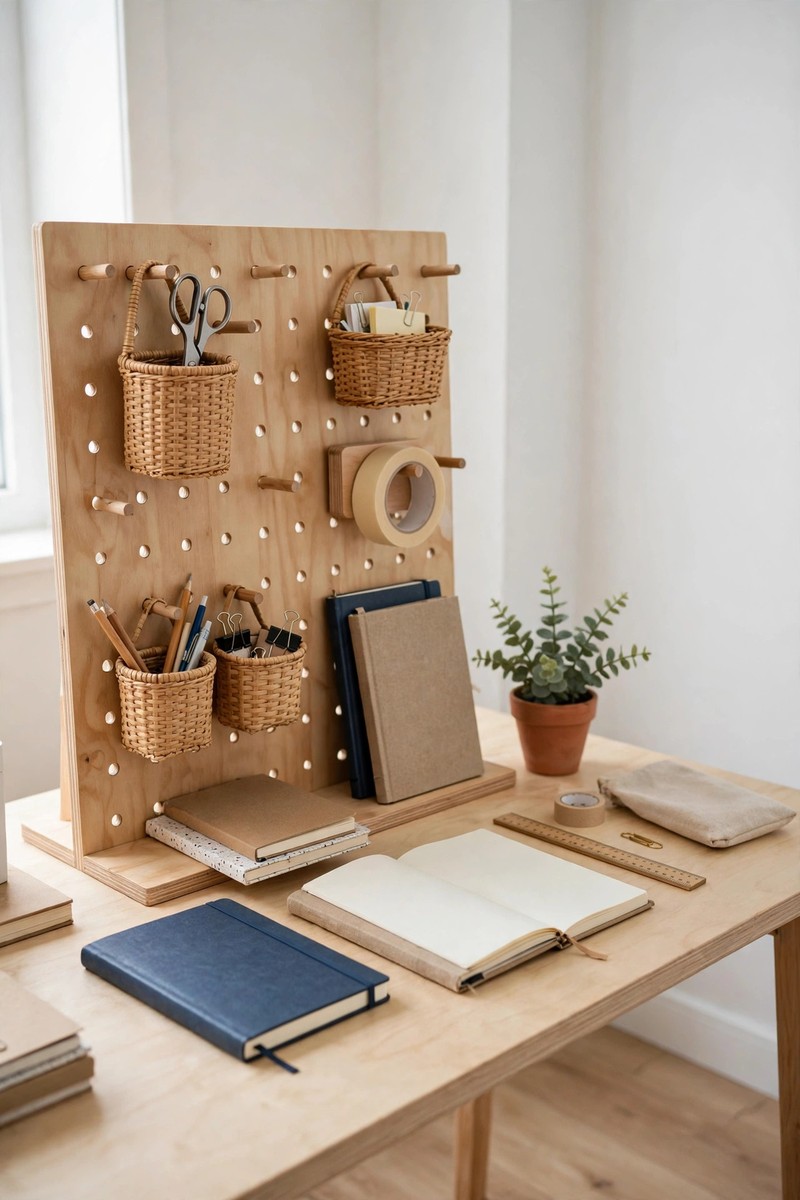
- Holds desk supplies, tools, and craft bits on hooks you can move.
- Freestanding models sit on a desk or the floor, no wall screws.
- Rearrange the hooks in seconds when your setup changes.
- Costs 25 to 55 dollars and works in any room.
Desk drawers swallow small things whole. Scissors, tape, chargers, and pens slide to the back of the drawer, and you buy a second pair of scissors because you cannot find the first. A freestanding pegboard fixes that in ten minutes: it stands on the desk or the floor, and hooks, pegs, and small baskets hold everything in plain sight, where your hand lands without thinking. Rearrange the hooks in seconds when your setup changes. Most pegboards cost 25 to 55 dollars. Pick a board at least 16 inches wide so it holds a full row of hooks.
Weight is the limit on a pegboard, so keep it light. Hooks hold scissors, tape, and small baskets fine, but a pegboard is not a shelf for heavy books or jars. Put the items you reach for every day at arm height, and the extras up top. Check the hooks monthly, since a hook that slides out drops everything on the desk. When you move, lift the pegboard off the desk and pack it flat, and the wall and desk look exactly as they did before. No holes, no marks, no patching.
Standing Jewelry Organizer
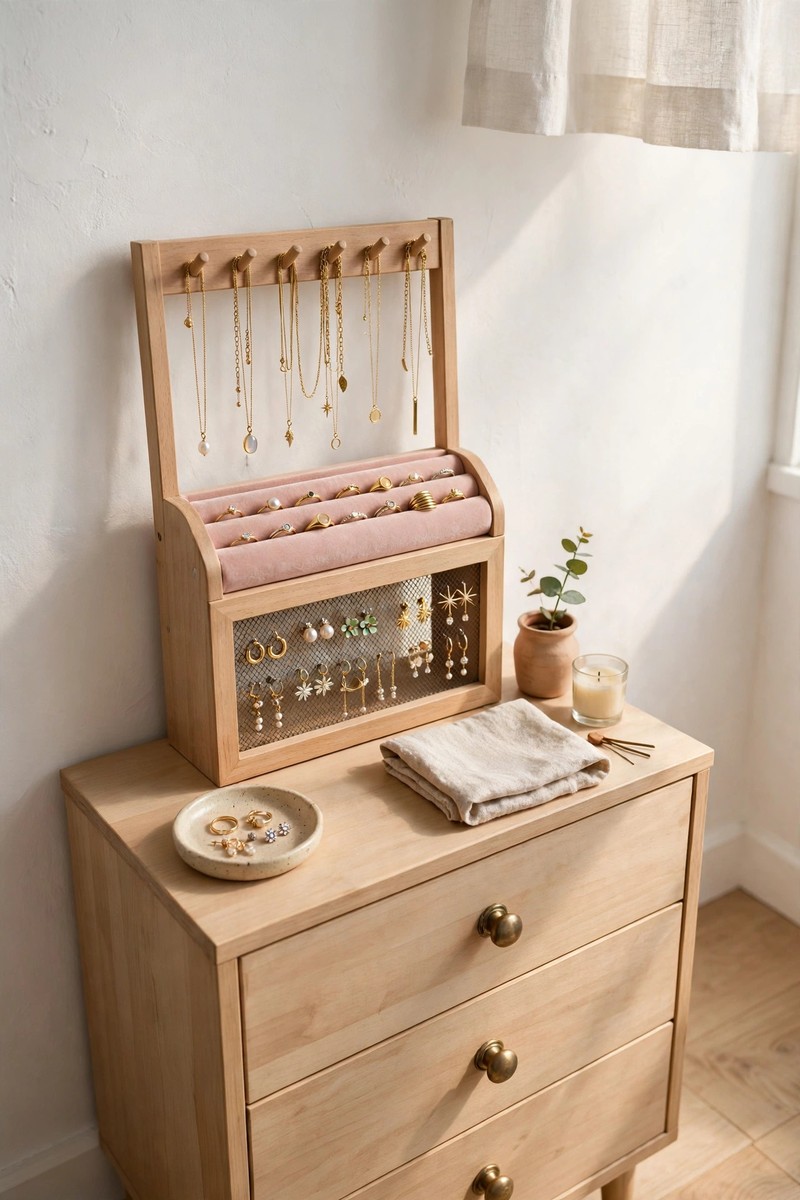
- Keeps necklaces untangled, rings in rows, and earrings paired.
- Stands on the dresser, so it needs no wall space at all.
- Pick a model with a mix of hooks, rolls, and a mesh panel.
- Costs 20 to 45 dollars and doubles as a pretty display.
Jewelry in a drawer turns into a knot. Necklaces tangle into one chain, earrings lose their partners, and rings roll to the back where you forget them. A standing jewelry organizer fixes that in a minute: it stands on the dresser, holds necklaces on hooks, rings on a padded roll, and earrings on a mesh panel, so every piece hangs in plain sight. Most organizers cost 20 to 45 dollars, and the best ones mix hooks, rolls, and a panel in one frame. Keep your everyday pieces at the front, where your hand lands first.
Dust is the enemy of open jewelry storage, so wipe the organizer weekly. A felt-lined tray below catches loose rings. A quick pass with a soft cloth keeps necklaces bright and stops dust from settling into ring settings. Keep the organizer away from the bathroom, since steam tarnishes silver fast. If you have more jewelry than the organizer holds, rotate the pieces by season instead of cramming them in. When you move, wrap the organizer in a towel and pack it flat, and the dresser looks exactly as it did before.
Indoor Bike Stand
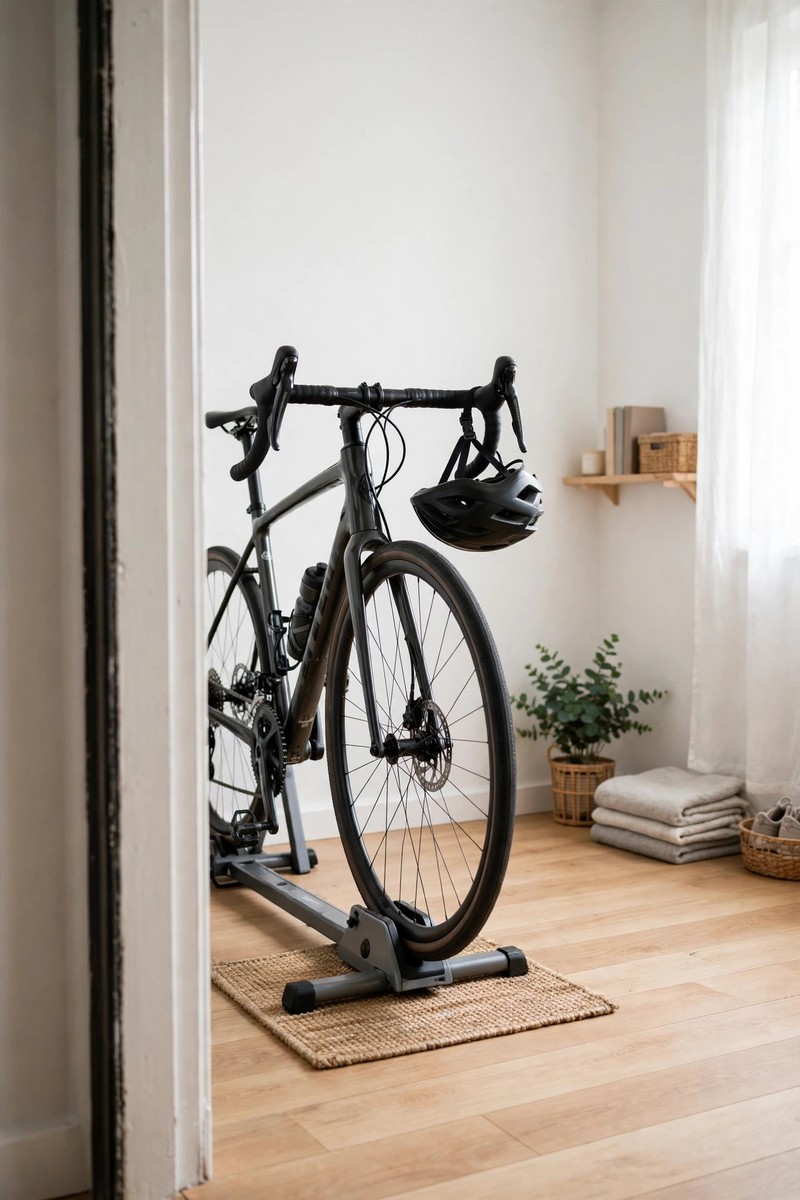
- Holds a bike upright in a corner, so it stops leaning on the wall.
- Freestanding stands need no wall mount and no screws.
- Pick a stand rated for your bike type, since tire widths vary.
- Costs 25 to 60 dollars and saves your walls from tire marks.
A bike in a small apartment leans on everything. It rests against the living room wall, slides onto the sofa, and leaves tire marks on the paint that come straight out of your deposit. An indoor bike stand fixes that in five minutes: a freestanding stand holds the bike upright by the front wheel in a corner, with a mat below to catch drips. Most stands cost 25 to 60 dollars and fit tire widths from road to mountain. Measure your tire before you buy. Pick a stand with a wide base so it never tips.
Tire width is the detail most people get wrong. A stand built for a road tire will not grip a mountain bike tire, and a stand built for fat tires lets a road bike wobble. Check the rated tire width on the box and match it to your bike. Keep a mat under the stand, since tires drip water and grit after a rainy ride. When you move, the stand folds flat and packs into a box, and the wall it saved looks exactly as it did before. No marks, no holes.
Decorative Storage Boxes

- Hide chargers, craft supplies, and spare keys behind a pretty front.
- Boxes in one color family look like decor, not clutter control.
- Pick boxes with lids so the contents stay dust-free.
- A set of three costs 20 to 40 dollars.
Open shelves show everything, and everything is not always pretty. Chargers tangle, craft supplies spill, and spare keys scatter across the shelf, and the whole room looks messier than it is. Decorative storage boxes fix that in an afternoon: woven seagrass or linen boxes sit on the shelf, hide the clutter behind a neat front, and look like a design choice instead of a workaround. A set of three costs 20 to 40 dollars. Pick boxes in one color family, so the row looks planned. Measure the shelf depth first, since boxes run 10 to 14 inches deep.
Lids are what make a box work on an open shelf. A box without a lid is just a basket, and the clutter inside stays visible from across the room. Lidded boxes hide everything and keep dust off the contents, so the shelf looks tidy for weeks. Wipe the boxes monthly, since open shelves collect dust fast. Label each box on the inside of the lid, so you know what is inside without ruining the look. When you move, the boxes pack with their contents inside, and the shelf looks exactly as it did before.
Folding Drying Rack

- Dries clothes without a dryer and folds flat behind a door.
- A three-tier rack holds a full load in about four square feet.
- Put it near a window or fan so clothes dry in hours, not days.
- Costs 25 to 50 dollars and saves dryer fees every week.
Laundry with no dryer takes over the apartment. Wet T-shirts drape over chairs, towels hang from door handles, and socks end up on every radiator in the place. A folding drying rack fixes that in two minutes: it opens into three tiers, holds a full load in about four square feet, and folds flat behind a door when the clothes are dry. Most racks cost 25 to 50 dollars, and a wooden rack lasts longer than a cheap metal one. Put it near a window for airflow. It beats draping clothes over chairs every week.
Airflow is what dries clothes, not heat alone. A rack in a closed, stuffy corner takes two days to dry a load, and damp clothes left that long start to smell musty. Put the rack near a window or a fan, spread the clothes out so air reaches both sides, and flip the thickest items after a few hours. Wipe the rack down monthly, since dust settles on the bars. When you move, fold the rack flat and carry it out, and the corner looks untouched. Setup takes two minutes, and folding it takes less.
Frequently Asked Questions
How do I add storage to a small apartment without drilling?
Use freestanding pieces and no-drill fixes: under-bed rolling bins, a double hang rod in the closet, a storage ottoman in the living room, a freestanding coat rack by the door, and a leaning ladder shelf in a bare corner. None of these need a screw, and all of them pack up clean at move-out. Measure each spot before you buy, since a bin or shelf one inch too wide is the most common waste of money.
What is the best first storage fix for a tiny apartment?
Start under the bed, because that space is the biggest empty area in most small apartments and rolling bins need no permission. Next, double the closet with a second hang rod, which costs under 25 dollars and takes five minutes. Then fix the entryway, since coats and shoes by the door are the clutter you see first every day. One zone at a time beats a whole-apartment overhaul.
How do I double my closet space in a rental?
Add a second hang rod below the main one for shirts and folded pants, then hang a fabric shelf organizer on the side for sweaters and jeans that should not hang. Shelf dividers keep the folded stacks upright, and vacuum bags shrink off-season coats to a third of their size. No screws, no landlord call, and the whole setup costs under 60 dollars.
Will freestanding shelves damage my walls or floors?
No, if you set them up right. Stick felt pads on the feet and on any part that touches the wall, keep the heaviest items low so nothing tips, and check the feet monthly on smooth floors. A leaning shelf should sit about a foot out from the wall for a stable angle. At move-out, everything lifts away and the wall and floor look untouched.
Conclusion
A small apartment does not have to stay a daily fight. These small apartment storage ideas show that the space you need is already there, under the bed, inside the closet, behind the sofa, and in the hallway you walk past every day. Each idea costs little, needs no drill, and leaves nothing behind at move-out. Save this guide on Pinterest for later, try the one idea that fixes your worst clutter this week, and share it with a friend whose closet looks like yours. Your apartment is small. It does not have to feel small too.
You Might Also Like
- 30+ Small Apartment Kitchen Ideas for Renters (No Drilling Needed)
- 25+ Dollar Store Home Decor Ideas for Renters (Mostly Under $5)
- 25+ Small Bathroom Storage Ideas for Renters (No Holes, No Damage)
- Start Here
- More Small Spaces Ideas
New guides land every week.