
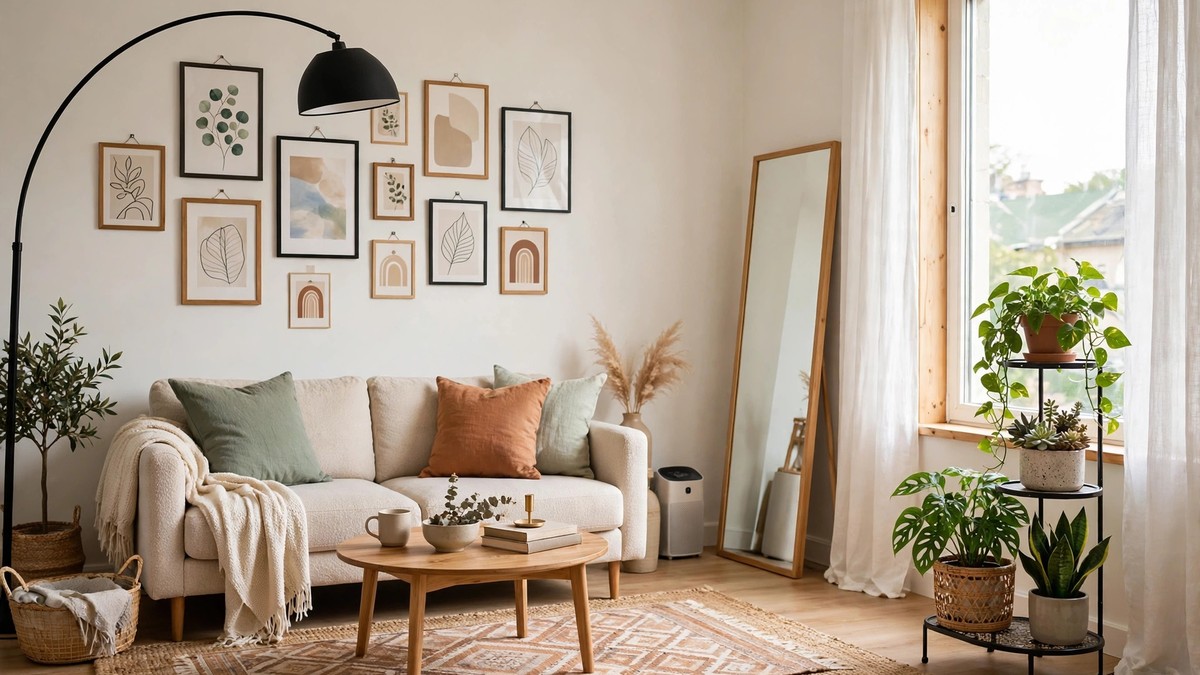
25+ No-Drill Decor Ideas for Renters (No Holes, No Deposit Risk)
Bare white walls make a rental feel like a waiting room. You signed the lease, moved your boxes in, and the place still looks like nobody lives there. These no-drill decor ideas for renters fix that without a single hole: 25 ways to hang art, soften windows, warm up the light, and layer color and texture so the apartment finally feels like yours. Every idea is no-drill, deposit-safe, and cheap enough to try this weekend, and every one of them comes off clean when you move out. You do not need a drill to have a home that looks finished. Start with the wall that bugs you most, and work from there.
Leaning Floor Mirror
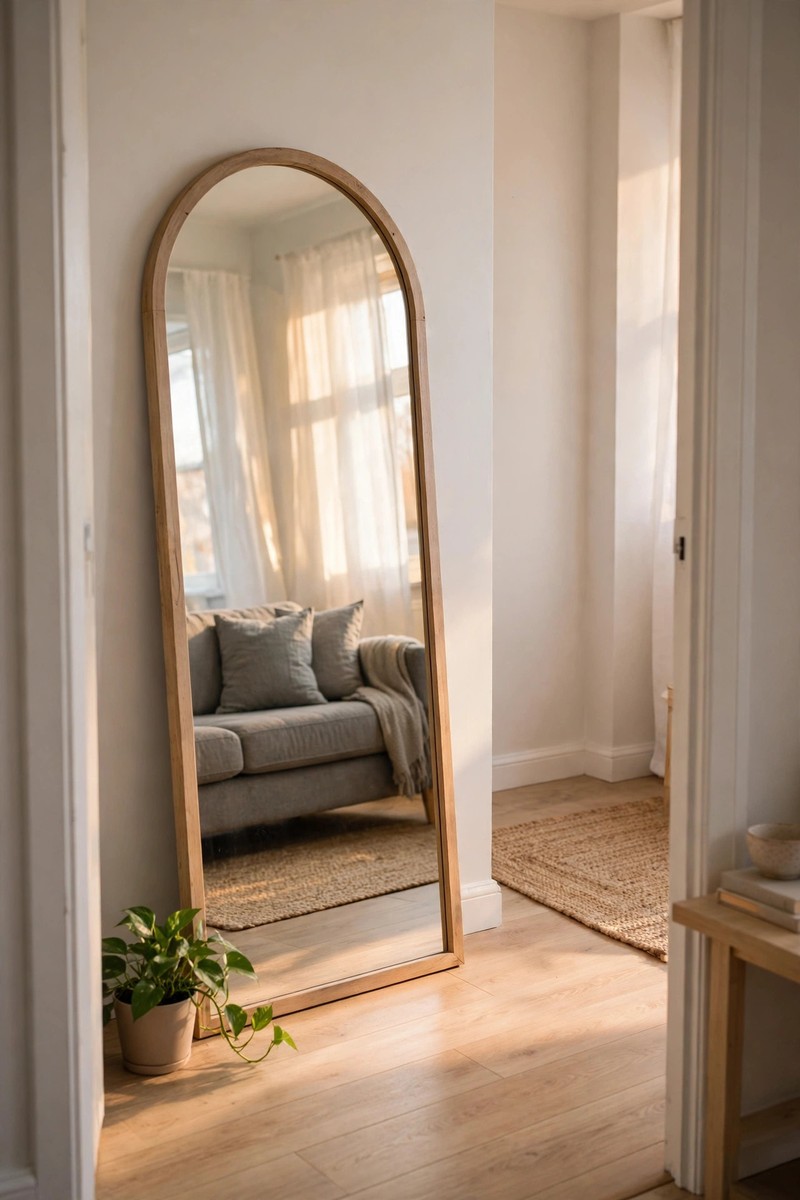
- Makes a small room look bigger and brighter by bouncing light around.
- Leans against the wall, so it needs no screws, hooks, or adhesive.
- Arched mirrors 60 to 72 inches tall work best in small living rooms.
- Stick felt pads behind the top edge so the frame never marks the paint.
A floor mirror is the fastest way to make a small rental feel twice as big. It bounces daylight across the room, doubles the view of your best window, and turns a bare wall into a feature. Lean it against the wall at a slight angle, about two inches out at the base, and it stays put with no screws, no hooks, and no adhesive at all. Arched mirrors 60 to 72 inches tall suit most living rooms, and thrift stores sell them for 40 to 80 dollars. Place it opposite a window and watch the whole room brighten.
Stability is the one thing to get right, because a tall mirror is heavy. Check the lean before you walk away: the base should sit about two inches from the wall, and the top edge should rest flat against it. Stick felt pads behind the top edge and under the feet, so the frame never scuffs the paint or scratches the floor. Keep it out of the main walkway, where a bumped elbow can send it sliding. When you move, lift it straight off the wall and wrap it in a blanket for the ride.
Adhesive Gallery Wall
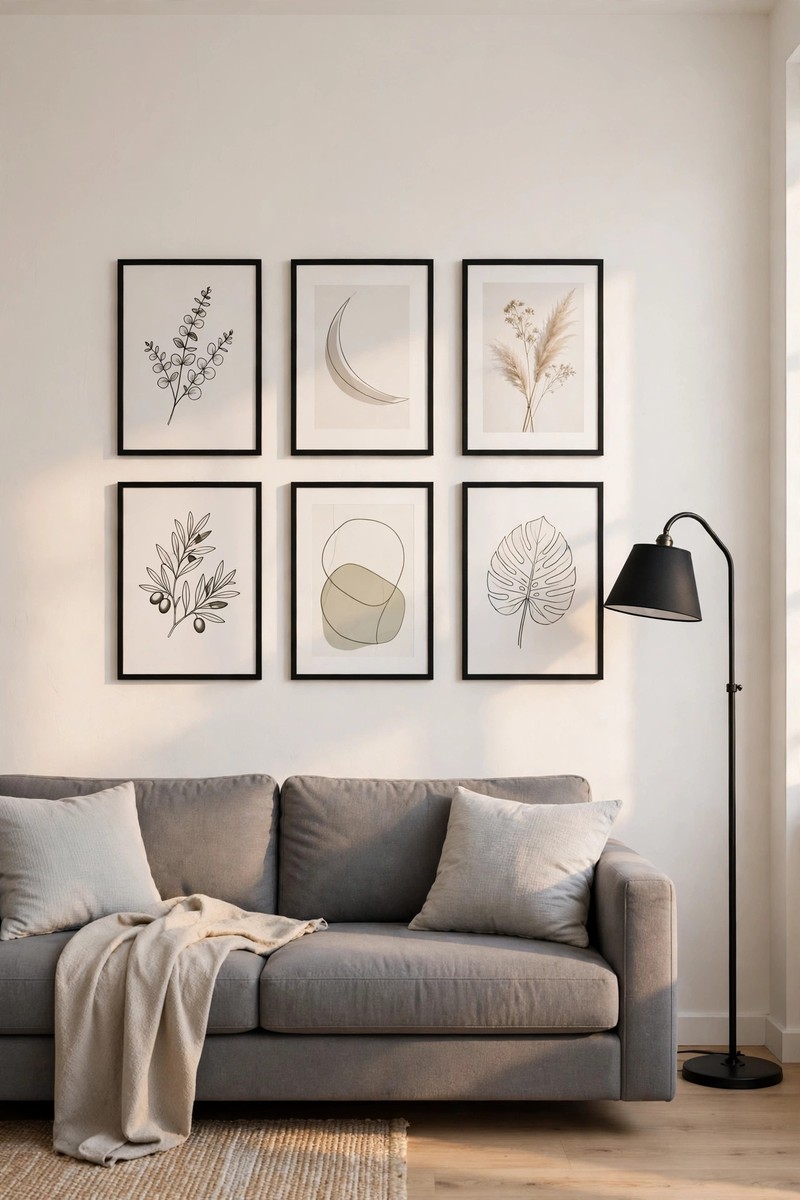
- Turns a blank wall into a gallery with adhesive strips, no nails at all.
- Lay the frames on the floor first to plan the layout before you stick anything.
- Use strips rated for the frame weight, and always stay under the limit.
- Keep frames the same color family so the wall looks planned, not random.
A gallery wall is the single best way to make a rental feel like yours. Six framed prints in two neat rows turn a blank wall into the room’s focal point, and adhesive strips hold them up with no nails at all. Lay the frames on the floor first and shuffle them until the layout feels right, then trace each frame on paper and tape it up. Most adhesive strips hold 3 to 9 pounds each, so check the weight on the back of every frame. A full wall of prints costs 40 to 90 dollars with thrifted frames.
Weight limits are the whole game with adhesive strips, so read the pack. A strip rated for 9 pounds should carry a frame of 6 pounds or less, because heat and humidity weaken the bond over time. Clean the wall with rubbing alcohol first, press the strip hard for 30 seconds, and wait an hour before you hang the frame. Check each frame monthly and press any lifting edge down before it fails. Never stick strips on textured paint, because they need a smooth flat surface to grip. At move-out, pull each strip straight down slowly.
Removable Wall Decals
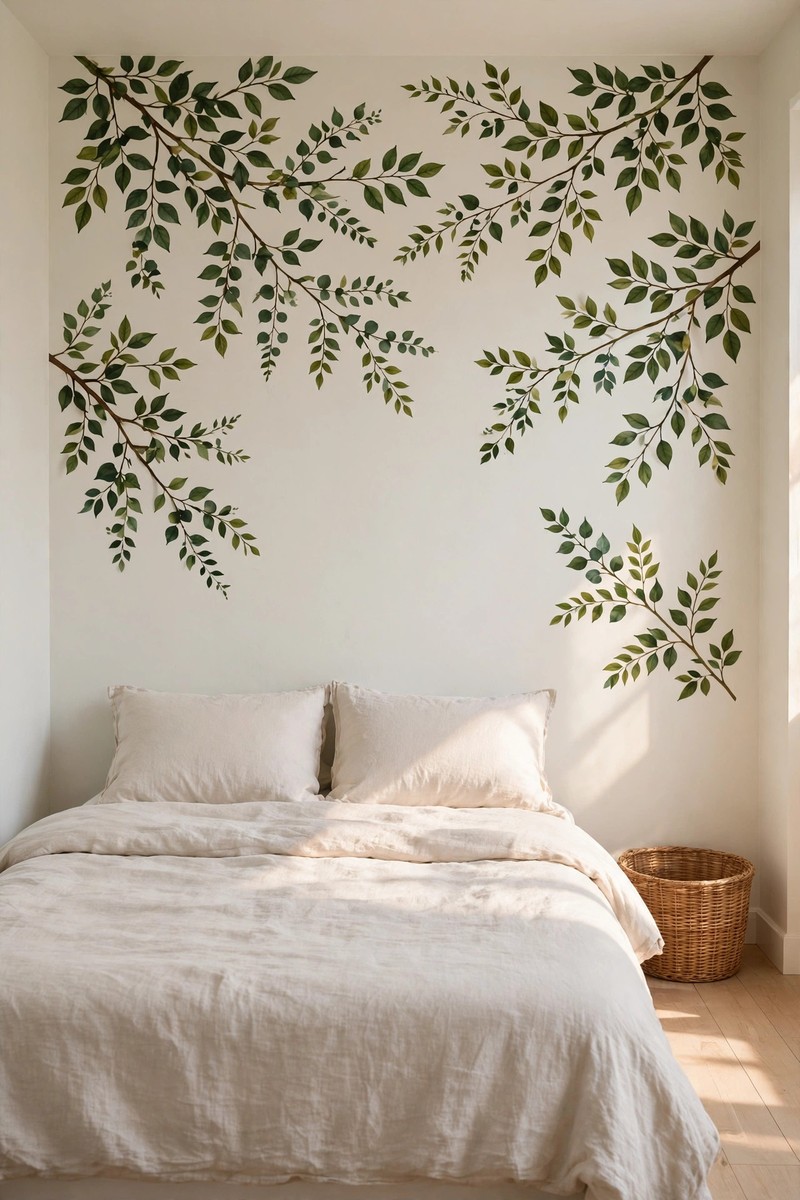
- Big decals cover a blank wall in minutes with no tools at all.
- Peel-and-stick vinyl lifts off clean, so landlords never need to know.
- Place large decals with two people to avoid bubbles and crooked edges.
- Skip decals on freshly painted walls; wait at least two weeks.
Wall decals are the closest thing to paint that a renter can use. Large leaf or arch decals cover a blank wall in under an hour, need no tools, and peel off clean when the lease ends. Start at the top of the design and smooth downward with a credit card, pushing out air as you go, and work in pairs for anything wider than your arm span. A full set of large decals costs 20 to 50 dollars, and one set can fill the whole wall behind a bed. Pick a simple shape if you are new to this.
Fresh paint is the one surface decals can damage, so check the timing. If the walls were painted less than two weeks ago, the paint has not cured and a decal can pull it off at move-out. Test a small decal in a hidden corner first and peel it after a day to see how the paint holds. Store spare decals flat, never rolled, so the edges stay clean. At move-out, warm each decal with a hair dryer for 30 seconds and peel slowly from one corner, and the wall looks untouched.
Tension Rod Curtains

- A tension rod wedges inside the window frame, so no brackets or screws.
- Hang curtains floor-length to make low ceilings look taller.
- Sheer panels let light in while softening the view from outside.
- Check the rod tension monthly, since it loosens over time.
Curtains change a room more than almost any other single item. They soften a bare window, hide an ugly frame, and make a low ceiling look taller when they hang from the top of the frame to the floor. A tension rod wedges inside the window frame with spring pressure, so there are no brackets, no screws, and no holes to fill later. Measure the inside width of the frame first, then buy a rod that fits it snug. Rods cost 10 to 20 dollars, and a pair of sheer panels adds 20 to 40 dollars.
The rod only works if the frame is solid, so test it before you hang curtains. Twist the rod tight until it grips both sides, then tug it down hard with both hands. If it slips, the frame sides are too smooth or too far apart, and a wider rod or a different window is the answer. Keep the load light: sheer or linen panels, not heavy blackout drapes, which can drag a tension rod down overnight. When you move, twist the rod loose and pack it flat, and the frame looks untouched.
Static Window Film
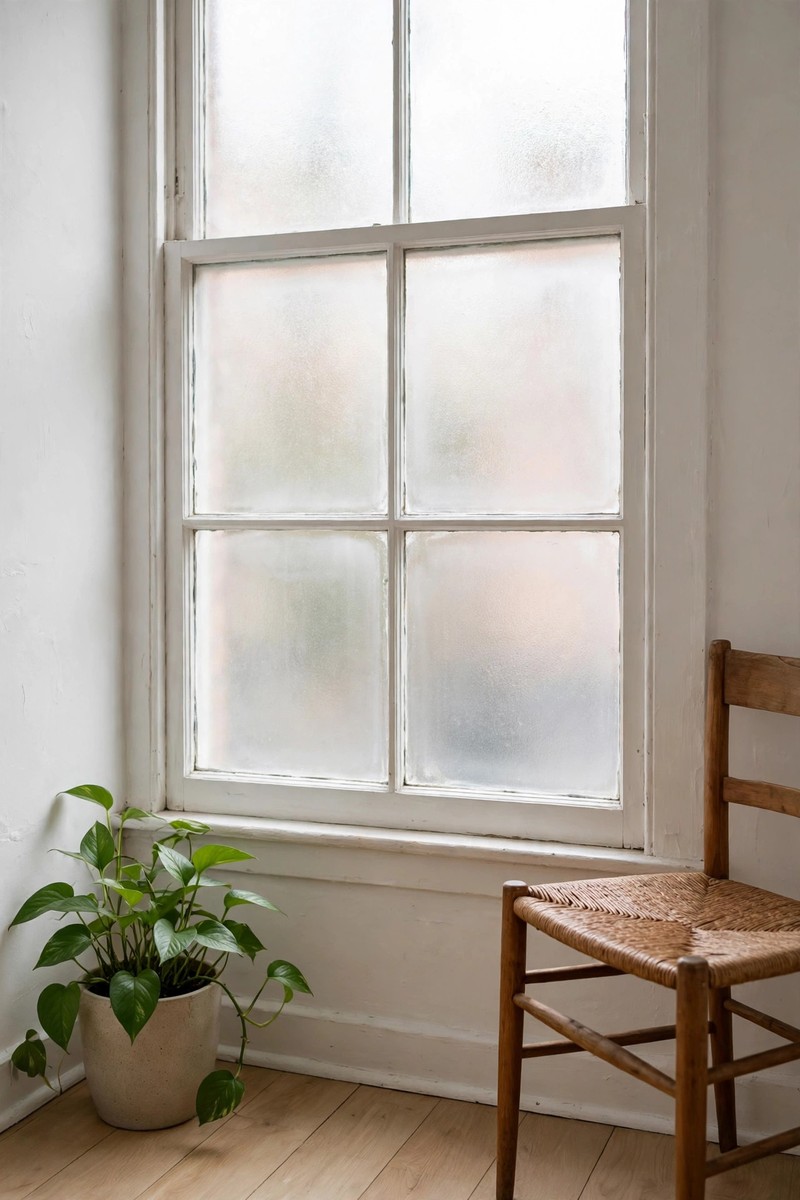
- Frosted film gives privacy without blocking daylight or needing curtains.
- Static cling film sticks with water, no adhesive and no residue.
- Cut it to fit the glass exactly, then smooth out bubbles with a card.
- Peels off in one sheet at move-out and the glass looks untouched.
A window that faces another building leaves you choosing between light and privacy. Static window film ends that trade: frosted film lets daylight pour in while the view from outside turns into a soft blur. It sticks with nothing but water and static, so there is no adhesive, no residue, and nothing to scrape off later. Cut the film to the size of the glass, spray the window with soapy water, and smooth the film on with a credit card. A roll costs 15 to 30 dollars and covers two or three windows.
Bubbles are the only real annoyance, and they are easy to beat. Spray the glass generously before you lay the film down, because the soapy water lets you slide the film into place and push air out from the center to the edges. Trim the film a hair smaller than the glass, so the edges never catch on the frame. In summer heat, check the corners monthly, since direct sun can loosen the cling. At move-out, peel the film off in one sheet and wipe the glass with soapy water.
Plug-In Wall Sconces

- Plug-in sconces give warm wall light with no wiring and no electrician.
- Mount them with adhesive strips or a single hook rated for the weight.
- Hide the cord in a paintable cord cover for a finished look.
- Pick warm bulbs, 2700K, for a cozy glow at night.
Overhead lights make every rental feel like an office. Plug-in wall sconces fix that in twenty minutes: two brass sconces beside the bed throw warm light at eye level, and the whole room feels softer and more expensive. They plug into a normal outlet, so there is no wiring, no electrician, and nothing the landlord needs to approve. Mount each sconce with adhesive strips or a small hook, and hide the cord in a paintable cover. A pair costs 40 to 80 dollars. Pick warm bulbs at 2700K, because cool white bulbs undo the whole cozy effect in one flick.
Cord covers are what separate a finished look from a messy one. A slim white cover runs from the sconce to the outlet and blends into the wall, and you can paint it to match in ten minutes. Keep the cord cover short and straight, because a long diagonal run draws the eye more than the sconce does. Never run a cord under a rug or behind a bed leg, where it can get pinched. At move-out, pull the adhesive strips down slowly and patch nothing. If the sconce feels loose, add a second strip before you trust it overnight.
Arc Floor Lamp

- An arc lamp throws light over the sofa like a ceiling light, with no wiring.
- A heavy marble base keeps the tall curve steady on any floor.
- Pick a lamp 72 to 84 inches tall so the arc clears the sofa.
- A dimmer switch lets you set the mood from bright to soft.
A ceiling light you cannot change is a renter’s curse, and an arc lamp is the workaround. The tall curved arm reaches over the sofa and drops warm light right where you read, so the room gets the glow of a pendant with no wiring and no landlord approval. A heavy marble base keeps the whole thing steady, and most arcs stand 72 to 84 inches tall, which clears a standard sofa with room to spare. Arc lamps cost 60 to 150 dollars, and a dimmer makes all the difference.
Placement matters more than price with an arc lamp. Put the base behind the sofa or in the corner beside it, and let the arm reach over the seat, not over the walkway where heads pass under it. Keep the cord flat against the wall or under a rug edge, so nobody trips on it in the dark. Dust the shade monthly, because a dusty bulb throws half the light. When you move, the lamp folds down and packs into a tall box with no marks left behind at all.
Layered Area Rugs
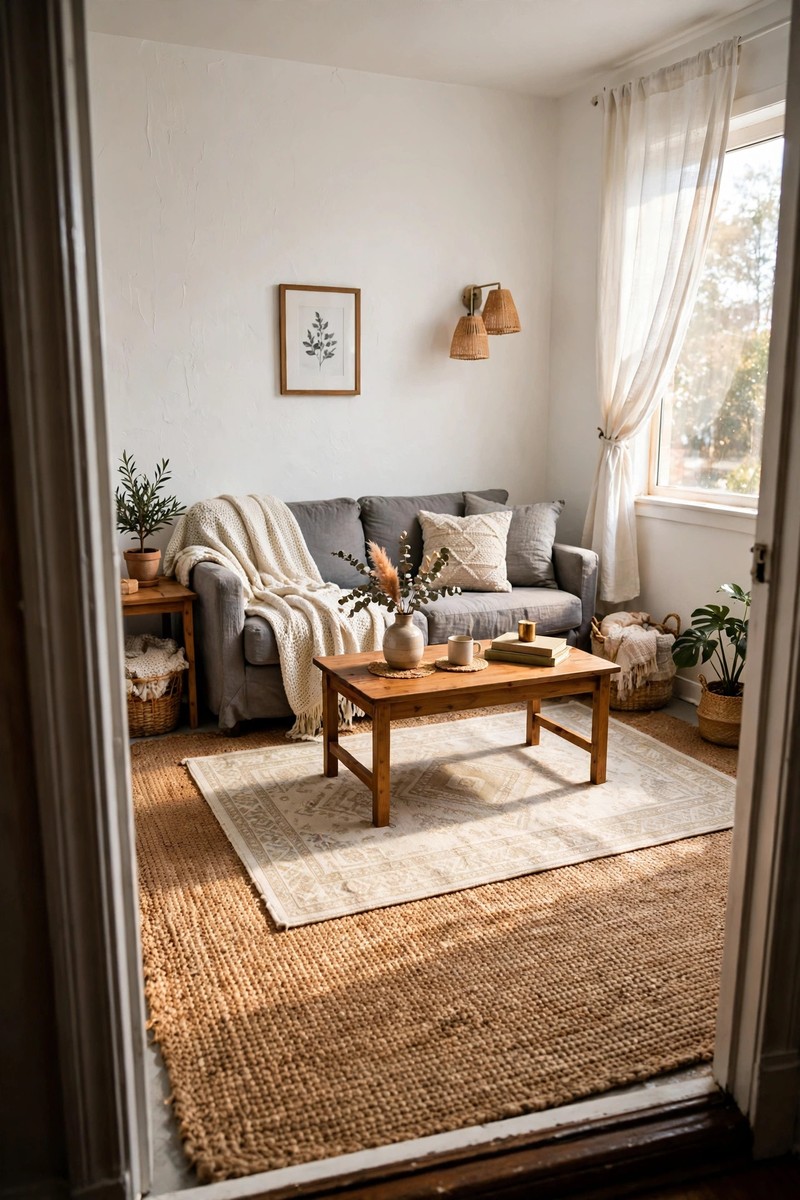
- Layering a small patterned rug over a large jute rug hides ugly floors.
- A rug pad underneath stops both layers from sliding and adds softness.
- Keep the top rug at least 12 inches smaller on every side.
- Rugs roll up at move-out and go straight to the next apartment.
Ugly rental floors are a problem you cannot fix, so cover them instead. Layering a small patterned rug over a large natural jute rug hides stained carpet or cheap vinyl and makes the room feel styled in ten minutes. The trick is size: the top rug should sit at least 12 inches inside the bottom rug on every side, so the layers read as a choice, not a mistake. A jute rug 8 by 10 feet costs 80 to 150 dollars, and a smaller patterned rug adds 40 to 90 dollars.
A rug pad underneath is the part people skip, and it is the part that matters most. Without a pad, the top rug slides every time you walk across it, and the bottom rug bunches at the corners. A felt pad 2 by 3 feet smaller than the bottom rug grips both layers and adds softness underfoot. Vacuum the top rug weekly and lift it monthly to shake out the dust trapped between layers. When you move, roll both rugs up and carry them out, and the floor looks untouched.
Bedding Color Refresh
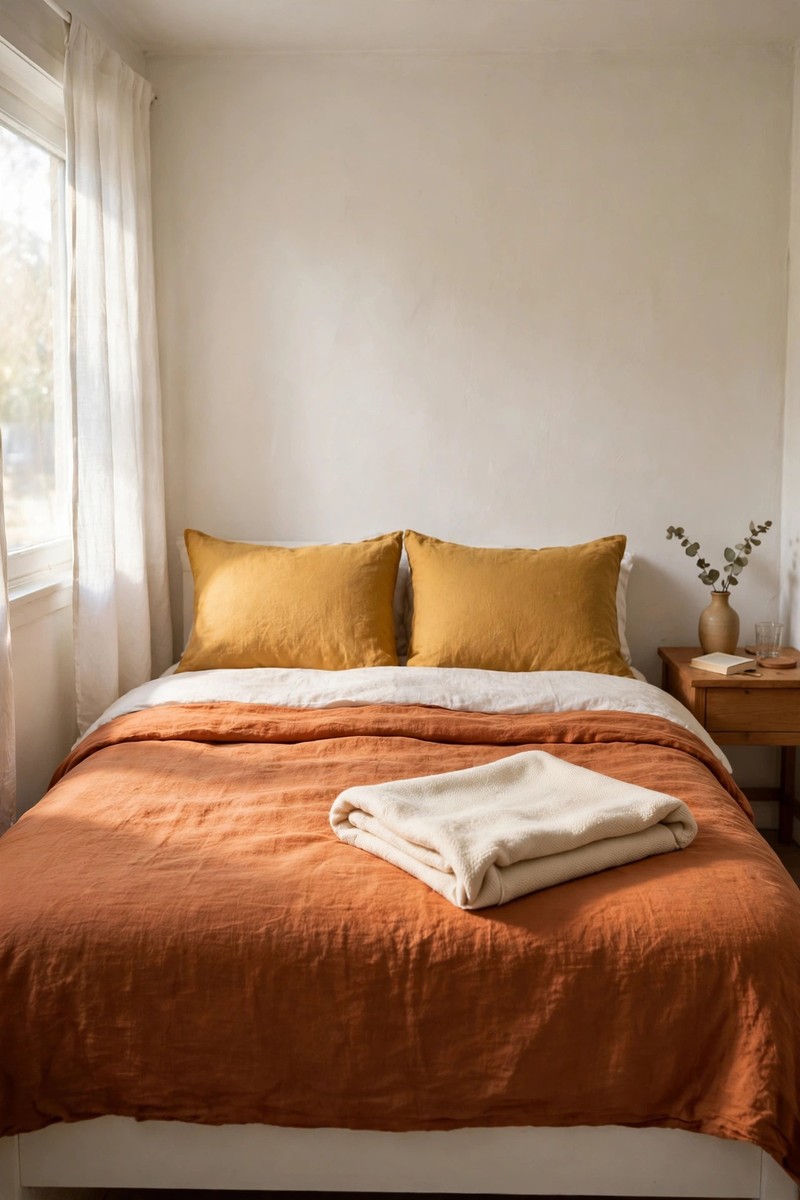
- New bedding is the fastest color change a bedroom can get.
- One bold duvet color plus two matching pillows is enough.
- Linen or cotton percale feels better than shiny polyester sets.
- Wash new bedding once before the first night to soften it.
The bed takes up half the bedroom, so changing the bedding changes the whole room. A rust or sage duvet cover, two matching pillows, and a folded throw at the foot turn a plain white bed into the room’s focal point in one move. Pick one bold color and keep the rest neutral, because three loud colors fight each other. A linen duvet set costs 60 to 120 dollars, and cotton percale runs 40 to 80 dollars. Wash it once before the first night, because new bedding softens fast in the wash.
Pillows are where people overspend, so keep the count low. Two sleeping pillows, two accent pillows, and one small lumbar pillow fill a queen bed without turning it into a pile you have to move every night. Rotate the accent pillows by season: warm rust and mustard for fall, cool sage and white for spring. Shake the duvet out weekly so the filling stays even, and wash the cover every two weeks. At move-out, the bedding packs into one bag and goes with you. Skip the shiny polyester sets, because they look cheap and sleep hot.
Slipcovered Dining Chairs
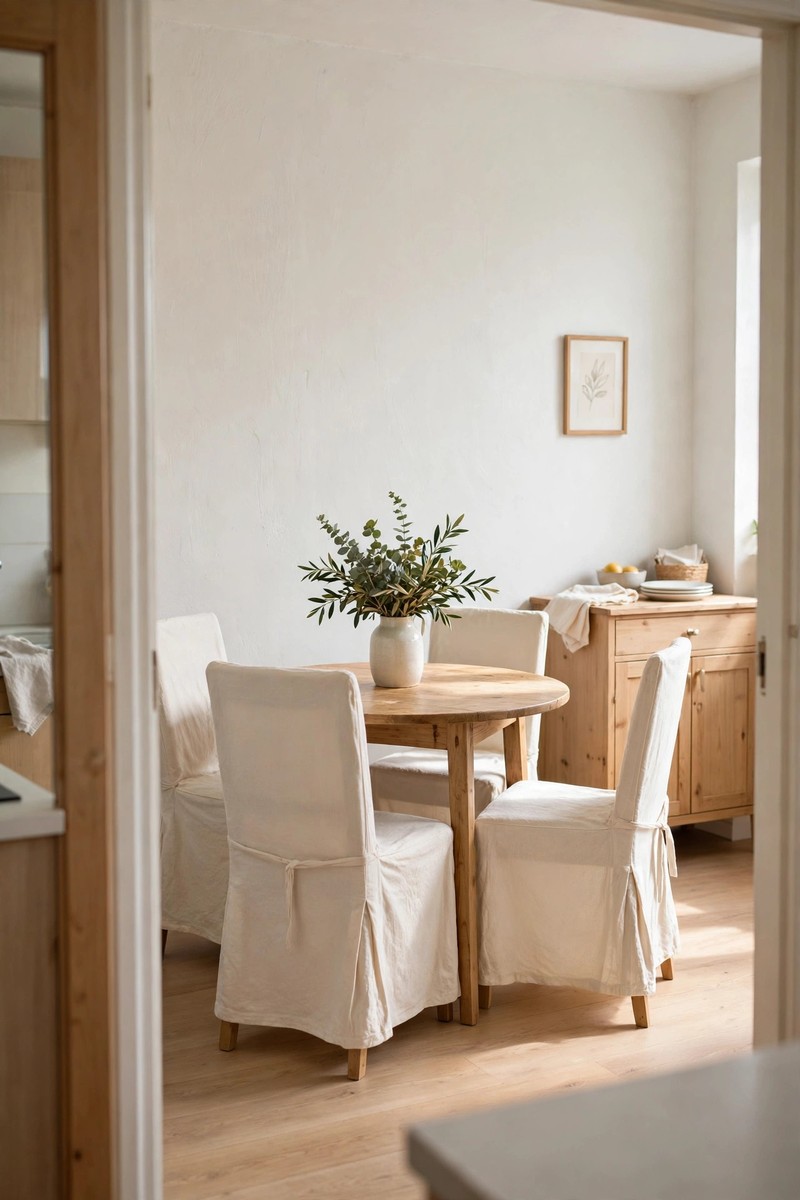
- Slipcovers hide stained or mismatched chairs in minutes.
- Stretch covers fit most dining chairs and wash in the machine.
- Pick a washable cream or gray fabric that matches the table.
- Tuck the cover tight so it looks tailored, not baggy.
Mismatched dining chairs are the first thing guests notice, and slipcovers hide them in minutes. Stretch covers pull over each chair like a fitted sheet, turning four different chairs into a matching set that looks planned. Measure the back height and seat width first, because covers come in sizes and a loose one looks baggy. Cream or light gray covers suit most tables, and they go straight in the washing machine. A set of four costs 30 to 60 dollars. Tuck the fabric tight at the seat corners so the cover sits smooth and looks tailored instead of thrown on.
Washable fabric is the whole point, because dining chairs take a beating. Spaghetti sauce, coffee, and sticky fingers land on chairs every week, and a cover you can wash beats a chair you have to scrub. Wash the covers in cold water and line dry them, because heat shrinks stretch fabric. Keep one spare cover for the chair that gets the most use. At move-out, the covers go in the laundry bag and the chairs look exactly as they did before. If a cover slips during dinner, a small strip of rug tape under the seat keeps it in place.
Freestanding Room Divider
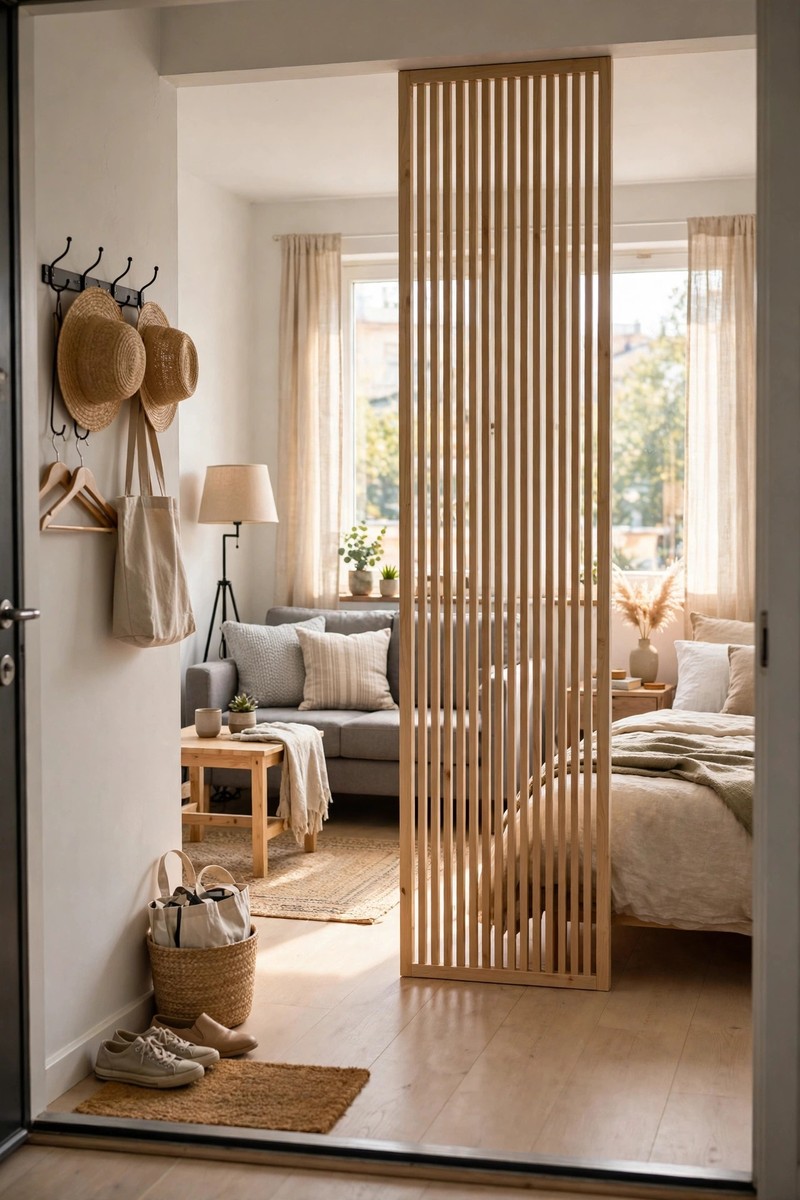
- A divider splits a studio into a bedroom and a living room, no walls needed.
- Folding screens cost less than bookcase dividers and move in seconds.
- Pick a divider 60 to 72 inches tall so it feels like a real wall.
- Leave a gap at the top so light and air still flow through.
A studio apartment with no walls feels like one big room, and a divider fixes that in minutes. A folding screen or a freestanding bookcase splits the space into a bedroom side and a living side, so the bed stops being the first thing guests see. Pick a divider 60 to 72 inches tall, because anything shorter reads as decoration, not a wall. Folding screens cost 50 to 120 dollars, and open bookcases run 80 to 200 dollars. Leave a gap at the top so light still flows through both sides.
Stability matters, because a tall divider in a small room gets bumped. A folding screen needs a slight zigzag shape to stand on its own, so never open it flat against a wall. A bookcase divider needs its heaviest books on the bottom shelf, where the weight sits low. Keep the walkway around the divider at least 30 inches wide, so you never squeeze past it. When you move, fold the screen flat or empty the bookcase, and the room looks untouched. Anchor nothing to the wall, because a freestanding divider is the whole point.
Styled Bar Cart
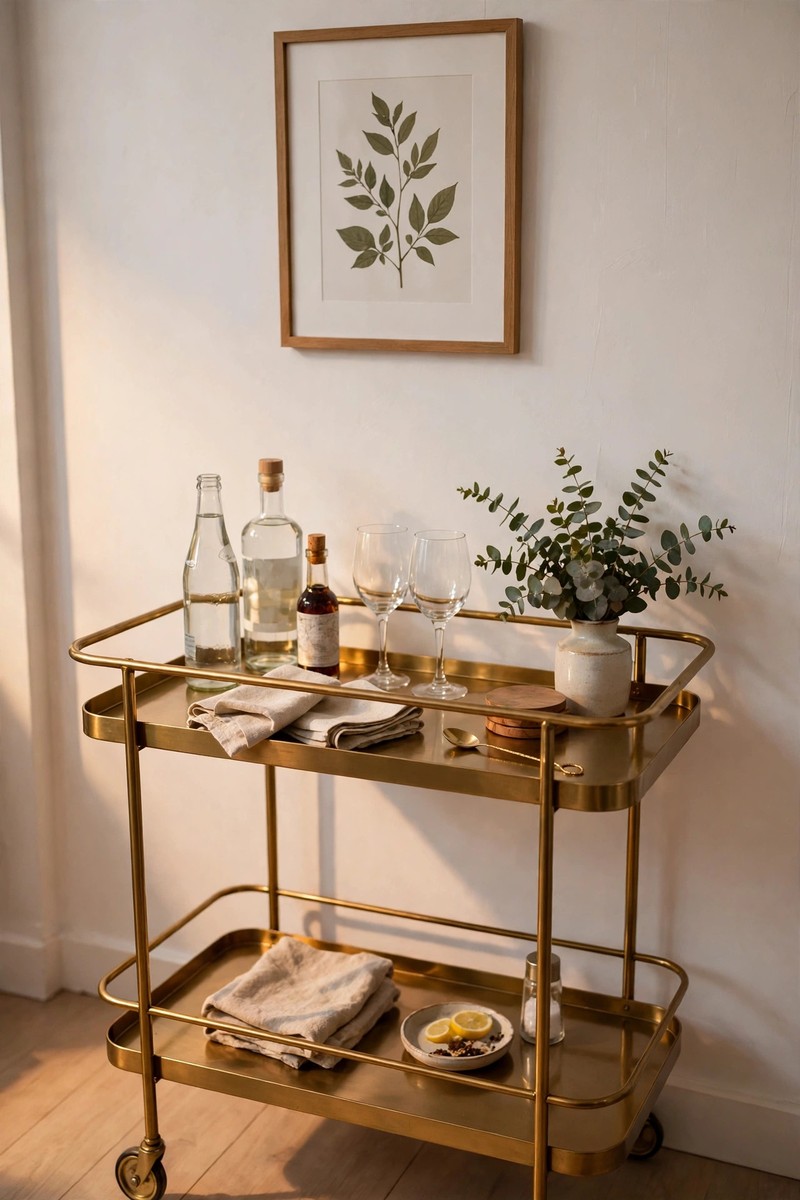
- A bar cart turns an empty corner into a styled display that looks planned.
- Two shelves are enough: bottles below, glasses and a vase above.
- Lock the wheels so the cart never rolls when you reach for a glass.
- Use it as a coffee station instead if you do not drink.
An empty corner is a wasted corner, and a bar cart fills it with style. A brass cart with two shelves holds bottles below and glasses above, and suddenly the dead space beside the sofa looks like a design choice. Keep it simple: three or four bottles, two glasses, and one small vase of greenery is enough. Lock the wheels before you load it, so the cart never rolls when you reach for a glass. Bar carts cost 50 to 120 dollars, and thrift stores often sell them for less.
The cart does not have to hold alcohol to earn its spot. Turn it into a coffee station with a small pour-over set, two mugs, and a jar of beans, or a tea station with a kettle and a row of tins. Wipe the glass shelves weekly, because dust shows fast on glass. Keep the heaviest bottles on the bottom shelf, where the weight sits low and the cart stays steady. When you move, empty the shelves, fold the cart flat, and roll it out. A folded coaster under the short wheel levels a wobbling cart fast.
Removable Floor Tiles

- Peel-and-stick floor tiles cover ugly vinyl or stained floors in an afternoon.
- They stick to smooth, clean floors and peel off without residue.
- Lay them from the center outward so the pattern stays even.
- Seal the seams in a kitchen so water never gets underneath.
Ugly kitchen floors are the hardest rental problem to hide, and peel-and-stick tiles solve it in one afternoon. The tiles press onto a smooth, clean floor with no glue and no tools, and a checkerboard or stone pattern turns stained vinyl into a floor that looks planned. Lay them from the center of the room outward, so the pattern stays even and the cut tiles land at the edges. A box of tiles covers about 10 square feet and costs 20 to 35 dollars, so a small kitchen runs 80 to 150 dollars.
Water is the enemy of a peel-and-stick floor, so seal the seams in a kitchen. A thin line of clear silicone along the seams keeps spills and mop water from seeping under the tiles and loosening the adhesive. Sweep daily and mop with a damp cloth, never a soaking wet one. If a tile edge lifts, press it down with a warm iron through a cloth. At move-out, warm each tile with a hair dryer and peel it up slowly, and the floor underneath looks untouched. Test one tile in a hidden corner first.
Contact Paper Counters
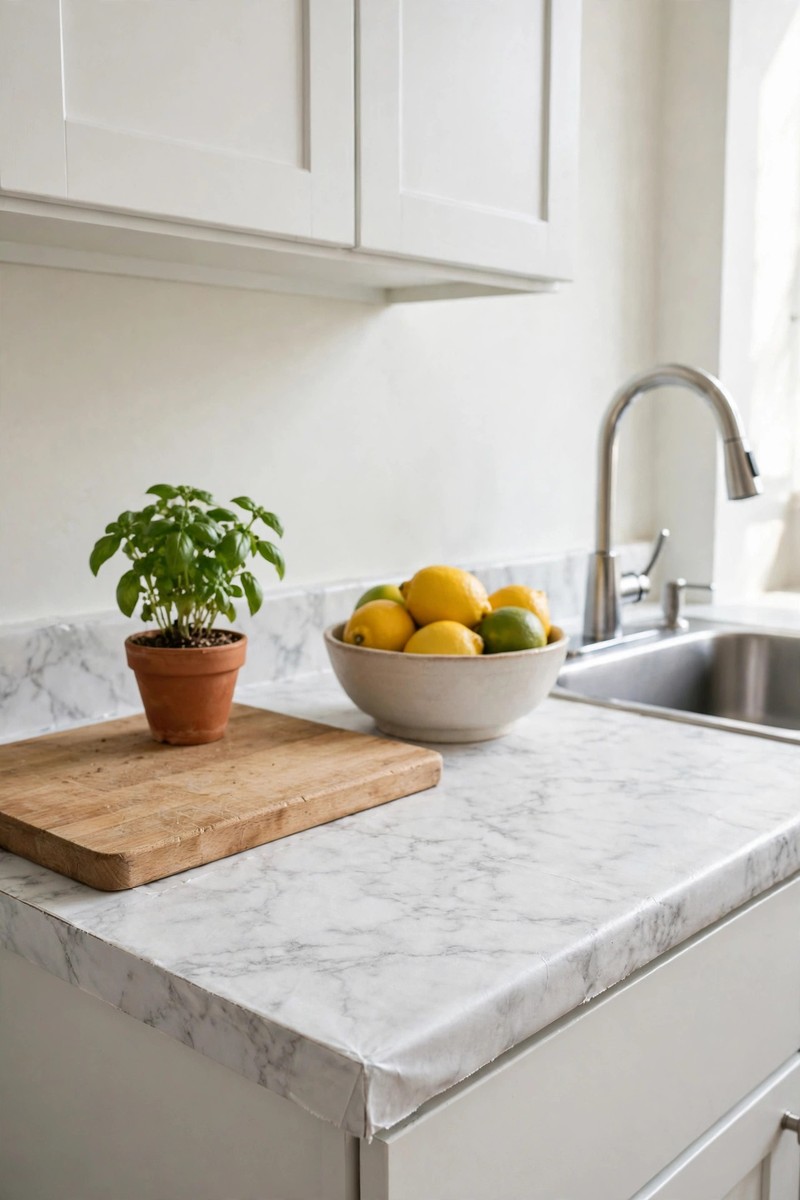
- Marble-pattern contact paper turns a stained counter into a fresh one.
- It sticks with light adhesive and peels off without residue.
- Apply it slowly with a card to push out bubbles as you go.
- Never cut directly on it, and keep hot pans off the surface.
A stained laminate counter makes the whole kitchen feel tired, and contact paper fixes it for the price of a pizza. Marble-pattern contact paper sticks to a clean, dry counter with light adhesive, and the result looks close enough to real stone that guests ask about it. Peel back a few inches at a time and smooth the paper down with a credit card, pushing bubbles out as you go. A roll 24 inches wide costs 12 to 25 dollars and covers a small counter in one afternoon with one seam or none.
Heat and knives are the two things that ruin contact paper fast. Never set a hot pan straight on the surface, and never cut directly on it, because a knife scores the paper and the mark never comes out. Use a cutting board for every job and a trivet for every hot pot. Wipe spills up fast, because water left on a seam can loosen the edge. At move-out, warm the paper with a hair dryer and peel it back slowly, and the counter looks untouched. Test a small piece behind the toaster first.
Poster Hanger Frames
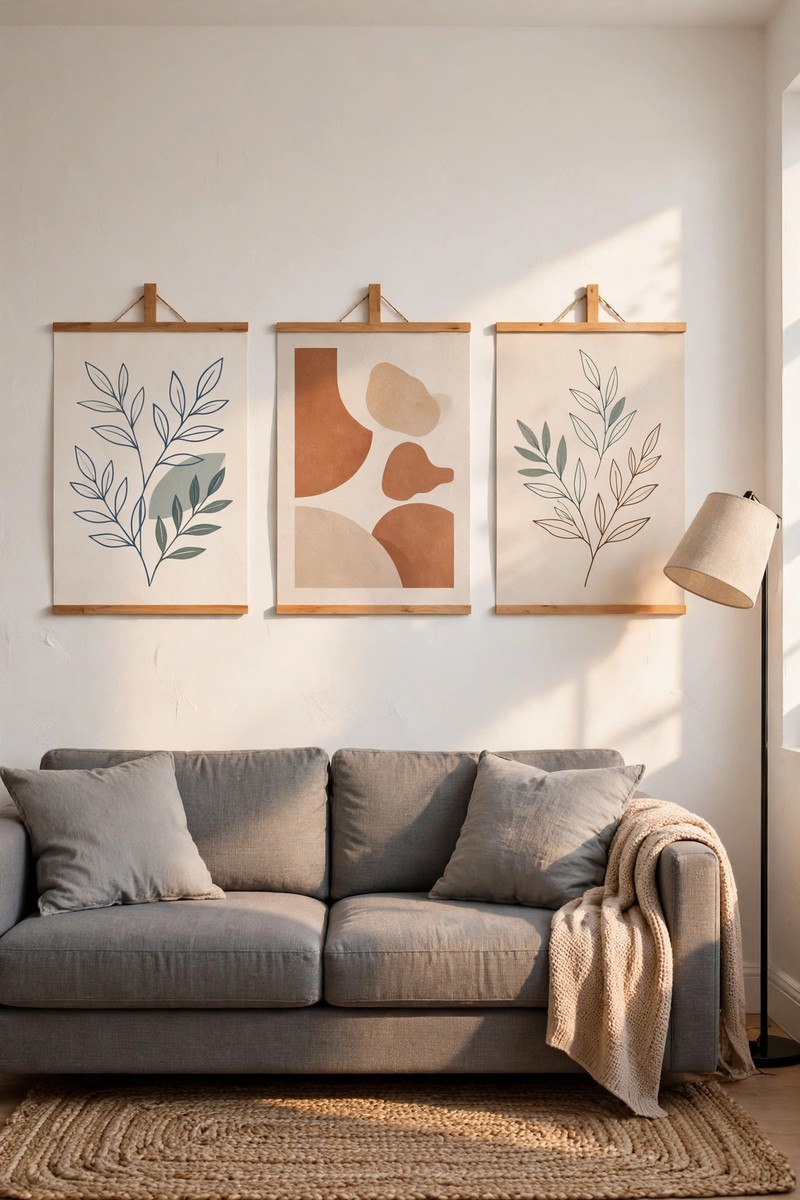
- Magnetic poster hangers frame a print in seconds, no glass and no frame.
- Hang them from one adhesive hook, so the wall stays hole-free.
- Swap prints in seconds when you want a new look.
- Pick hangers the same width as the print for a clean edge.
Framing art is expensive, and poster hangers skip the cost entirely. Two slim wooden rails grip the top and bottom of a print with magnets, and the whole thing hangs from a single adhesive hook. The look is simple and gallery-like, and it suits large prints that would cost 80 dollars to frame properly. A set of hangers costs 10 to 20 dollars, and the print itself can be a free download. Swap the print in seconds when the season changes. Pick hangers the same width as the print, because rails that stick out past the edges look unfinished.
Weight is barely an issue here, which is why hangers suit renters so well. A print and two wooden rails weigh under a pound, so even a small adhesive hook holds them with room to spare. Hang the hook first and wait an hour before you hang the print, so the adhesive sets fully. Keep prints out of direct sun, because the paper fades fast in a bright window. At move-out, pull the hook strip straight down slowly and the wall looks untouched. If a rail keeps sliding off, wipe the print edge clean, because dust breaks the magnet grip.
Dried Pampas Display
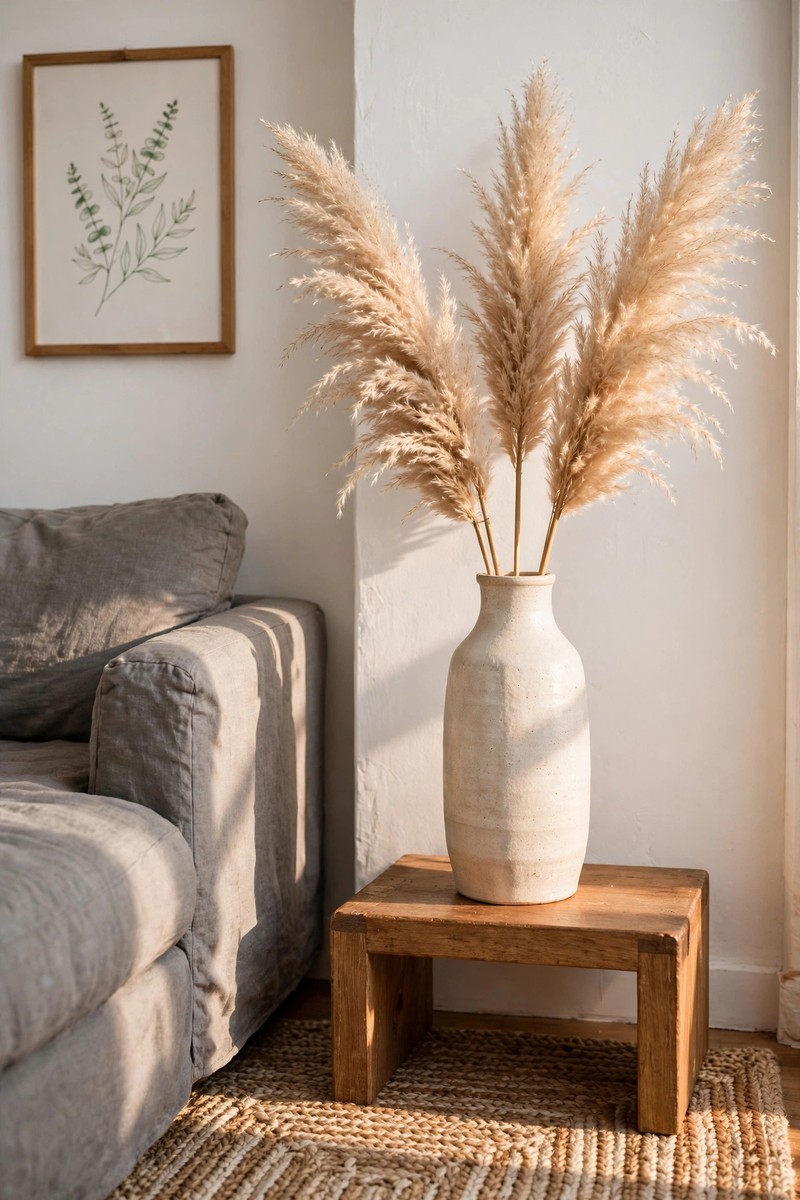
- Dried pampas fills a tall empty corner with no watering and no mess.
- A tall vase plus five or six plumes is enough for one corner.
- Spray the plumes with hairspray to stop shedding.
- Keep them away from open flames, because dried grass burns fast.
A tall empty corner is the hardest spot in a rental to fill, and dried pampas does it in one move. Five or six plumes in a tall ceramic vase add height, softness, and texture to a corner that would otherwise sit bare. The plumes never need water, never drop leaves, and last for years, which makes them cheaper than fresh flowers by a wide margin. A bundle of plumes costs 15 to 30 dollars, and a tall vase adds 20 to 40 dollars. Keep them away from open flames.
Shedding is the one annoyance with pampas, and hairspray fixes it. A light coat of hairspray over the plumes keeps the soft fibers in place, and a quick shake outside every few weeks catches whatever loosens. Place the vase where it will not get bumped, because a tall vase on a hard floor tips fast. Never put pampas near a candle or a fireplace, because dried grass catches fire in seconds. At move-out, the vase wraps in a towel and the plumes go in a tall bag for the next apartment.
Thrifted Accent Chair
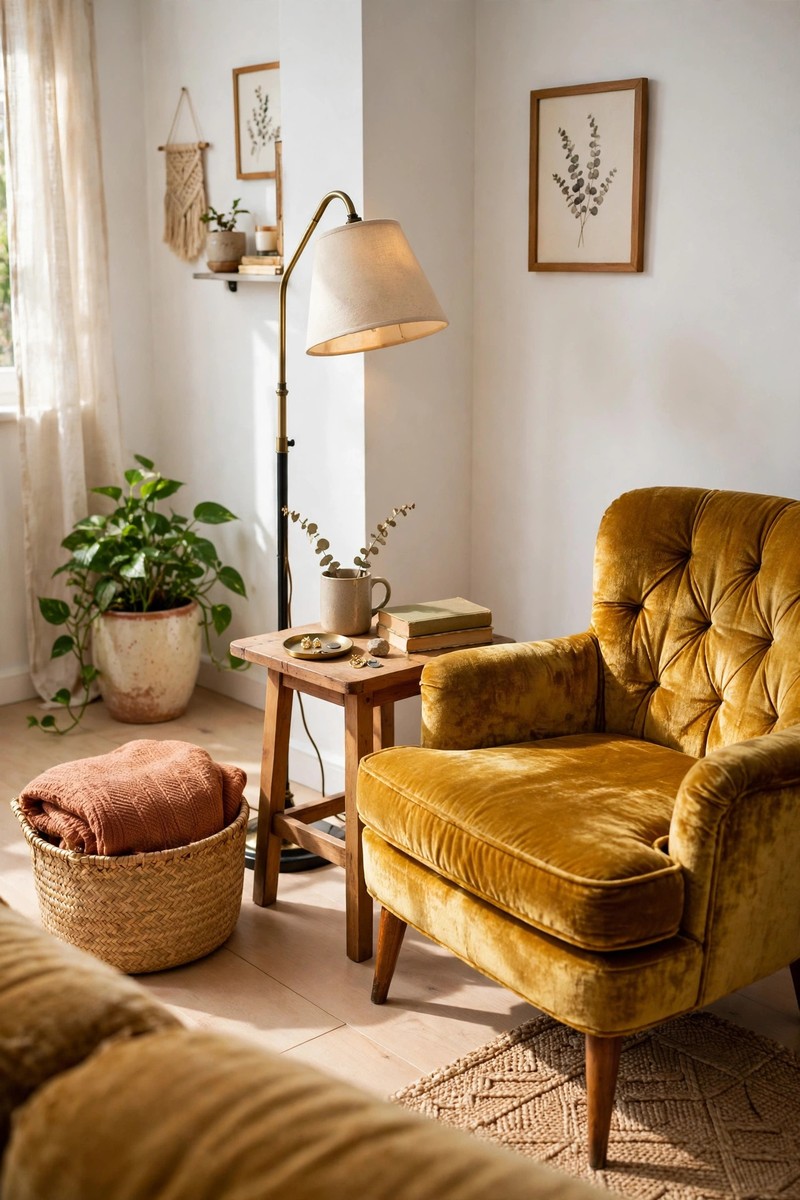
- One thrifted chair adds color and character for a fraction of retail.
- Check the frame for wobbles and the fabric for stains before you buy.
- A bold color works best when the rest of the room stays neutral.
- Steam-clean the fabric at home before the chair comes inside.
Every rental living room needs one piece with personality, and a thrifted accent chair is the cheapest way to get it. A mustard velvet chair or a mid-century armchair in the corner turns a room full of flat-pack furniture into a space that looks collected, not bought in one trip. Thrift stores sell good chairs for 30 to 80 dollars, and estate sales go lower. Check the frame for wobbles, sit in it for a full minute, and smell the fabric before you pay. A chair that smells musty will smell musty in your living room too.
Clean the chair before it crosses your threshold, because thrift-store fabric holds dust and old smells. A steam cleaner or a rented upholstery cleaner costs 25 to 40 dollars and makes a used chair feel new. Let the fabric dry fully before you sit on it, which takes about a day in a warm room. Place the chair at an angle in the corner, not flat against the wall, so the room feels layered. At move-out, the chair goes in the truck with everything else. Felt pads under the legs stop the chair scratching the floor.
Floor Cushion Corner
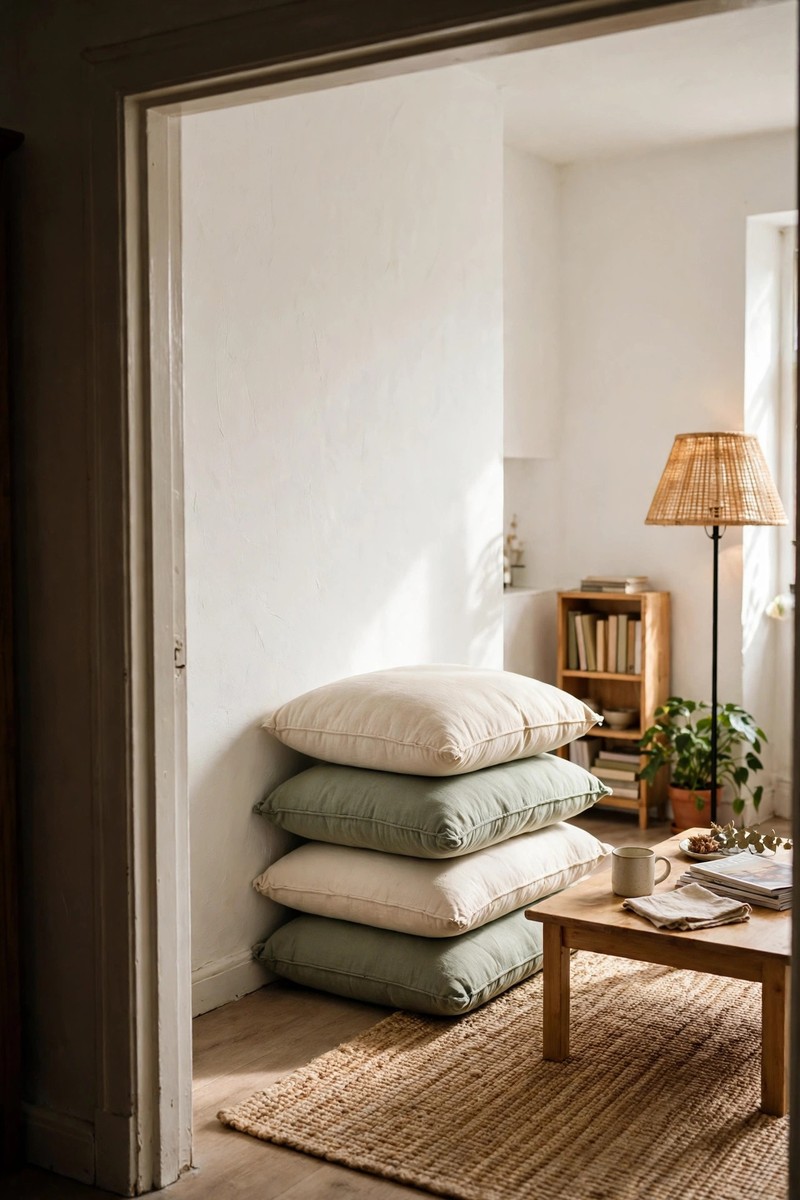
- Floor cushions turn an empty corner into a reading nook for almost nothing.
- Stack three or four large cushions against the wall when not in use.
- Pick covers that wash, because floor cushions collect dust fast.
- Add a low table and a lamp to finish the corner.
A corner with nothing in it is a corner asking for cushions. Three or four large floor cushions stacked against the wall turn dead space into a reading nook, a spot for friends to sit, and extra seating for movie night. Pick cushions at least 24 inches wide, because small ones slide around and feel like pillows on the floor. Covers in cream or sage suit most rooms, and washable covers matter here. A set of four cushions costs 50 to 100 dollars. Add a low table and a small lamp, and the corner feels finished instead of forgotten.
Dust is the enemy of floor cushions, so wash the covers often. Floor-level fabric collects dust, pet hair, and crumbs faster than any other seat in the room, and a cover you cannot wash turns gray in a month. Wash the covers every two weeks in cold water and let them air dry. Fluff the cushions weekly so the filling stays even, and store extras in a large basket when guests leave. At move-out, the cushions stack in a car trunk in one trip. A rug underneath the cushions keeps them off the bare floor and adds warmth.
Chalkboard Decal Board
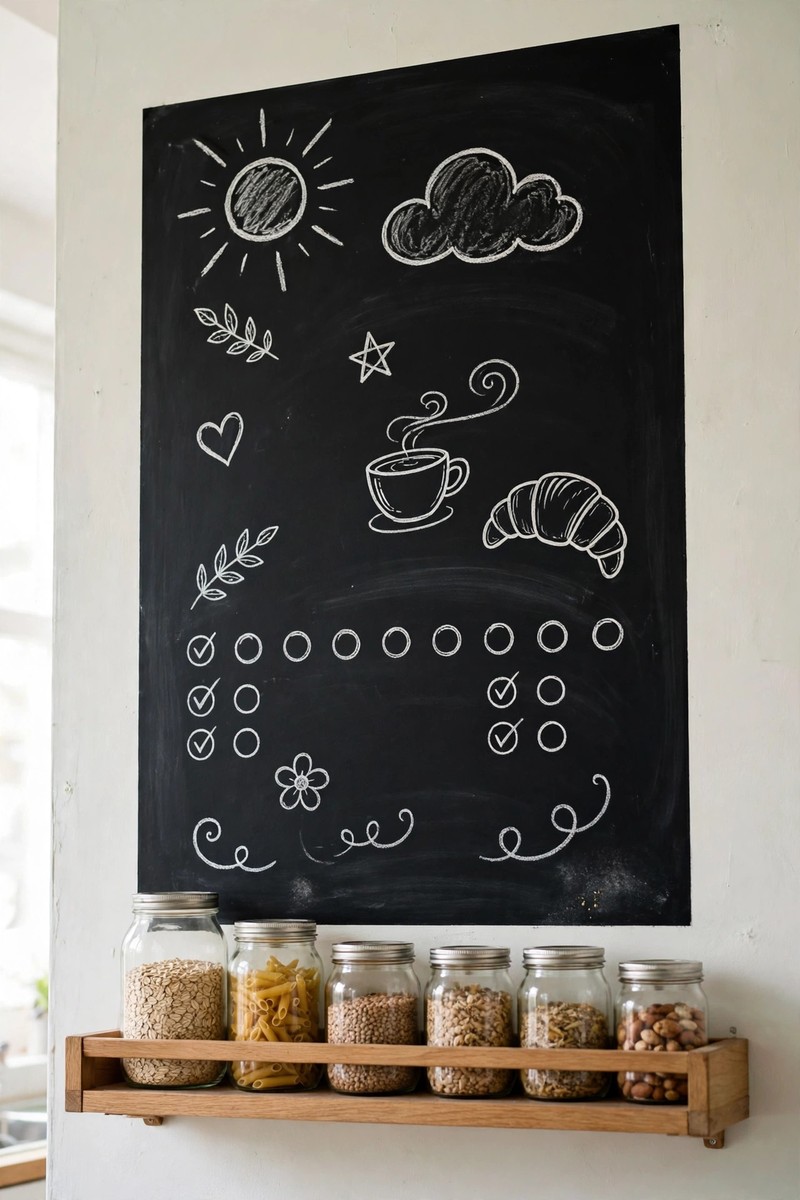
- A chalkboard decal turns a blank kitchen wall into a menu board and message center.
- Peel-and-stick vinyl applies in minutes and lifts off clean.
- Use chalk markers for sharp lines that wipe off with a damp cloth.
- Keep it away from the stove so steam never warps the vinyl.
A blank kitchen wall is a message board waiting to happen. A chalkboard decal sticks to the wall in minutes and gives you a place for the weekly menu, the shopping list, and the note that says the milk is gone. The vinyl peels off clean at move-out, so the landlord never sees a mark. Use chalk markers for sharp lines that wipe off with a damp cloth, because regular chalk dusts everything nearby. A large decal costs 15 to 30 dollars and covers a whole wall section in one sheet.
Steam is the one thing that loosens a chalkboard decal, so keep it away from the stove. Heat and moisture creep under the vinyl edge and make it curl, which looks messy and lets dust in. Place the board on the wall beside the fridge or the dining table instead, where it stays dry. Smooth the vinyl on with a credit card to push out bubbles, and wipe the surface with a damp cloth before the first use. At move-out, warm it with a hair dryer and peel slowly from one corner.
Tiered Plant Stand
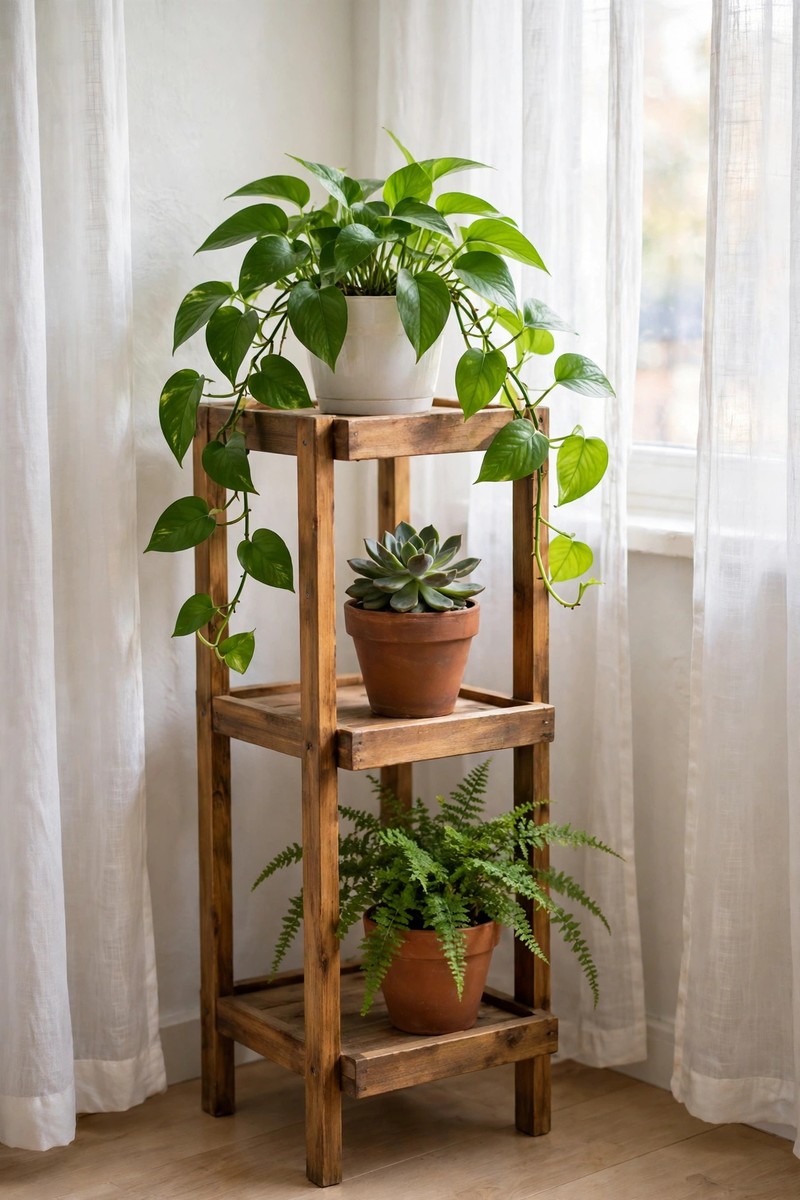
- A tiered stand turns five plants into a display instead of a cluttered sill.
- Place tall plants on the bottom tier and trailing ones up top.
- Put a tray under each pot so water never reaches the floor.
- Keep the stand near a window, but out of harsh midday sun.
Five plants scattered around a room look like clutter, and five plants on a tiered stand look like a display. A three-tier wooden stand stacks your plants by height, so each one gets light and the corner gets a focal point that costs almost nothing. Put tall plants on the bottom tier, medium ones in the middle, and trailing plants up top where they can spill over the edge. A three-tier stand costs 30 to 60 dollars, and the plants are the cheap part. Keep the stand near a window, because plants in a dark corner grow leggy and sad.
Water damage is the risk with any plant stand, so trays are not optional. A saucer under every pot catches drips before they reach the wood or the floor, and a wipe of the trays once a week stops them going green. Rotate each plant a quarter turn every week so it grows evenly toward the light. Check the stand for wobbles monthly, because water and wood do not mix well over time. At move-out, the stand folds flat and the plants ride in boxes. Never let pots sit in standing water, because roots rot fast.
Tension Rod Plants
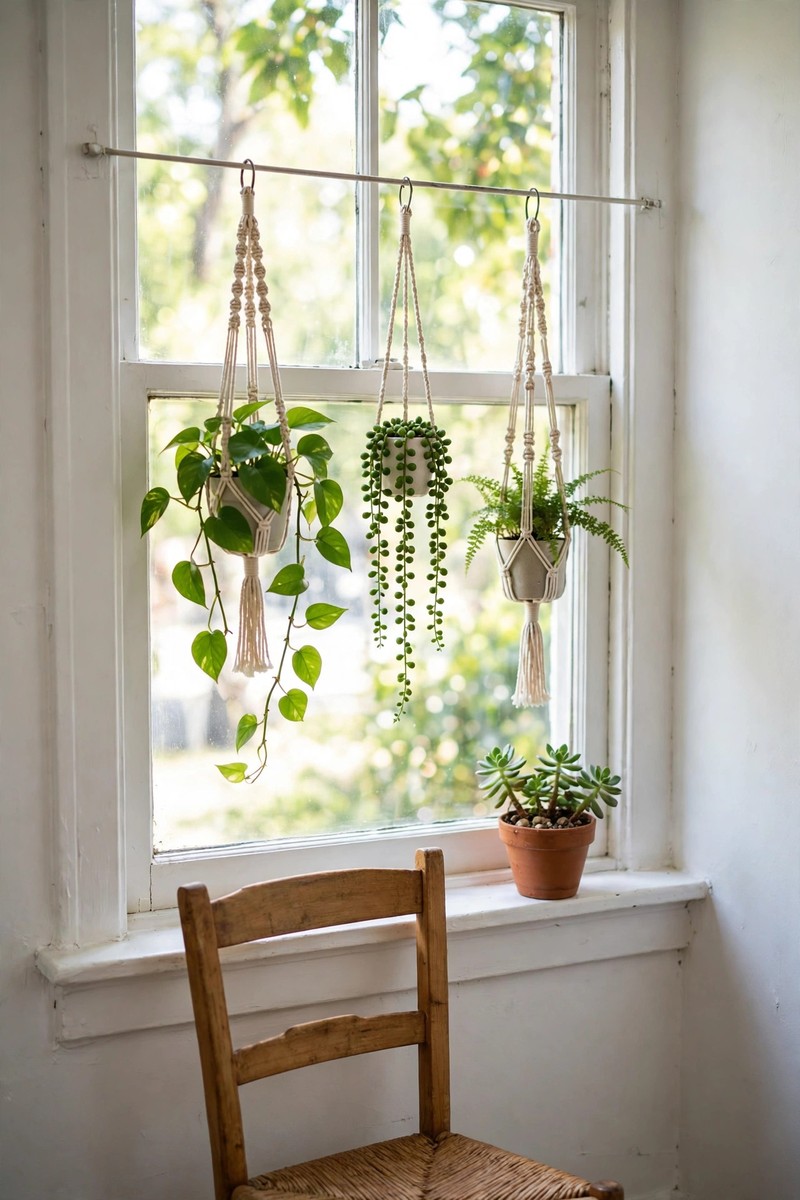
- A tension rod across the window holds hanging plants with no hooks.
- Hang plants at different heights so each one gets light.
- Keep the total weight under 5 pounds so the rod never slips.
- Water plants over the sink, then hang them back once they stop dripping.
Hanging plants need a hook in the ceiling, and renters cannot drill one. A tension rod across the window frame solves that in five minutes: the rod wedges between the frame sides, and three macrame holders hang from it at different heights. Each plant gets full window light, and the window turns into a green curtain that softens the whole room. A tension rod costs 10 to 20 dollars, and macrame holders run 8 to 15 dollars each. Keep the total weight under 5 pounds. Water the plants over the sink, then hang them back once they stop dripping.
The rod only holds if the frame grips it tight, so test it before you hang anything. Twist the rod until it bites both sides, then tug down hard with both hands and hang a heavy bag from it for an hour. If it slips empty, it will slip full, so try a different window or a wider rod. Check the tension monthly, because heat and humidity loosen the grip over time. At move-out, twist the rod loose, pack the holders, and the frame looks untouched. Never hang a plant heavier than 2 pounds from one hook.
Decorative Switch Plates
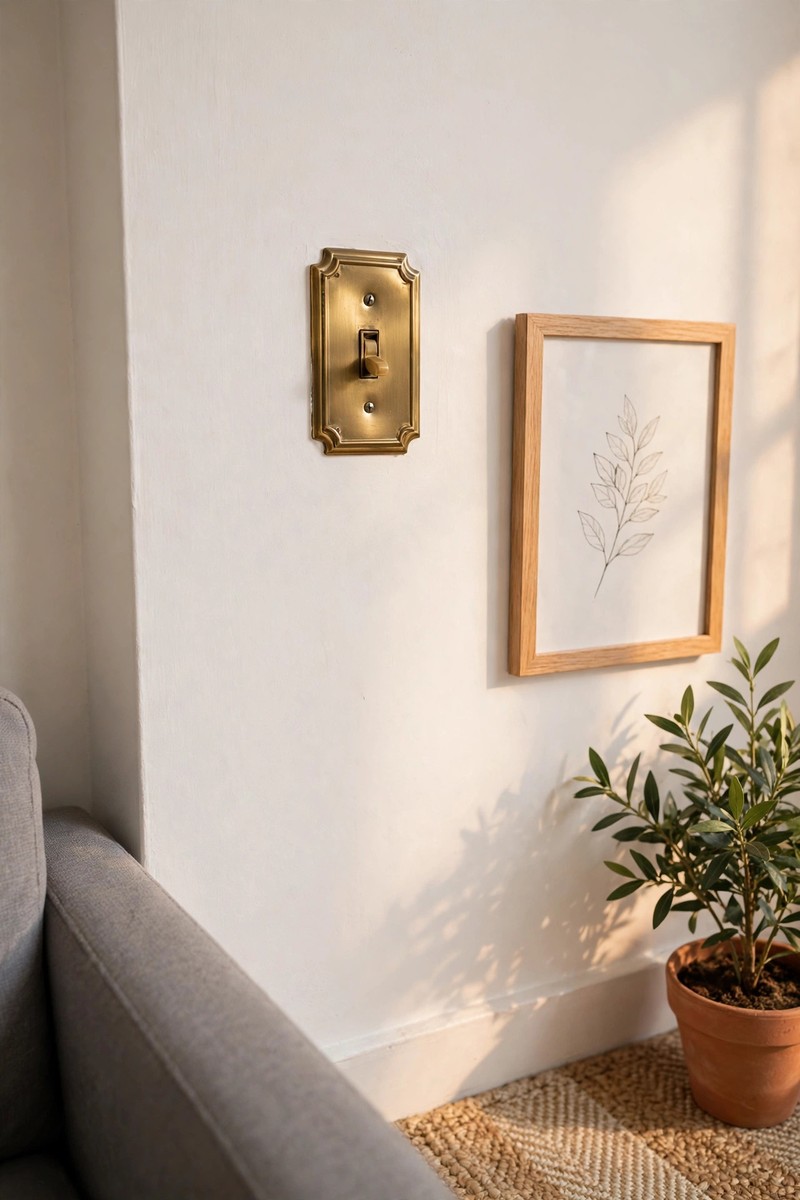
- A brass or patterned switch plate turns a boring detail into a design touch.
- Swap takes two minutes with a screwdriver and the original plate goes in a bag.
- Match the plate finish to your lamp or curtain rod for a pulled-together look.
- Keep every original plate and screw so move-out takes minutes.
Switch plates are the smallest detail in a room, and they are the first thing a design eye notices. A plain white plastic plate looks cheap next to a brass lamp, while a brass or patterned plate ties the whole wall together. Swapping one takes two minutes with a screwdriver: unscrew the old plate, screw on the new one, and drop the original in a labeled bag. Plates cost 5 to 15 dollars each, so a whole apartment runs 30 to 60 dollars. Match the plate finish to your lamp or curtain rod, because mixed metals look accidental.
The original plate is your deposit protection, so never throw it away. Bag each original plate with its screws and label the bag by room, so move-out takes ten minutes instead of a hardware store trip. Never touch the switch wiring itself, because the plate is the only part a renter should swap. If a plate screw feels stripped, stop and use a slightly larger screw from the new plate pack. At move-out, swap the originals back and the walls look untouched. Check the new plate sits flat, because a rocking plate looks worse than the plain one.
Swapped Cabinet Knobs
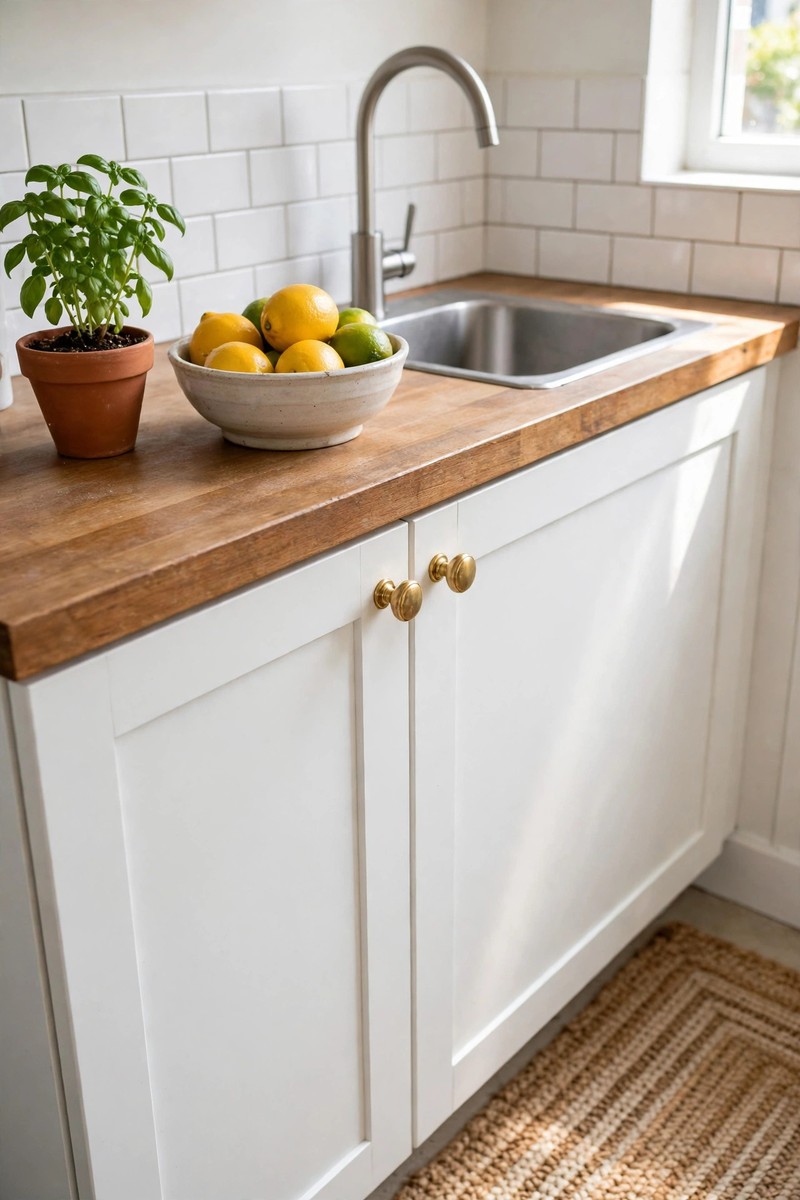
- New knobs make dated cabinets look updated for a few dollars each.
- Swap takes one screwdriver and about 20 minutes for a whole kitchen.
- Measure the screw spacing before you buy pulls, because sizes vary.
- Bag the original knobs and screws by cabinet for move-out.
Dated cabinet knobs age a kitchen by twenty years, and swapping them takes twenty minutes. Brass knobs on white cabinets look custom, black pulls on wood look modern, and the change costs a few dollars per knob. Unscrew the old knob, screw on the new one, and drop the original in a labeled bag with its screw. Knobs cost 3 to 10 dollars each, so a kitchen with 12 knobs runs 40 to 120 dollars. Measure the screw spacing first if you are buying pulls. Keep the finish consistent across the kitchen, because mixed knobs look like a repair job.
The original knobs are your move-out insurance, so treat them like it. Bag each original knob with its screw and label the bag by cabinet, because a missing screw on move-out day costs a hardware store trip. Never force a knob that does not fit, because a stripped screw hole in a cabinet door is real damage. If a new knob wobbles, add a small washer behind it before you tighten. At move-out, swap the originals back and the kitchen looks untouched. Check the screw length, because a screw that pokes through the door is a problem.
Statement Shower Curtain
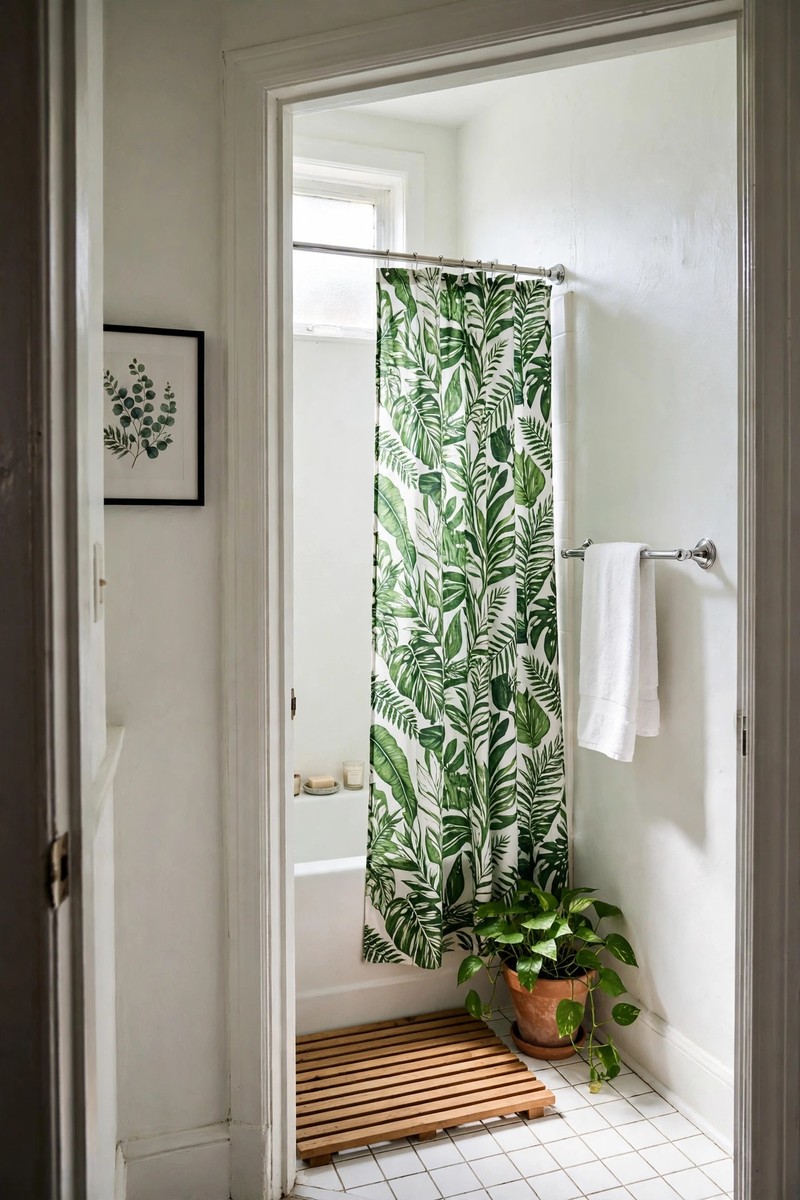
- A bold shower curtain is the cheapest focal point a bathroom can get.
- Hang it high and wide so the bathroom looks taller and wider.
- A fabric curtain with a liner lasts longer than a plastic one.
- Wash the curtain monthly so mildew never gets a hold.
The shower curtain is the biggest surface in a small bathroom, so it sets the whole mood. A bold botanical print or a deep solid color turns a plain white bathroom into a room with a point of view, and it costs less than dinner out. Hang the curtain high and wide, with the rod near the ceiling and the curtain falling past the tub edge, so the bathroom looks taller. Fabric curtains with a separate liner cost 25 to 50 dollars and last for years. Pick a print with a color that matches your towels.
Mildew is the enemy of every shower curtain, and a liner is the defense. The liner takes the water and the soap, and the fabric curtain stays dry enough to last for years. Wash the liner monthly in cold water and hang it to dry, and wipe the bottom edge weekly so soap scum never builds up. Keep the curtain pulled open after a shower so air flows through. At move-out, the curtain and liner pack into one bag and go with you. Soak a musty bottom edge in warm water and white vinegar for an hour.
Windowsill Plant Row
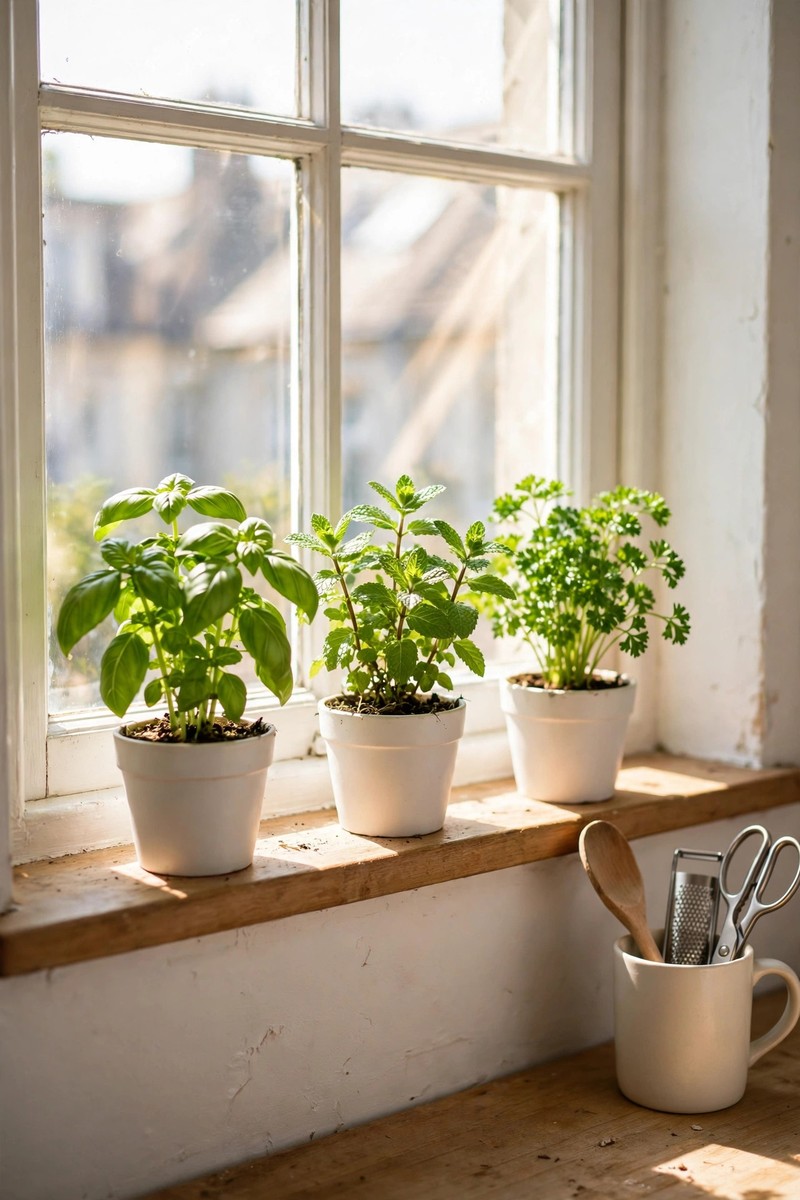
- A row of small herbs turns a bare sill into a green display you can cook with.
- Matching pots in a row look planned, even if the plants differ.
- Put a tray under the pots so water never marks the sill.
- Basil and mint grow fast and forgive a missed watering.
A bare windowsill is a shelf nobody uses, and a row of herbs fixes that in one move. Six small pots in a neat row, basil, mint, parsley, and chives, turn a plain kitchen window into a green display you can cook with. Matching white pots make the row look planned even when the plants differ in size. Small herb pots cost 3 to 8 dollars each, and a long tray underneath costs about 10 dollars. Water them when the soil feels dry an inch down. Rotate the pots weekly so each plant grows straight.
Water damage is the only risk on a windowsill, so the tray is not optional. A long tray under the pots catches every drip before it reaches the sill, and a wipe of the tray once a week stops it going green. Never let pots sit in standing water, because herb roots rot fast in a wet tray. Snip herbs from the top, which keeps the plant bushy instead of leggy. At move-out, the pots pack into a box and the sill looks untouched. Keep pots an inch from the glass in winter, because cold glass chills the leaves.
Frequently Asked Questions
How do I hang art on rental walls without drilling?
Use adhesive strips for framed art, lean large frames and mirrors against the wall, and hang prints from magnetic poster hangers on a single hook. Tension rods hold curtains and hanging plants with no brackets. Every one of these comes off clean at move-out, and none of them needs a screw.
Will adhesive strips damage my paint when I move out?
No, if you use the right strips and remove them properly. Buy strips rated for the frame weight, press them onto clean, dry, smooth paint, and wait an hour before hanging anything. At move-out, pull the strip straight down slowly and the paint stays perfect. Never stick adhesive on fresh paint that is less than two weeks old.
What is the cheapest way to make a rental look decorated?
Start with the biggest surface in each room: a bold shower curtain in the bathroom, new bedding in the bedroom, and a thrifted accent chair or a leaning mirror in the living room. Wall decals and a fresh set of switch plates cost under 20 dollars each and change a wall in minutes.
Where should I start if my whole apartment feels bare?
Start with the wall you see first when you walk in, because it sets the tone for the whole apartment. Hang a gallery wall or lean a floor mirror there, then fix the lighting with a plug-in sconce or an arc lamp. Layer a rug over the floor last. One room at a time beats a half-finished whole apartment.
Conclusion
Your rental does not have to look like a blank box. These no-drill decor ideas for renters prove that a leaning mirror, a gallery wall, and the right lamp can turn white walls and bare floors into a home that feels like you. Every idea here costs little, needs no drill, and leaves nothing behind when you move out. Save this guide on Pinterest for later, try the one idea that fixes your worst wall this week, and share it with a friend whose apartment still looks like a waiting room. Your lease is temporary. The way your home feels does not have to be.
You Might Also Like
- 30+ Small Apartment Kitchen Ideas for Renters (No Drilling Needed)
- 25+ Dollar Store Home Decor Ideas for Renters (Mostly Under $5)
- 25+ Small Bathroom Storage Ideas for Renters (No Holes, No Damage)
- Start Here
- More Renter Tips Ideas
New guides land every week.

2 Comments