30+ Retro Apartment Aesthetic Ideas for Renters (No Paint, No Drilling)
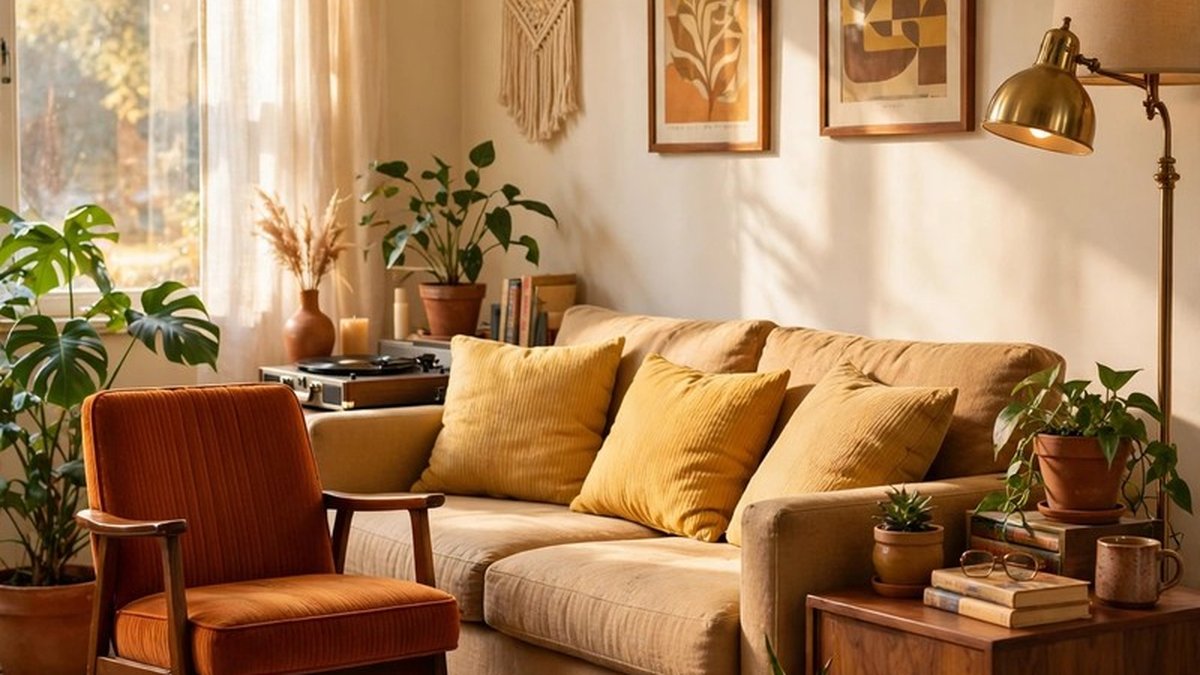
You get a retro apartment aesthetic in a rental by layering warm color, vintage shapes, and bold pattern over what you already have, with no paint and no drilling. Start with one anchor piece, a curved armchair, a walnut sideboard, or a sunburst mirror, then build around it with mustard cushions, a shag rug, and thrifted ceramics. Every idea in this guide works apartment-wide, from the living room to the kitchen, and each one is renter-safe with no holes and no paint. Pick one room, choose three pieces that share a warm palette of mustard, rust, and olive, and the whole place starts to feel like a 70s home. Try one idea this weekend and watch your apartment change.
Warm Palette Trio
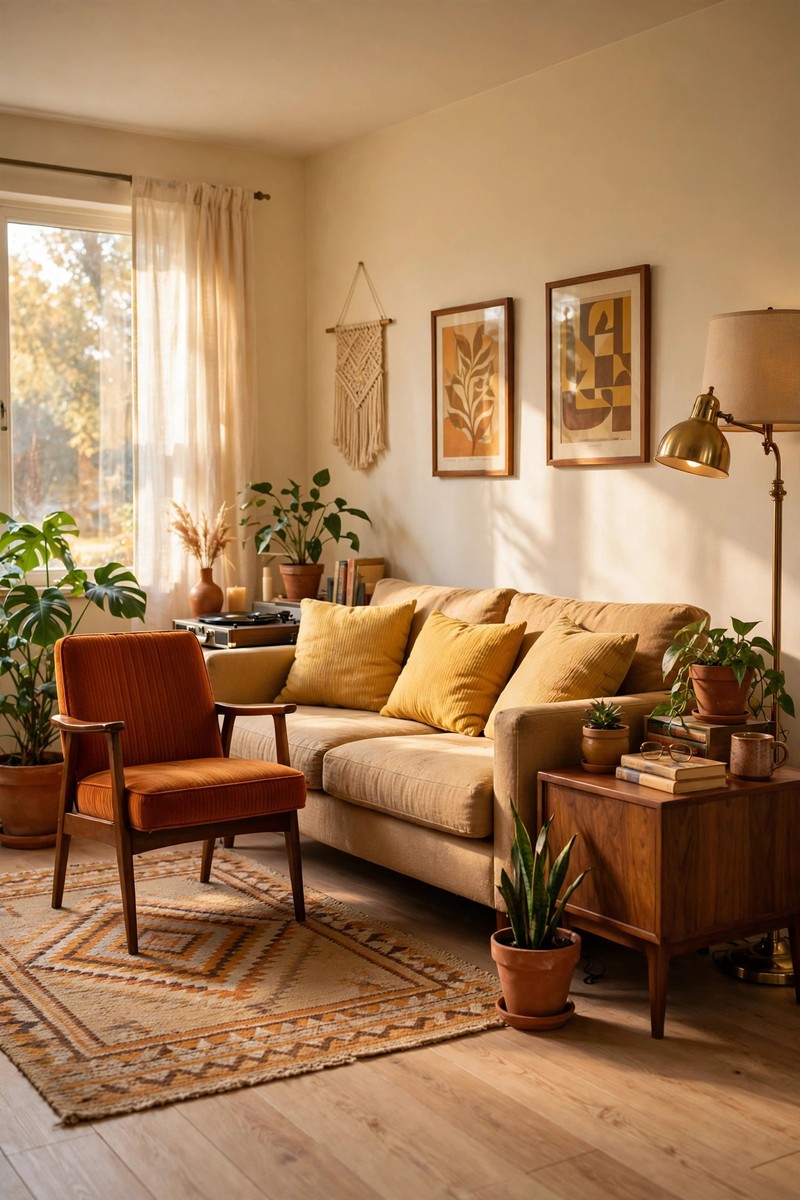
- Pick three warm tones, like cream, rust, and mustard, and repeat them in every room.
- Keep walls light and put the bold colors on cushions, throws, and art.
- Add one wood tone, like walnut or teak, to ground the palette.
- Test color swatches on a poster board before buying anything.
Three warm colors can turn a plain rental into a retro hideaway, and you only need one trip to the thrift store to start. Pick a base like cream or soft beige, then add a deep rust and a golden mustard, and repeat those three tones in cushions, throws, and art so every room feels connected. A cream sofa cover costs about 40 dollars, rust cushions run 12 dollars each, and a mustard throw adds the last pop for under 25 dollars. The mix feels warm, lived in, and unmistakably 70s.
Your walls stay landlord-safe because the color lives in fabric and decor, not on the surface itself. Swap white pillowcases for rust ones, drape a mustard throw over the sofa arm, and lean a warm-toned print against the wall for instant retro style. Warm wood finishes, like walnut or teak, tie the trio together, so pick a side table or a tray in one of those tones. Test the palette with a 10 dollar thrift store haul first, then add bigger pieces once the colors feel right at home today.
Peel-Stick Wallpaper Wall
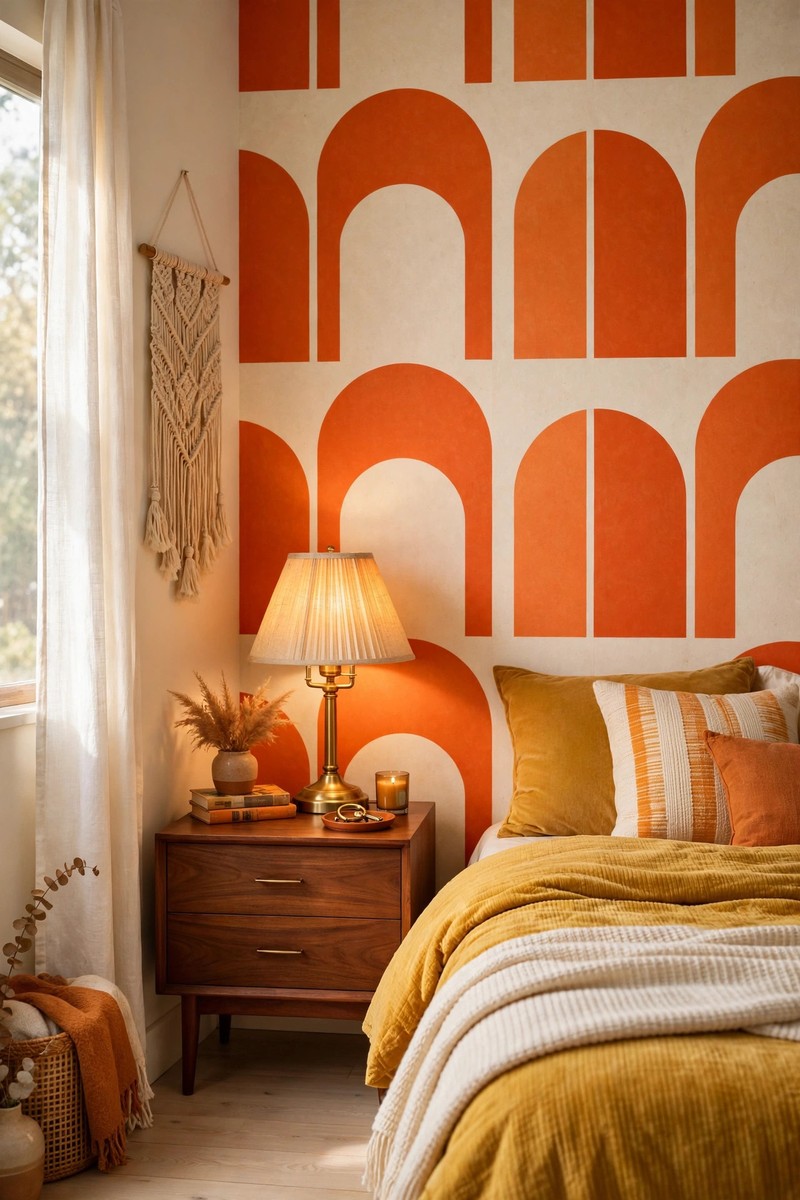
- Choose a bold retro print, like arches, sunbursts, or 70s florals.
- Cover one wall only, so the pattern feels fun and not loud.
- Smooth each strip from the center out to push air bubbles away.
- Peel it off slowly at move-out, and the wall stays clean.
One bold wallpaper wall can make a rental feel like a 70s time capsule, and peel and stick paper makes it fully reversible. Pick a retro print with arches, sunbursts, or bold florals in orange, mustard, and cream, then cover a single wall behind the bed or sofa. A roll costs about 25 to 40 dollars and covers roughly 30 square feet, so measure the wall first and order one extra roll. Line up the pattern at eye level, smooth each strip from the center outward, and trim the edges with a craft knife for a clean finish.
Renters worry about wallpaper damage, but modern peel and stick paper lifts off cleanly when you pull it slowly at a low angle. Test a small corner behind the door first, and leave it for a week to check that the adhesive leaves no residue on the surface. Pair the busy wall with plain bedding or a solid sofa cover, so the pattern stays the star and the room feels calm, not chaotic. Warm wood, brass, and woven baskets echo the 70s print and pull the whole retro look together in one afternoon.
Checkerboard Contact Paper

- Use checkerboard contact paper on counters, shelves, or a backsplash strip.
- Choose black and cream for a classic diner feel, or brown and tan for a softer look.
- Smooth bubbles out with a credit card as you lay each piece.
- Peel it off at move-out with no sticky residue left behind.
A checkerboard floor is a classic 70s move, and contact paper brings that diner charm to a rental for under 30 dollars. Stick it on a countertop edge, a shelf, or a thin backsplash strip, and the bold black and cream squares instantly wake up a plain kitchen. A roll costs about 15 dollars and covers 18 square feet, so one roll handles most small kitchens with paper left over. Cut each piece a half inch longer than the surface, press it down from one end, and smooth bubbles out with a credit card.
The checkerboard pattern pairs perfectly with warm wood, brass handles, and orange or avocado accents for a full retro vibe. Keep the rest of the kitchen calm, with plain dish towels and simple ceramic canisters, so the pattern stays the star of the room. Contact paper also works on the inside of glass cabinet doors, on a tray, or along a stair riser for a surprise pop of pattern. At move-out, peel slowly from one corner, warm any stubborn spot with a hair dryer for 10 seconds, and wipe the surface clean.
Geometric Pattern Rug
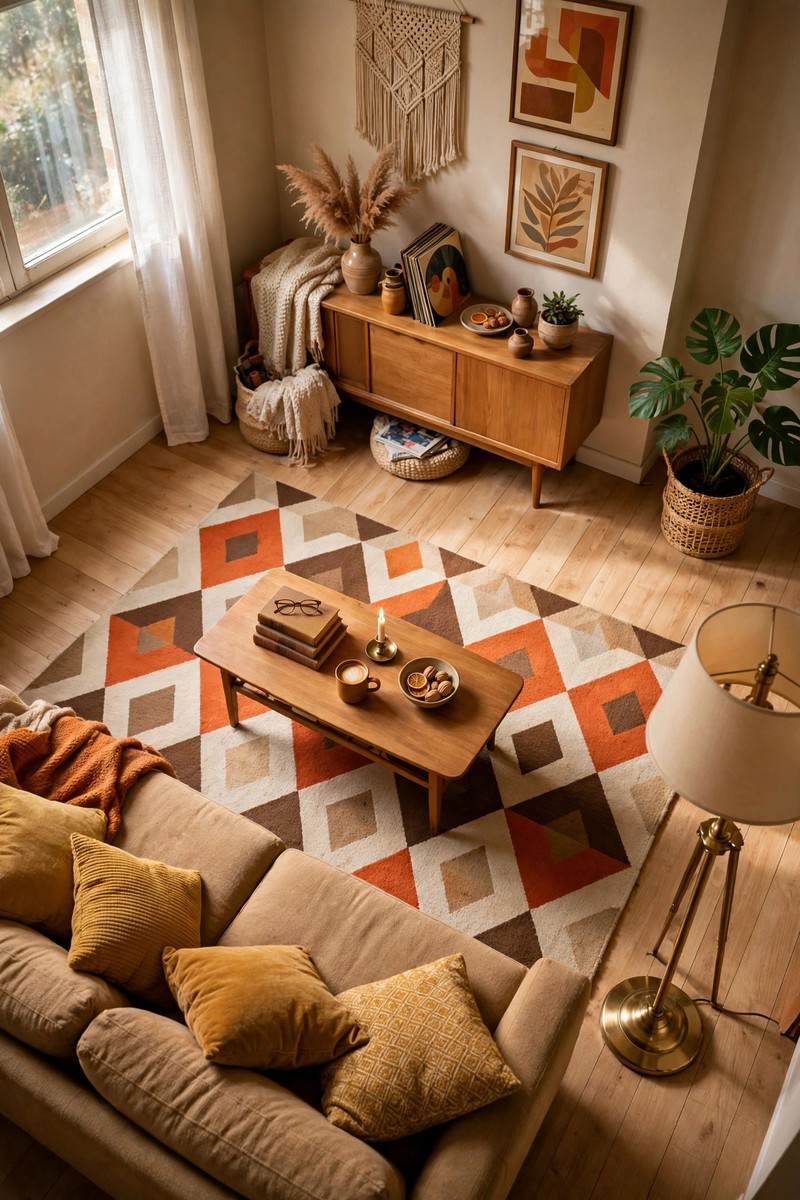
- Pick a rug with diamonds, arches, or sunburst shapes in warm retro colors.
- Size it so the front legs of the sofa sit on the rug.
- Layer a small rug over a big plain one for extra pattern and warmth.
- Use a non-slip rug pad to keep it flat and protect the floor.
A geometric rug is the fastest way to ground a retro room, because the pattern does the decorating while the furniture stays simple. Look for diamonds, arches, or sunburst shapes in orange, mustard, and brown, and pick a low pile rug that feels soft under bare feet. A five by seven foot rug costs about 60 to 120 dollars at discount stores, and it covers the seating area without swallowing the room. Choose a size that lets the sofa front legs rest on the rug, with at least 12 inches of rug showing on each side.
Patterned rugs hide everyday wear, which makes them perfect for rentals where the floor already has a few scuffs and marks. Layer a small geometric rug over a larger plain jute rug for depth, and the combo looks collected, not matchy, which suits the 70s spirit. Vacuum weekly and rotate the rug every three months so the pattern fades evenly and the traffic lanes stay invisible. When moving day comes, roll the rug up, shake it out on the balcony, and take it along, since it works in almost any future apartment.
Velvet Cushion Mix
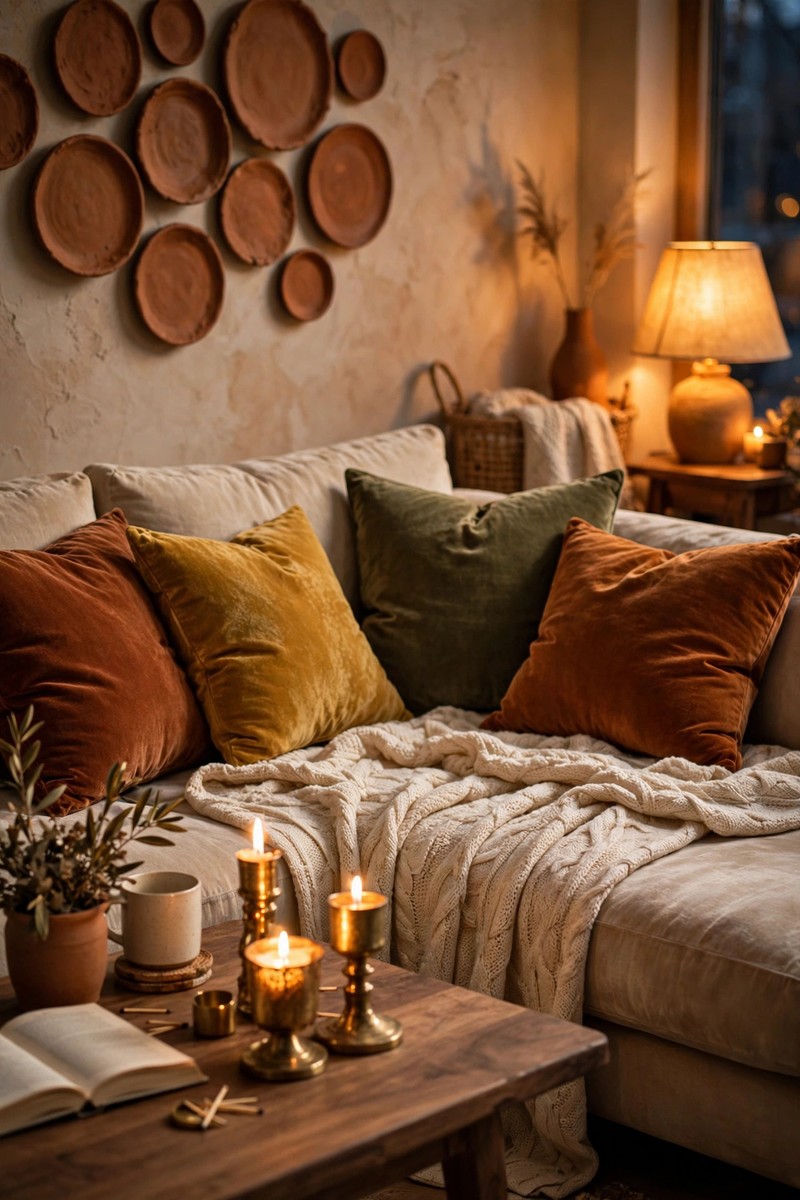
- Mix three to five velvet cushions in rust, mustard, olive, and cream.
- Vary the sizes, with two large squares and a few smaller rectangles.
- Pair velvet with a woven throw so the textures contrast nicely.
- Thrift velvet cushion covers for 5 to 10 dollars each.
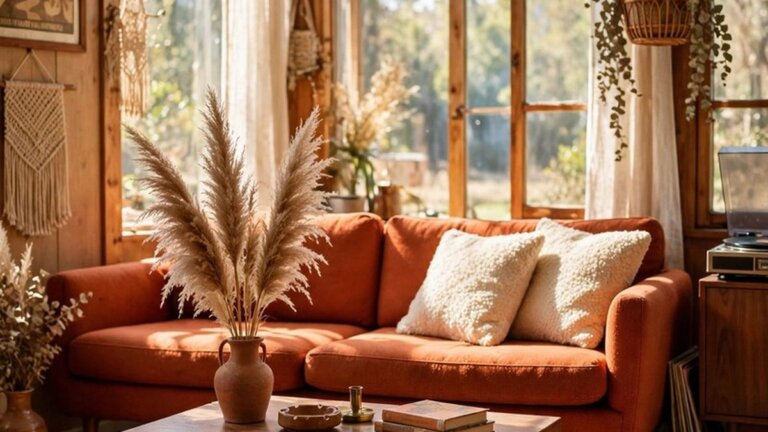
Velvet cushions are the cheapest shortcut to a retro living space, because the soft sheen instantly says 70s without any big furniture swap. Mix rust, mustard, olive, and cream covers in different sizes, with two large squares at the back and smaller rectangles in front. Velvet covers cost about 8 to 15 dollars each online, and thrift stores often sell them for under 5 dollars in great condition. Keep the sofa itself plain, in cream or tan, so the cushions carry the color and the room never feels overdone or busy.
The trick is mixing textures, not just colors, so add a chunky knit throw or a woven blanket beside the smooth velvet. Velvet catches the light differently from every angle, which gives the sofa a rich, layered look even in a small apartment. Fluff the cushions daily and brush the velvet with a soft clothes brush once a week to keep the nap smooth and even. At move-out, the covers fold flat into a suitcase, which makes them one of the easiest retro upgrades to take to the next place.
Mushroom Table Lamp
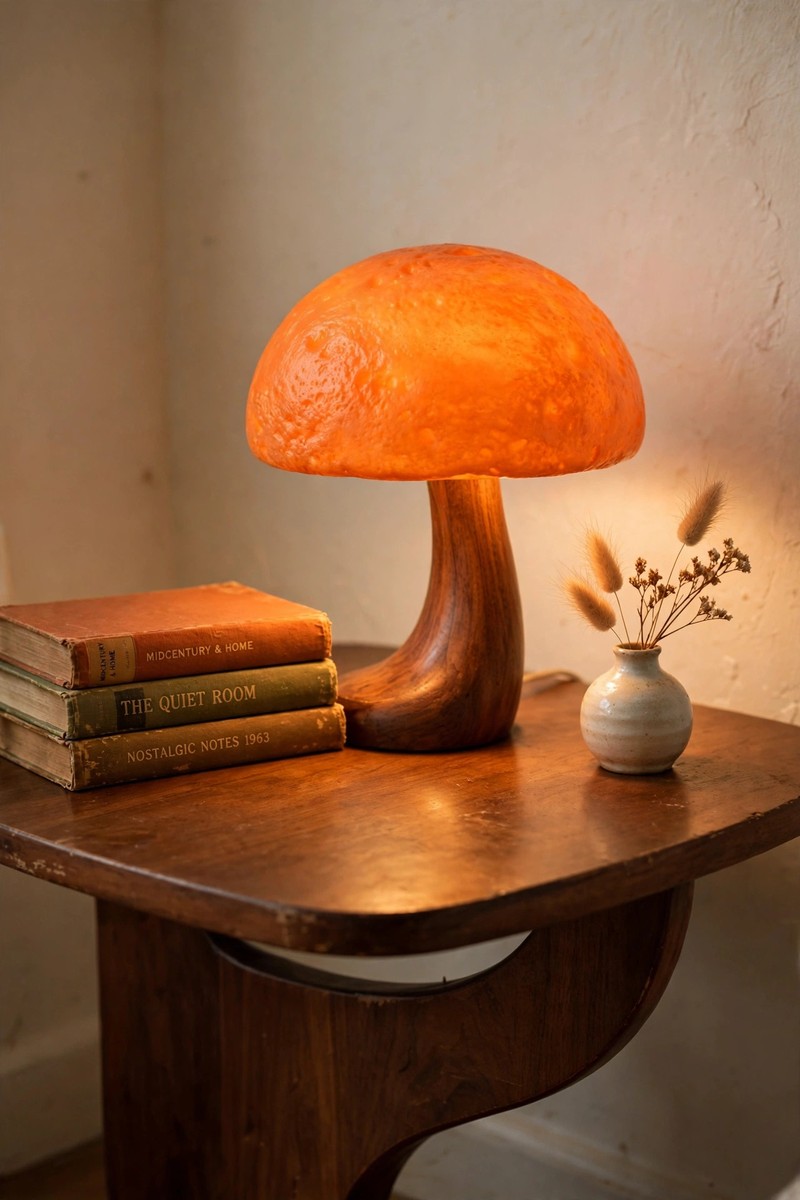
- Pick a mushroom lamp in orange, cream, or amber glass for a true 70s glow.
- Use a warm bulb, 2700K, for soft light that flatters the whole room.
- Place it on a side table, nightstand, or shelf as a statement piece.
- Thrift one for 10 to 20 dollars, or buy new for about 30 dollars.
A mushroom lamp is the single most recognizable 70s object, and one glowing dome can set the whole retro mood in a room. Pick orange, cream, or amber glass, and use a warm 2700K bulb so the light pools softly instead of glaring like an overhead fixture. Thrift stores sell vintage mushroom lamps for 10 to 25 dollars, while new versions cost about 30 to 50 dollars online. Set it on a side table or nightstand where the dome catches the eye, and keep the rest of the lighting low for maximum glow.
Mushroom lamps work in almost any room, from a bedside table to a desk corner, because the shape is small and the light is gentle. Pair the lamp with warm wood and brass, and the amber glow bounces off those surfaces to make the whole corner feel cozy. Avoid cool white bulbs, which flatten the retro colors and make the lamp look like a modern gadget instead of a vintage find. When moving day comes, wrap the dome in a towel, pack it in a box, and it becomes the first retro piece in the next apartment.
Brass Accent Pieces
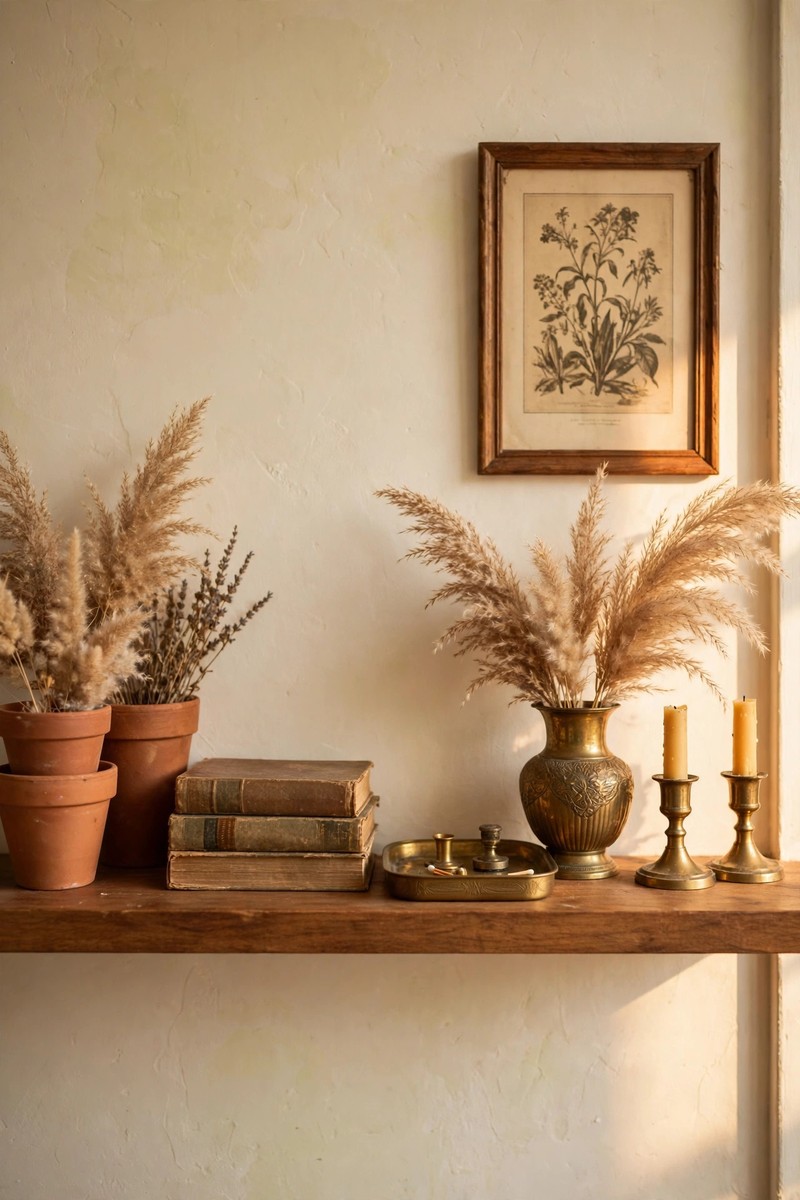
- Scatter small brass pieces, like candle holders, trays, and vases, across shelves and tables.
- Mix shiny and aged brass for a collected, thrifted feel.
- Keep brass in three spots per room so it reads as a theme.
- Clean brass with lemon and baking soda to restore the shine.
Brass is the metal of the 70s, and a few small pieces can warm up a rental faster than any big furniture purchase. Scatter candle holders, a tray, and a small vase across shelves and tables, and repeat the brass in three spots per room. Thrift stores sell brass pieces for 3 to 12 dollars each, and a quick polish with lemon and baking soda brings back the shine. Mix shiny new brass with aged, patina pieces, because the contrast looks collected over years instead of bought in one trip.
Brass pairs beautifully with warm wood, velvet, and terracotta, which makes it the easiest metal to build a retro look around. Avoid chrome and silver in the same room, since cool metals fight the warm retro palette and make the brass look out of place. A brass tray on the coffee table corrals remotes and candles, while brass candle holders add height and glow to a shelf. At move-out, brass pieces pack small and travel well, so they become instant warmth in the next apartment without any new spending at all.
Walnut Thrifted Sideboard
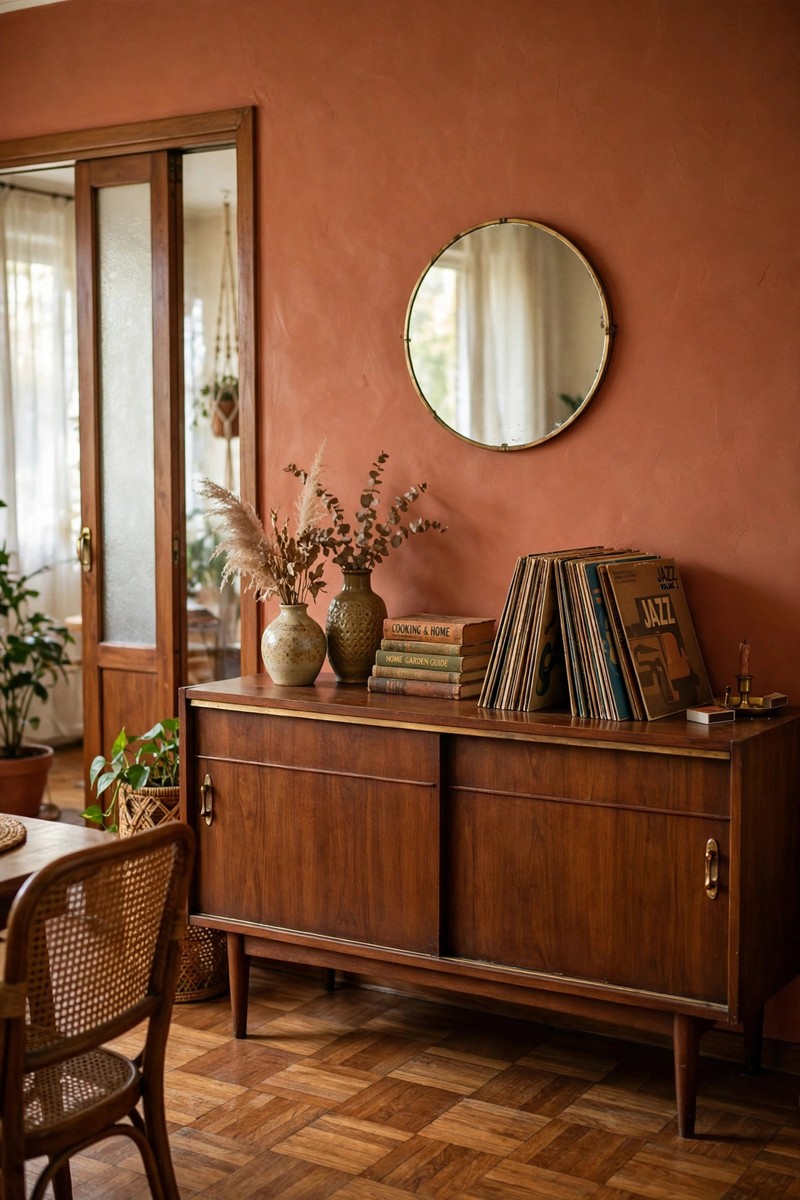
- Hunt thrift stores and marketplace listings for a solid walnut sideboard.
- Check that doors slide smoothly and the legs feel sturdy before buying.
- Use it as a dining room buffet, a media stand, or an entryway catch-all.
- Style the top with vases, records, and a small lamp.
A walnut sideboard is the anchor piece of a retro apartment, and thrift stores hide them for a fraction of new furniture prices. Look for solid walnut or walnut veneer with sliding doors and brass pulls, and check that the legs feel sturdy before you pay. A good thrifted sideboard costs 50 to 150 dollars, while a similar new piece runs 400 dollars or more at furniture stores. Measure the wall first, since most sideboards run 48 to 72 inches long, and leave 6 inches of breathing room on each side.
Style the top with a ceramic vase, a stack of vinyl records, and a small lamp, and the sideboard becomes the room's focal point. Inside, the sliding doors hide board games, table linens, or office supplies, which keeps a small apartment tidy without extra storage furniture. Walnut pairs perfectly with brass, velvet, and warm earth tones, so the sideboard ties the whole retro palette together in one piece. Wipe the wood with a damp cloth weekly, use coasters under drinks, and the thrifted find will look good for years to come.
Arched Mirror Lean
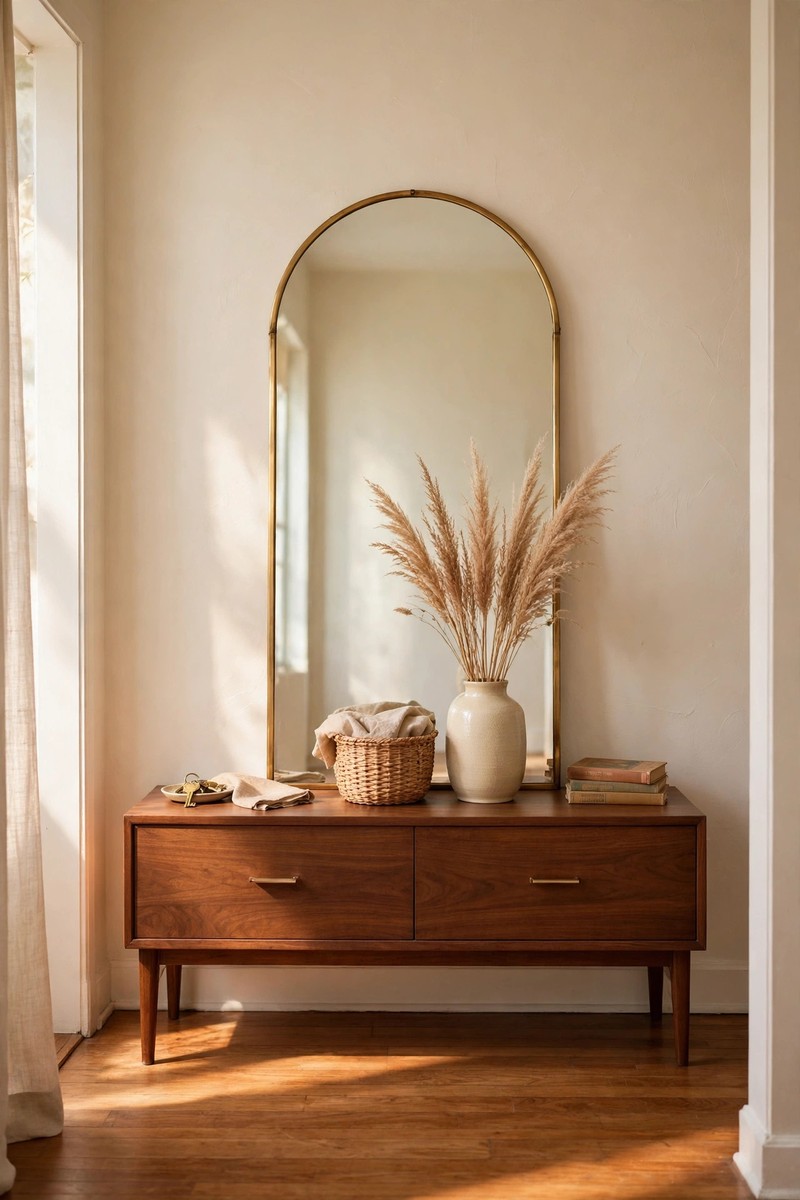
- Lean a tall arched mirror against the wall, no mounting needed.
- Place it near a window so it bounces light deep into the room.
- Choose a brass or walnut frame to match the retro palette.
- Anchor it with a small console table or basket in front.
An arched mirror leaning against the wall is pure 70s glamour, and it needs zero holes, which makes it perfect for renters. Pick a tall arch, about 60 to 72 inches high, with a thin brass or walnut frame, and lean it at a slight angle against a solid wall. New arched mirrors cost 80 to 200 dollars, while thrift stores and marketplace listings often sell them for 30 to 60 dollars. Place the mirror near a window so it bounces daylight deep into the room, and watch a small apartment feel twice as bright.
Leaning mirrors feel safer than hanging ones, because the floor carries the weight and nothing pulls on the wall at all. Anchor the base with a small console table, a basket, or a stack of books in front, so nobody bumps the mirror by accident. The arch shape softens a boxy rental room, and the curved top echoes the arches in retro wallpaper, art, and rugs. Clean the glass with a vinegar and water mix weekly, and the mirror will keep bouncing light and doubling the room for years ahead.
Abstract Retro Art
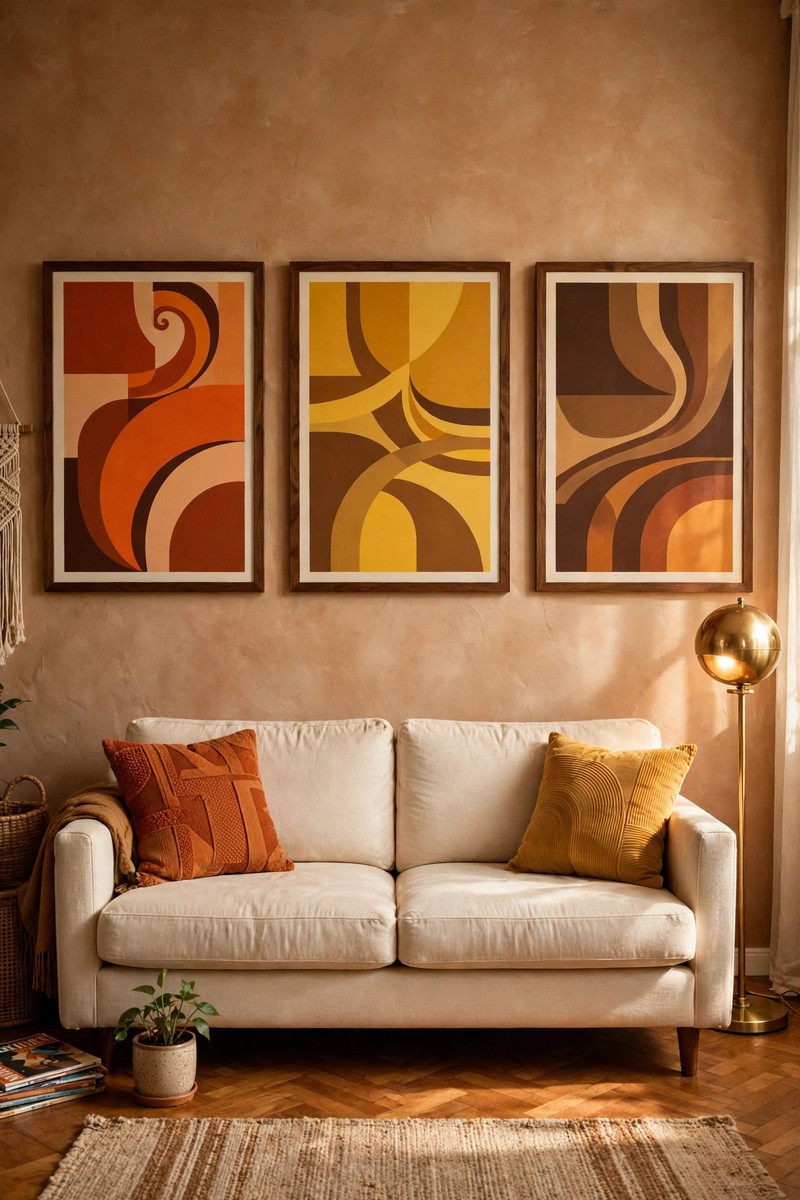
- Hang two or three abstract prints with curved shapes and warm colors.
- Use adhesive strips rated for each frame weight, up to 8 pounds.
- Keep the art center at 57 inches from the floor.
- Print your own art at a copy shop for under 10 dollars per print.
Abstract retro art is the easiest way to fill a blank rental wall, because bold curves and warm colors do all the talking. Look for prints with arches, sunbursts, and wavy lines in orange, mustard, and brown, and frame them in walnut or thin black frames. Digital downloads cost 5 to 15 dollars each, and a copy shop prints them at 16 by 20 inches for about 8 dollars. Hang a trio above the sofa with two inches between frames, and the wall suddenly looks curated instead of empty and bare.
Adhesive strips hold light frames with no damage, so renters can build a real art wall without asking the landlord for permission. Check each strip rating on the pack, use two strips per frame over 3 pounds, and press each one for 30 seconds. Mix one large print with two smaller ones for balance, and repeat one color from the art in a cushion or throw nearby. When moving day comes, pull each strip down slowly, pack the frames flat, and the art wall moves with you to the next place.
Sheer Amber Curtains
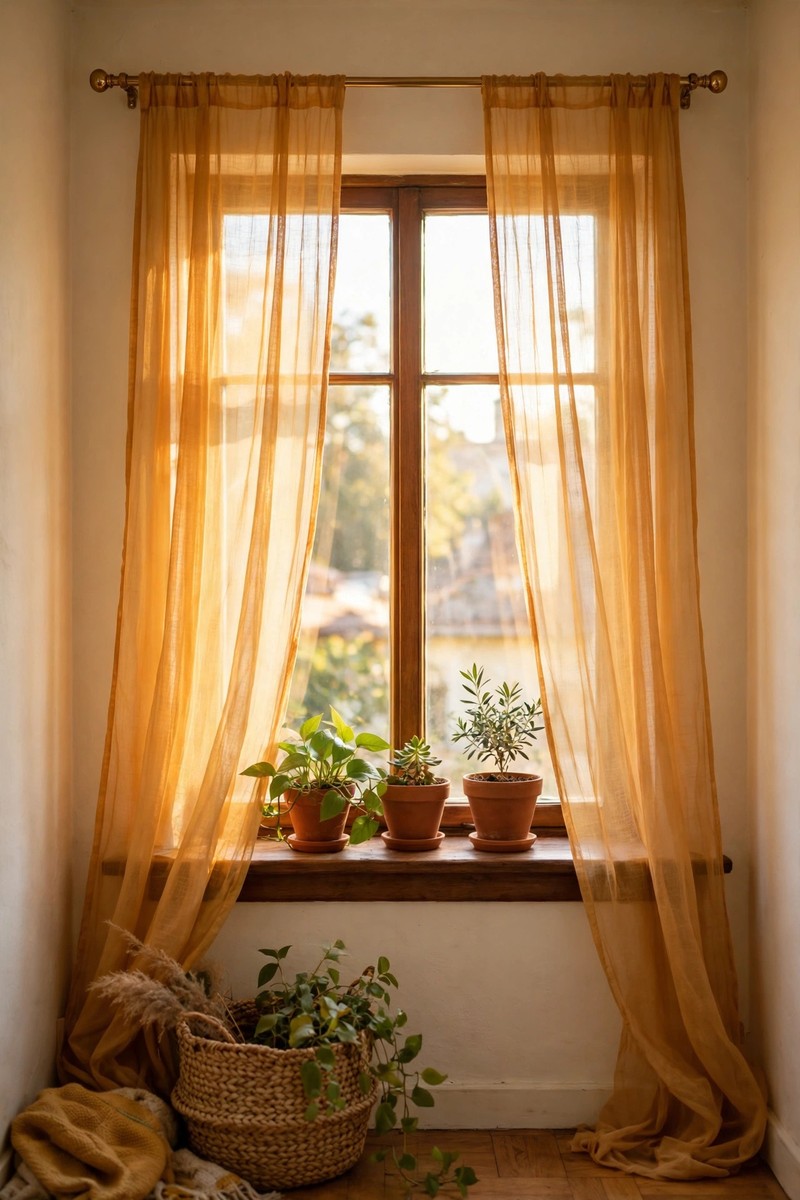
- Hang sheer amber curtains on a tension rod, no brackets needed.
- Choose a warm amber or golden tone to tint the daylight.
- Let the panels pool slightly on the floor for a soft retro drape.
- Layer sheers over plain white blinds for privacy and glow.
Sheer amber curtains turn harsh daylight into golden hour, and a tension rod means you can hang them without touching the wall. Pick a warm amber or golden tone, and the fabric tints the whole room with a soft glow that feels like a 70s photograph. Sheer panels cost 12 to 25 dollars per pair, and a tension rod costs about 10 dollars and fits inside the window frame. Measure the window width first, then buy panels at least twice as wide so the fabric gathers in soft, full folds.
Amber sheers work best layered over plain white blinds, because the blinds give privacy while the curtains add color and warmth. Let the panels hang long enough to brush the floor, since a slight pool of fabric looks relaxed and very 70s. Wash the panels in cold water every few months, and the amber tint stays rich without fading to a dull yellow. At move-out, the tension rod pops out in seconds, the curtains fold into a bag, and the window looks untouched. The whole setup takes under 15 minutes to install from start to finish.
Macrame Plant Hangers
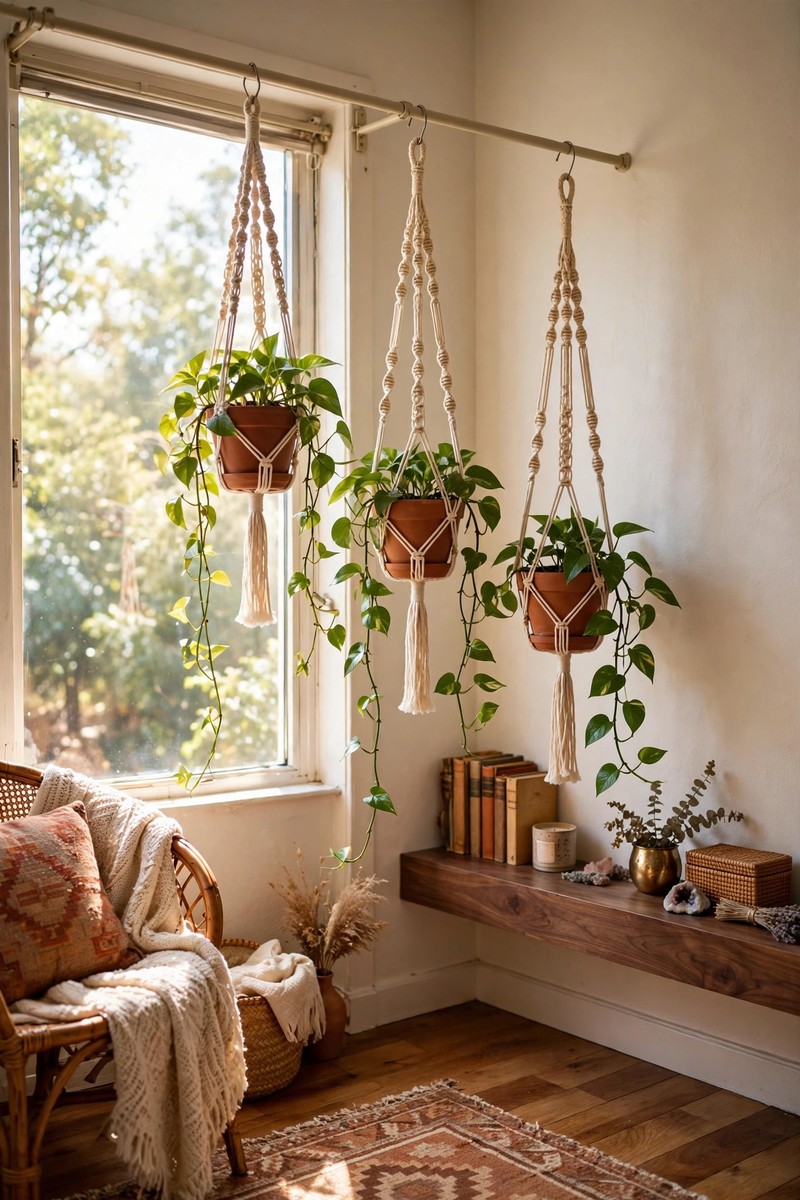
- Hang macrame plant holders from a tension rod or a clamp-on hook.
- Choose trailing plants, like pothos or spider plants, for a lush look.
- Vary the hanger lengths so the plants sit at different heights.
- Water over the sink to avoid drips on the floor.
Macrame plant hangers are pure 70s, and they add green life to a rental without taking up a single inch of floor space. Hang three holders at different heights from a tension rod near a sunny window, and fill them with trailing pothos or spider plants. Macrame hangers cost 8 to 20 dollars each, and a small pothos costs about 10 dollars at a garden center or grocery store. Cream cotton knots look best against warm walls, and the woven texture echoes the baskets and rugs in a retro room.
The trick is varying the heights, because three hangers at one level look flat, while staggered lengths create a living green curtain. Water the plants over the sink once a week, let them drain for 10 minutes, and hang them back up with no drips on the floor. Choose light pots under 3 pounds each, so the tension rod holds firm and the hangers never strain the window frame. At move-out, the hangers fold flat into a drawer, and the plants travel in a box, ready for the next sunny window.
Ceramic Vase Cluster
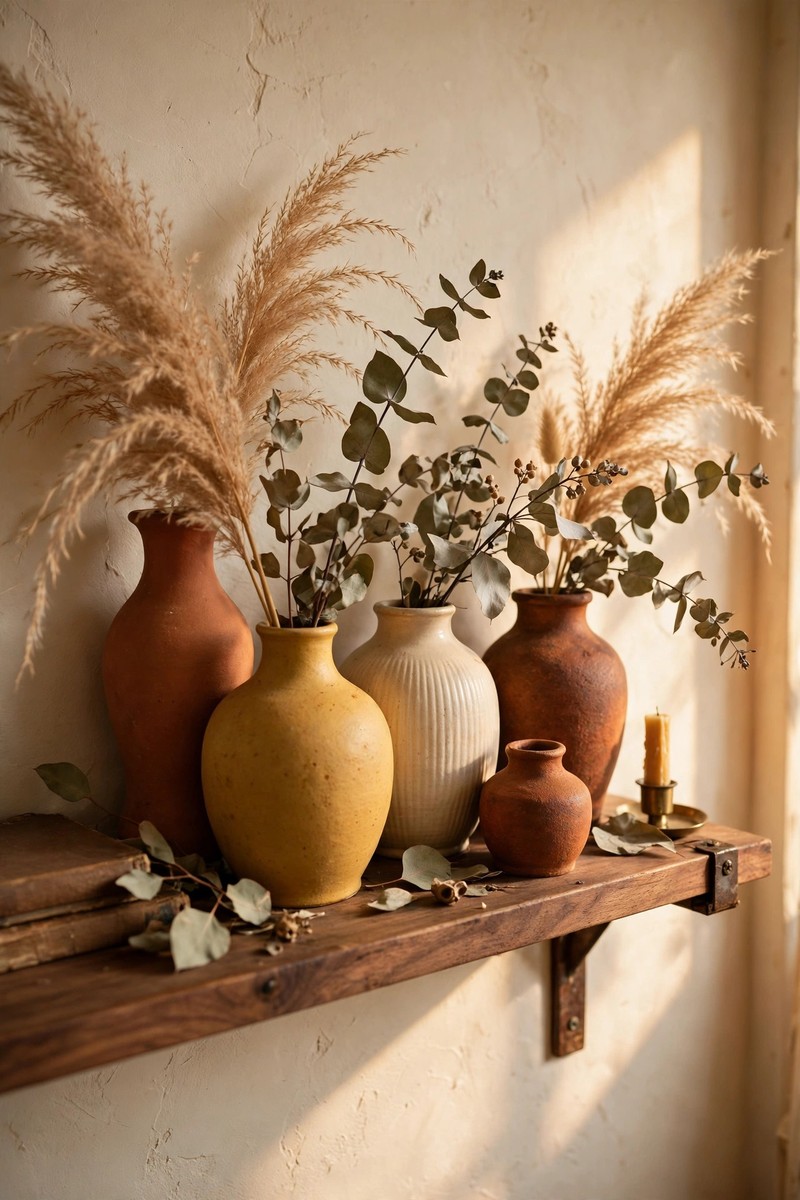
- Group three to five ceramic vases in different heights and warm colors.
- Mix matte and glossy finishes for a collected thrifted look.
- Fill one or two with dried pampas grass or eucalyptus stems.
- Thrift vases for 3 to 8 dollars each at secondhand stores.
A cluster of ceramic vases turns an empty shelf into a styled moment, and thrift stores make it one of the cheapest retro upgrades. Group three to five vases in different heights, with one tall piece at the back and smaller ones in front, for a natural stepped look. Stick to warm colors like terracotta, cream, mustard, and rust, and mix matte and glossy finishes so the group feels collected, not matched. Thrifted vases cost 3 to 8 dollars each, and dried pampas grass costs about 10 dollars a bunch at craft stores.
The secret is odd numbers, because three or five vases look lively while four in a row looks stiff and store-like. Fill one or two vases with dried stems, and leave the rest empty, so the shapes and colors get their own moment to shine. Place the cluster on a sideboard, a shelf, or a windowsill, and repeat one vase color in a cushion or a throw nearby. Wrap each vase in a towel at move-out, and the whole cluster travels safely to the next apartment for zero extra cost.
Shag Rug Layer
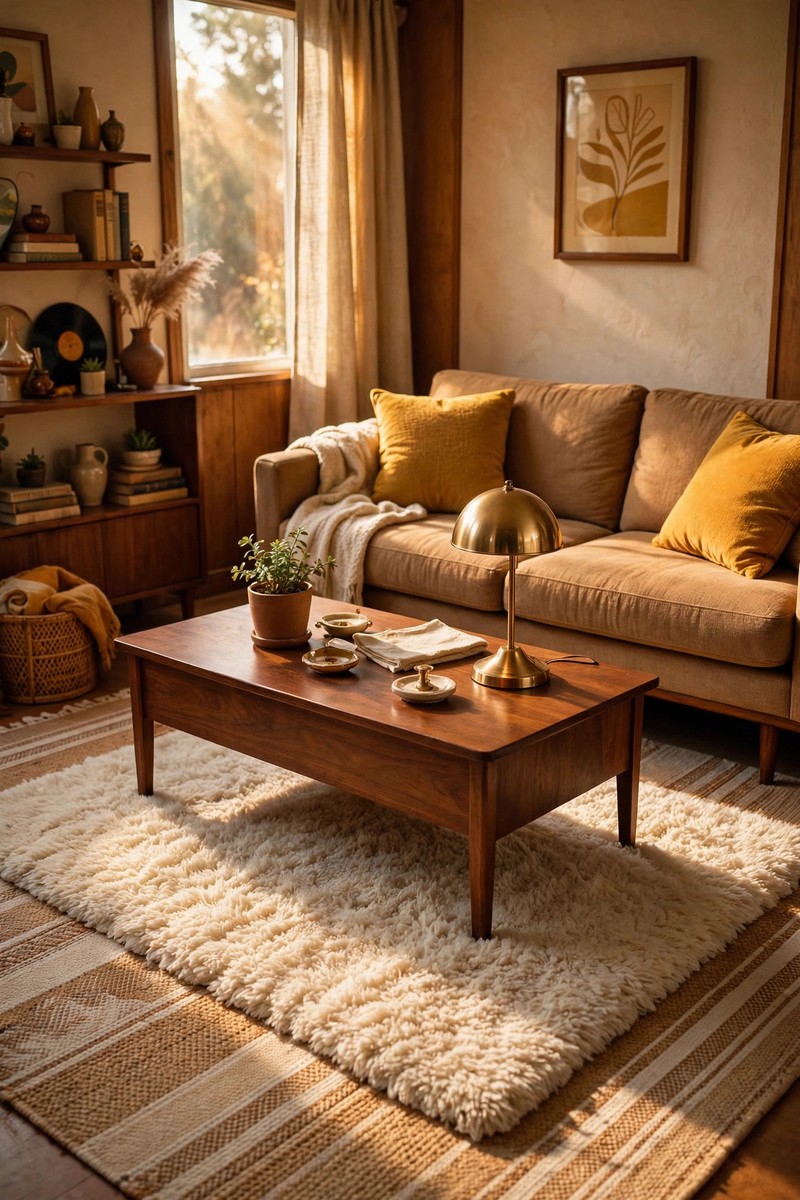
- Layer a small shag rug over a flat woven rug for texture and warmth.
- Choose cream, rust, or mustard shag to match the retro palette.
- Pick a high pile rug, at least 2 inches thick, for that true 70s feel.
- Shake it outside weekly and vacuum on low suction.
Nothing says 70s like a shag rug under bare feet, and layering one over a flat rug adds texture without replacing the floor. Pick a cream, rust, or mustard shag with a pile at least 2 inches thick, and let it spill past the edges of the rug below. A four by six foot shag rug costs 40 to 90 dollars, and a larger five by seven foot version runs about 80 to 150 dollars. Place the shag where feet land most, like beside the sofa or the bed, so the soft texture gets noticed every single day.
Shag rugs need a little more care than flat rugs, but the payoff is a cozy, sink-in feel that flat rugs never match. Shake the rug outside once a week, vacuum on low suction without a beater bar, and spot clean spills with cold water right away. Keep shag out of the kitchen and entryway, where crumbs and dirt hide deep in the pile and make cleaning a chore. At move-out, roll the shag up, tie it with twine, and it becomes the softest retro layer in the next apartment too.
Chrome Bar Cart
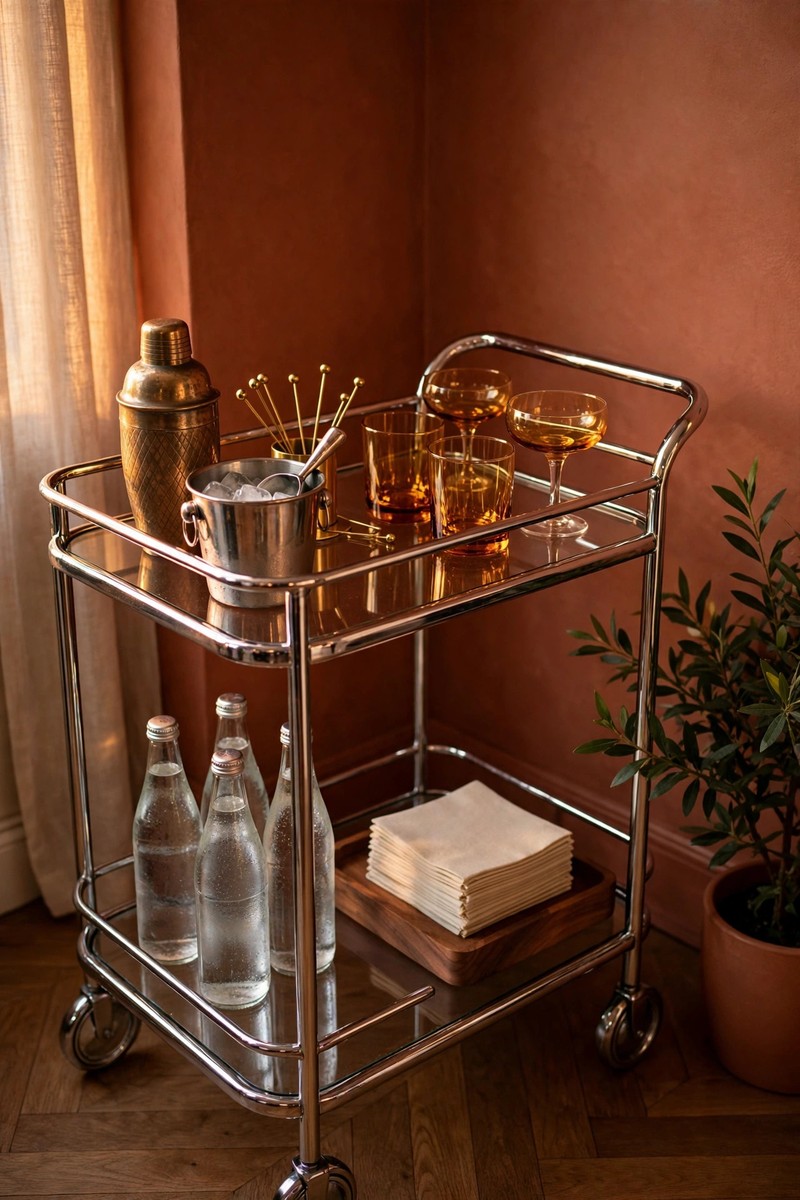
- Roll a chrome bar cart into a corner for instant 70s glamour.
- Stock the top shelf with glassware and the bottom with bottles and books.
- Add a small tray to keep bottles tidy and catch drips.
- Thrift a cart for 30 to 60 dollars, or buy new for about 100 dollars.
A chrome bar cart is the glamorous finishing touch for a retro apartment, and its wheels make it the most flexible piece you own. Stock the top shelf with amber glassware and a cocktail shaker, and use the bottom shelf for bottles, books, and a small ice bucket. Thrift stores sell chrome carts for 30 to 60 dollars, while new two-tier carts cost about 80 to 120 dollars online. Roll it beside the sofa for a party, then park it in a corner as a coffee station, a plant stand, or a record display.
Chrome shines against warm wood and terracotta, so the cart adds a cool sparkle that keeps the retro palette from feeling too heavy. Keep the shelves tidy with a small tray under the bottles, and wipe the chrome weekly with a damp cloth to stop fingerprints. Lock the wheels when the cart sits in place, especially near a walkway, so it never rolls into a guest or a pet by accident. At move-out, the cart rolls straight out the door, which makes it one of the easiest statement pieces to take along.
Retro Bedroom Headboard

- Choose a curved or arched panel in velvet or corduroy for instant 70s shape.
- Lean the panel against the wall behind the bed, no drilling needed.
- Pick burnt orange, mustard, or olive to anchor the retro look.
- Add two brass lamps to warm the edges of the bed.
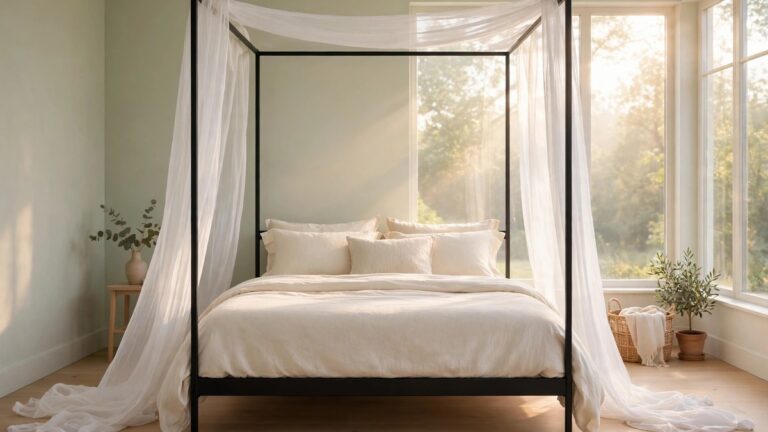
A headboard changes the whole bedroom in one move, and a curved velvet panel brings the 70s back without touching the wall. Lean a tall upholstered panel behind the bed and it reads like built-in furniture, even though it just rests on the floor. Look for arched or rounded tops in burnt orange, mustard, or chocolate brown velvet, because the soft curve is what sells the decade. A queen-size panel runs about 80 to 120 dollars at thrift stores and online shops, and setup takes ten minutes with a friend.
Styling around the panel is where the room really starts to feel like a 70s hideaway. Layer cream linen bedding with a mustard throw and two rust-colored cushions, then add a small brass lamp on each nightstand for warm evening light. Keep the wall behind the panel bare so the shape stands out, or hang one round mirror with adhesive strips to catch the light. When moving day comes, lift the panel away and the wall looks untouched, which keeps the deposit safe and the bed ready for the next place.
70s Bedding Layers

- Stack three layers: duvet, waffle blanket, and a folded throw at the foot.
- Mix rust, mustard, and cream for a warm 70s palette.
- Add two patterned cushions in brown and gold for shape.
- Choose cotton or linen so the layers breathe all night.
Layered bedding is the fastest way to make a rental bedroom feel like a 70s retreat, and it costs far less than new furniture. Start with a rust or terracotta duvet, add a cream waffle blanket folded across the middle, then finish with a mustard throw draped at the foot. Two patterned cushions in brown and gold add shape without clutter, and a full set of layers runs about 90 to 140 dollars from thrift shops and discount stores. Swap the top layer with the seasons to keep the bed looking fresh all year.
The secret to layers that look styled instead of messy is mixing textures, not just colors. Pair smooth cotton sheets with a nubby waffle blanket and a soft fringed throw, so each layer catches the light in a different way. Keep the palette tight, with three warm tones at most, and let one patterned cushion carry the print while the rest stay solid. Make the bed in five minutes each morning by smoothing the duvet, folding the blanket, and fluffing the cushions, and the room stays photo-ready. Small habits like this keep the layers looking intentional, not tossed on.
Rattan Bedside Table

- Pick a round rattan table about 18 inches wide for a small bedroom.
- Style it with one lamp, one book stack, and one small vase.
- Choose natural cane or warm honey tones to match the retro look.
- Keep the surface clear of clutter so the weave shows.
A rattan bedside table brings instant 70s warmth to a bedroom, and it costs less than most nightstands. The woven texture catches morning light in a way flat wood never does, and the open weave keeps a small room feeling airy instead of crowded. Look for a round table about 18 inches wide with a lower shelf, which holds books and a charger without cluttering the top. Thrift stores often sell them for 25 to 60 dollars, and a quick wipe with a damp cloth keeps the cane clean and bright.
Styling a rattan table is easy, because the weave does most of the work for you. Set a small brass lamp on one side, stack two vintage books on the other, and add a tiny ceramic vase with dried grass for height. Leave some of the woven top visible, since covering the whole surface hides the texture that makes rattan special. A rattan table moves easily from bedroom to living room to balcony, so it earns its place in a small apartment many times over. That kind of flexibility makes it a smart thrift find for any renter.
Kitchen Open Shelves
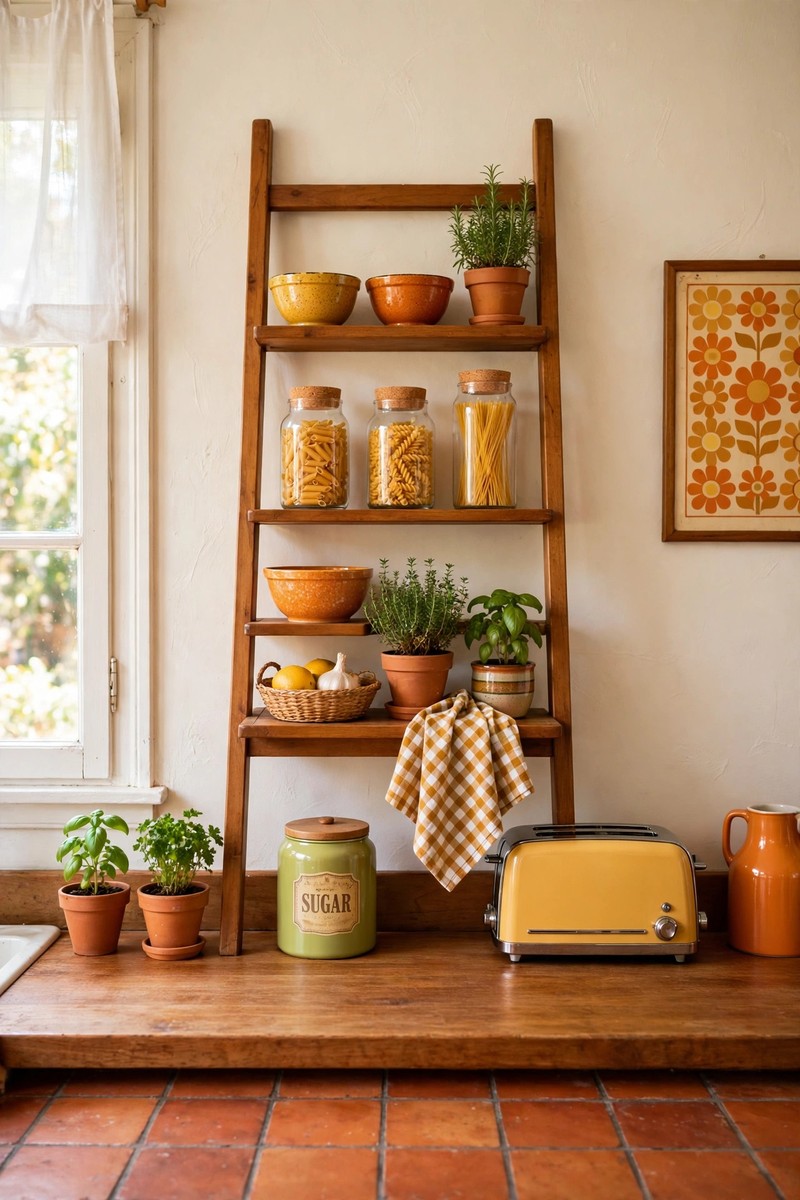
- Use a freestanding ladder shelf or leaning unit, never screwed into the wall.
- Group dishes by color so the shelf reads as decor.
- Keep daily plates at arm height and display pieces up high.
- Add small adhesive hooks on the side for mugs and towels.
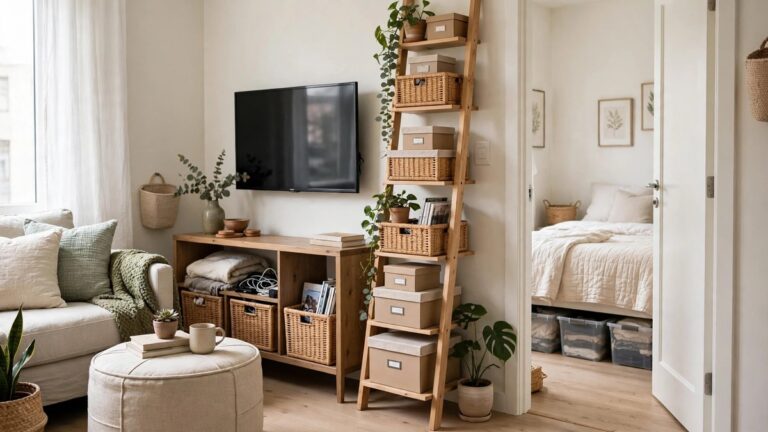
Open shelves make a small rental kitchen feel bigger, and a freestanding unit gives you the look with zero wall damage. A leaning ladder shelf in warm wood fits beside the fridge or against a bare wall, and it holds plates, bowls, and jars in plain sight. Group dishes by color, with mustard bowls on one shelf and cream plates on the next, so the unit reads as styled decor instead of storage. A sturdy ladder shelf costs about 60 to 110 dollars, assembles in 20 minutes, and moves with you to the next kitchen.
The trick to open shelves that look good is editing, not filling every inch of wood. Keep everyday plates and glasses at arm height, save the top shelf for pretty jars and plants, and leave one gap of empty space on each level. Dust the shelves once a week with a damp cloth, and rotate one or two pieces each month so the display stays fresh. If counter space is tight, add a small adhesive shelf inside a cabinet door for spices, keeping the open shelves for the prettiest pieces only.
Retro Kettle Display

- Pick a kettle in orange, avocado green, or cream enamel.
- Set it on a small wooden board or trivet to protect the counter.
- Pair it with matching canisters for coffee, tea, and sugar.
- Keep the display near the stove so it stays useful, not just pretty.
A retro kettle turns a plain kitchen counter into a 70s vignette, and it earns its spot by boiling water every single day. Look for a glossy enamel kettle in orange, avocado green, or cream, with a chunky handle and a whistle that sounds like childhood. Set it on a small wooden board or cork trivet beside the stove, then flank it with two glass canisters for coffee and tea. Thrifted enamel kettles run 15 to 35 dollars, and a new one costs about 40 to 70 dollars at home stores.
The kettle works best as part of a small cluster, not sitting alone on a bare counter. Add a cream canister set, a wooden spoon jar, and a folded checkered towel, and the whole corner starts to feel like a vintage kitchen. Keep the kettle filled and ready, because a display you actually use stays dust-free and never feels staged. Wipe the enamel with a soft cloth once a week, descale it monthly with vinegar, and it will keep its shine for years. That simple care keeps the color bright and the whistle working.
Checkerboard Kitchen Mat

- Choose a mat 20 by 36 inches to fit in front of the stove or sink.
- Pick black and cream checks for a classic retro diner feel.
- Look for a cushioned, wipe-clean surface for comfort while cooking.
- Use a non-slip backing so the mat stays put on tile floors.
A checkerboard mat is the smallest change with the biggest retro payoff in a rental kitchen. The black and cream checks echo old diners and 70s kitchens, and they ground the room the second you step inside. Pick a cushioned mat about 20 by 36 inches, big enough to stand on while cooking, with a wipe-clean surface and a non-slip backing. Good mats cost 25 to 45 dollars, roll up in seconds at move-out, and protect the floor from spills and scuffs in the meantime. That is cheap insurance for a deposit.
Place the mat where you stand most, usually in front of the stove or the sink, so it earns its place every day. The cushion takes pressure off tired feet during long cooking sessions, which matters when dinner prep stretches past an hour. Keep the rest of the floor clear so the checks stay the star, and wipe the mat down after spills with a damp cloth. Pair the mat with a checkered tea towel or a matching oven mitt, and the kitchen starts to feel like a set from a 70s sitcom.
Dining Drop-Leaf Table
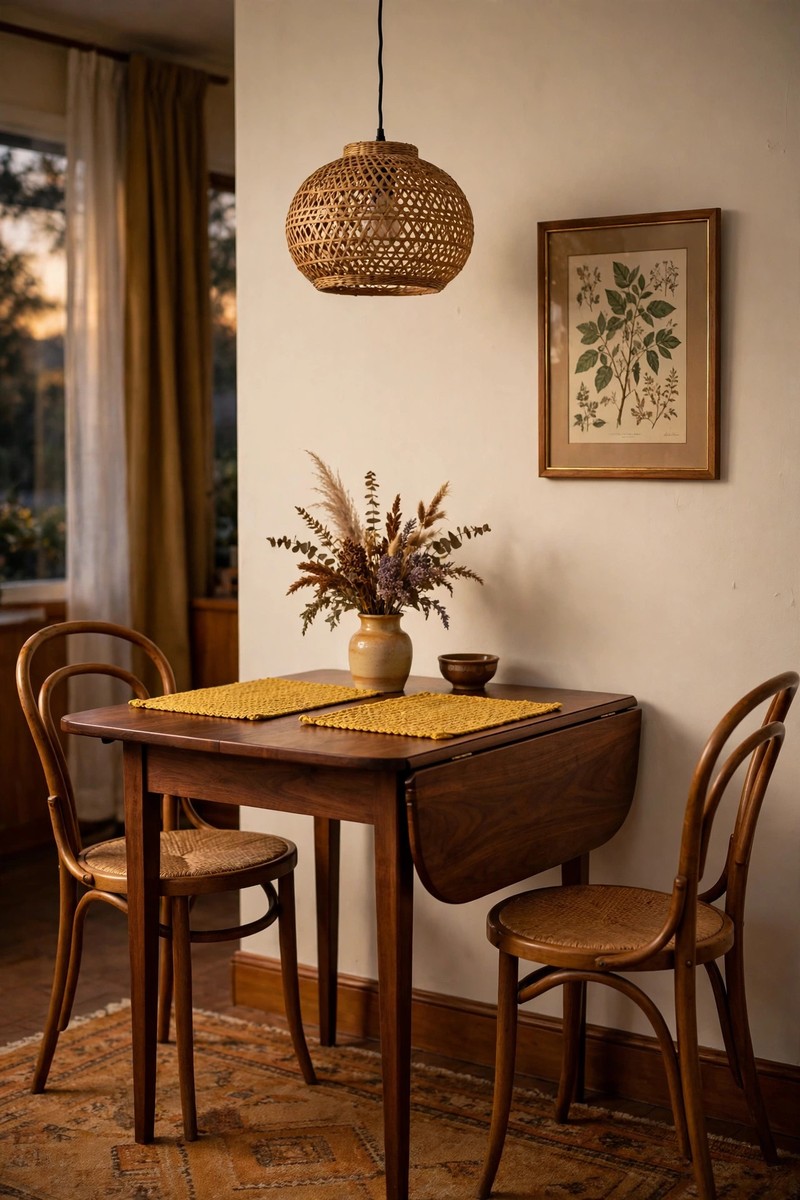
- Choose a table 36 inches wide that folds to half that size.
- Keep one leaf down daily and open both for guests.
- Pair it with bentwood or vinyl chairs for the retro look.
- Add a round woven placemat set in mustard or rust.
A drop-leaf table is the smartest dining choice for a small apartment, because it shrinks when you need floor space. Fold one leaf down for everyday meals for two, then open both sides when friends come over and the table seats four with ease. Look for warm walnut or teak finishes with rounded edges, which carry the 70s feel without shouting about it. Thrifted drop-leaf tables run 50 to 120 dollars, and a new one costs about 150 to 250 dollars at furniture stores. That is a fair price for a table that adapts daily.
Set the table against a wall with the folded leaf facing out, so the room gains nearly two feet of walking space. Style it with woven placemats in mustard, a small ceramic vase, and two bentwood chairs tucked neatly underneath. When guests arrive, pull the table away from the wall, lift both leaves, and add two folding chairs for a full dinner setup. Wipe the wood with a soft cloth after meals, use coasters under hot dishes, and the table will look good for years. Simple care like this keeps the finish warm and smooth.
Vinyl Dining Chairs
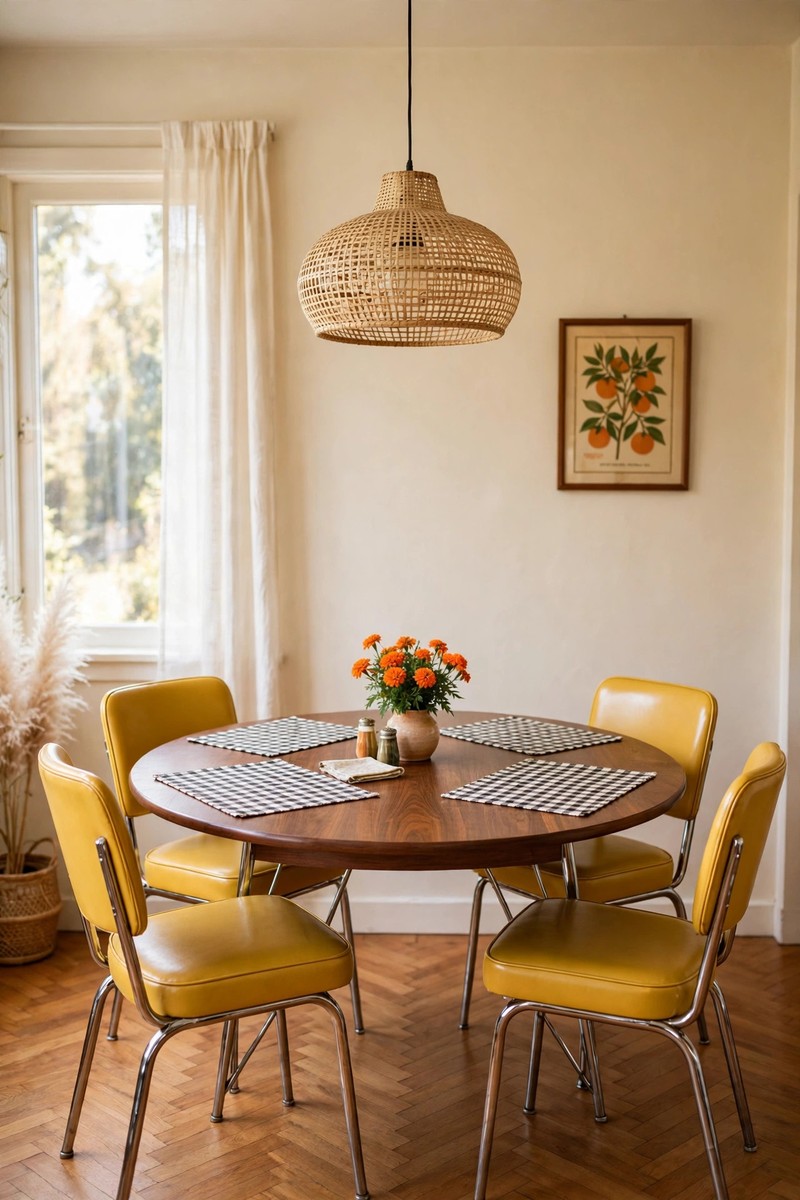
- Pick vinyl chairs in mustard, orange, or avocado green.
- Look for curved backs and chrome legs for the classic 70s shape.
- Choose wipe-clean seats, which survive spills and daily use.
- Mix two colors, like mustard and cream, for a playful set.
Vinyl dining chairs bring the diner era straight into a rental dining corner, and they wipe clean in seconds. The glossy seat in mustard or orange catches the light, while chrome legs and curved backs give the set its unmistakable 70s shape. A set of four thrifted vinyl chairs costs about 60 to 140 dollars, and new sets run 120 to 220 dollars online. Check the seams and seat padding before buying, because cracked vinyl and flat cushions are hard to fix at home. Good chairs last for years with almost no care.
Mixing two vinyl colors keeps the set playful, so try two mustard chairs with two cream ones around a round table. The round table softens the look and fits a small dining corner better than a long rectangle, leaving room to move around. Wipe the seats with a damp cloth after meals, and keep them out of direct sun so the color stays rich and even. If one chair wobbles, tighten the leg bolts with a wrench or add a felt pad under the short leg to level it quickly.
Entry Console Vignette

- Choose a slim console table 10 to 12 inches deep for a narrow entry.
- Hang a round brass mirror above it with adhesive strips.
- Add a small ceramic dish for keys and a plant for life.
- Tuck a woven basket underneath for shoes or bags.
A console vignette turns a blank entry wall into a warm welcome, and it takes less than an hour to style. Pick a slim walnut table about 10 to 12 inches deep, which fits a narrow hallway without blocking the path to the door. Hang a round brass mirror above it with strong adhesive strips, then set a ceramic dish for keys and a small potted plant on top. A console table costs 60 to 130 dollars thrifted, and the mirror and dish add about 20 to 40 dollars more.
Keep the vignette simple, because an entry table with too many pieces looks cluttered the moment you walk in. Three items are enough: one mirror, one dish, and one plant, with a woven basket tucked underneath for shoes or bags. Check the mirror once a week to make sure the adhesive strips still hold, especially in a humid hallway near the front door. When you move, lift the table away, peel the strips down slowly, and the entry wall looks untouched for the next tenant. That easy exit makes a console vignette a safe rental win.
Hallway Runner Rug

- Choose a runner 2 by 8 feet to fit most apartment hallways.
- Pick a rust, cream, and brown pattern for a warm 70s feel.
- Use a rug pad underneath to stop slipping and add cushion.
- Vacuum weekly and spot-clean spills right away.
A runner rug turns a plain hallway into a styled path, and it warms up cold wood floors in one unroll. Look for a geometric or floral pattern in rust, cream, and brown, which carries the 70s feel without needing any other decor. A runner about 2 by 8 feet fits most apartment hallways, and a good one costs 40 to 90 dollars at home stores. Add a non-slip rug pad underneath for about 15 dollars, which keeps the rug flat and protects the floor beneath it. That pad also adds a soft cushion underfoot.
Place the runner so it starts just inside the front door and runs toward the living room, guiding the eye forward. Leave about six inches of bare floor on each side, which frames the rug and keeps the hallway feeling wide instead of cramped. Vacuum the runner once a week, shake it outside monthly, and spot-clean spills right away with a damp cloth. When the lease ends, roll the rug up, pack the pad with it, and the hallway floor looks exactly as it did on move-in day. No marks, no fuss, no lost deposit.
Bathroom Vanity Tray
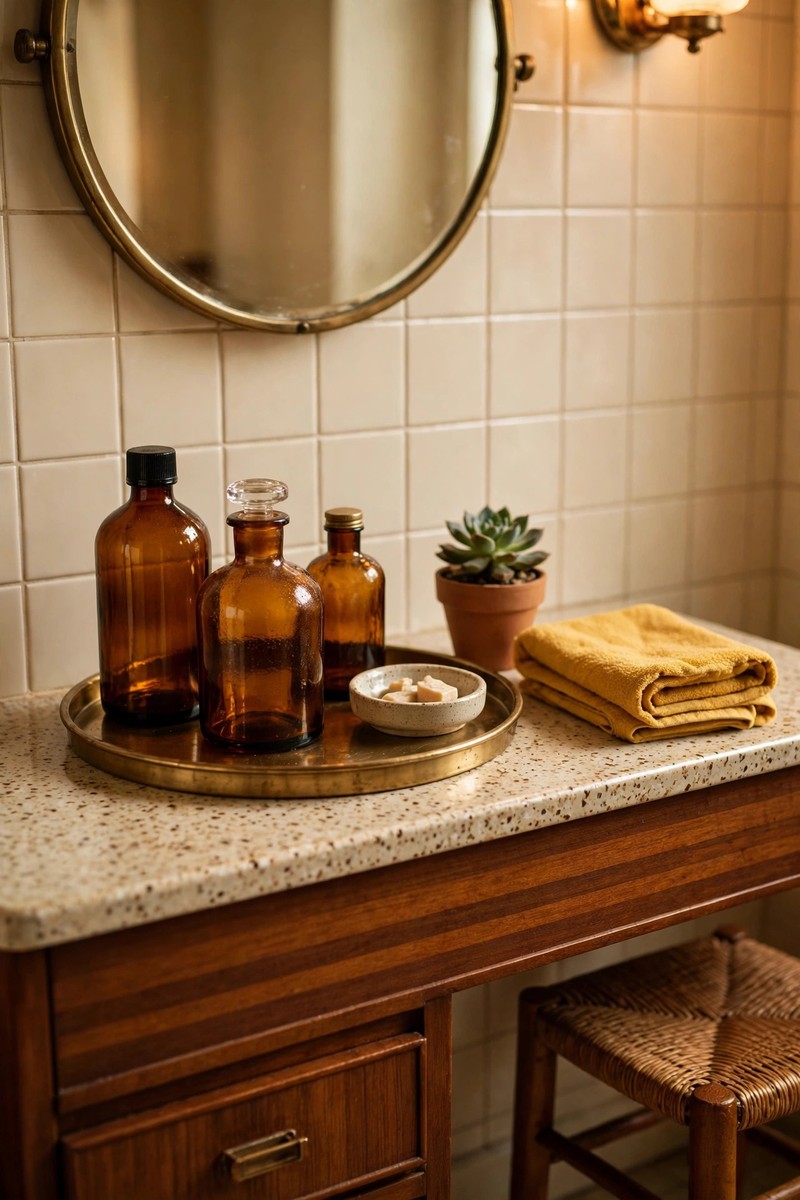
- Pick a round brass or wood tray about 12 inches wide.
- Group amber bottles, a small dish, and one plant on it.
- Keep daily items on the tray and extras in a cabinet.
- Wipe the tray weekly to stop water marks.
A vanity tray turns a cluttered bathroom counter into a styled display, and it takes five minutes to arrange. Choose a round brass or warm wood tray about 12 inches wide, then group amber glass bottles, a small ceramic dish, and one tiny plant on top. The tray corrals bottles that used to spread across the counter, which makes cleaning faster and the whole bathroom feel calmer. A brass tray costs 15 to 30 dollars, amber bottles run about 10 dollars for a set, and the whole vignette stays under 50 dollars.
Keep only daily items on the tray, like hand soap, lotion, and a toothbrush cup, and store the rest inside a cabinet. A tray with five items looks styled, while a tray with fifteen looks like a shelf that fell over, so edit with a firm hand. Wipe the tray once a week with a damp cloth to stop water marks, and dry the bottles after splashes so the brass stays bright. When guests visit, swap in a fresh hand towel and a small flower, and the bathroom feels like a boutique hotel in seconds.
Retro Shower Curtain

- Choose a geometric or floral print in orange, brown, and cream.
- Pick a fabric curtain 72 by 72 inches for a standard tub.
- Use a tension rod if the bathroom lacks a fixed rod.
- Wash the curtain monthly to keep it fresh and bright.
A retro shower curtain is the cheapest bathroom makeover a renter can buy, and it changes the whole room in ten minutes. Pick a bold geometric or floral print in orange, brown, and cream, which brings instant 70s color to plain white tile. A fabric curtain in the standard 72 by 72 inch size costs 20 to 40 dollars, and a matching liner adds about 10 dollars more. Hang it on the existing rod, or use a tension rod for about 12 dollars if the bathroom has no rod at all.
The curtain works as the bathroom's main art, so keep the rest of the room simple and let the print do the talking. Pair it with mustard towels, a woven bath mat, and a small plant on the windowsill for a coordinated 70s look. Wash the curtain monthly in cold water, hang it to dry, and replace the liner every few months to stop mildew. When you move, pack the curtain and rod in minutes, and the bathroom returns to plain white with no marks left behind. That is a makeover with zero risk to the deposit.
Home Office Nook
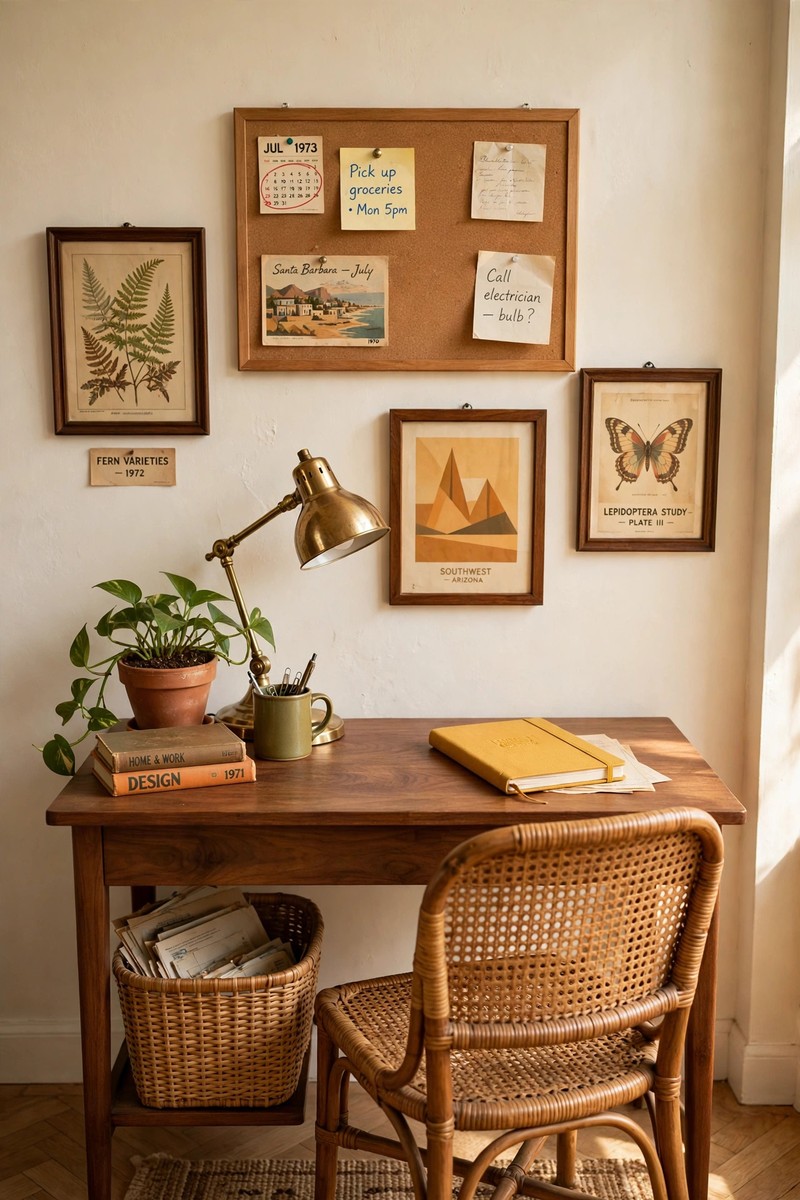
- Choose a small desk 36 to 42 inches wide for a corner nook.
- Add a rattan chair and a brass lamp for retro warmth.
- Hang one or two framed prints with adhesive strips.
- Keep a woven basket under the desk for papers and cables.
A home office nook proves that a tiny corner can work hard, and a few retro pieces make it a place you want to sit. Pick a small walnut desk about 36 to 42 inches wide, tuck it against a wall, and pair it with a rattan chair that keeps the corner airy. A brass desk lamp adds warm light for late work sessions, and two framed vintage prints hung with adhesive strips finish the wall. A small desk costs 60 to 120 dollars thrifted, and the chair and lamp add about 40 to 80 dollars more.
Keep the nook tidy, because a small desk fills up fast and clutter kills focus quicker than a bad chair does. Use a woven basket under the desk for papers, a small tray for pens, and a cord clip to keep cables from tangling on the floor. Work facing the wall with a lamp on the left, which lights the desk without glare on the screen. When the workday ends, clear the desk, close the laptop, and the nook turns back into a calm corner of the apartment. That reset keeps work from taking over the room.
Balcony Bistro Set
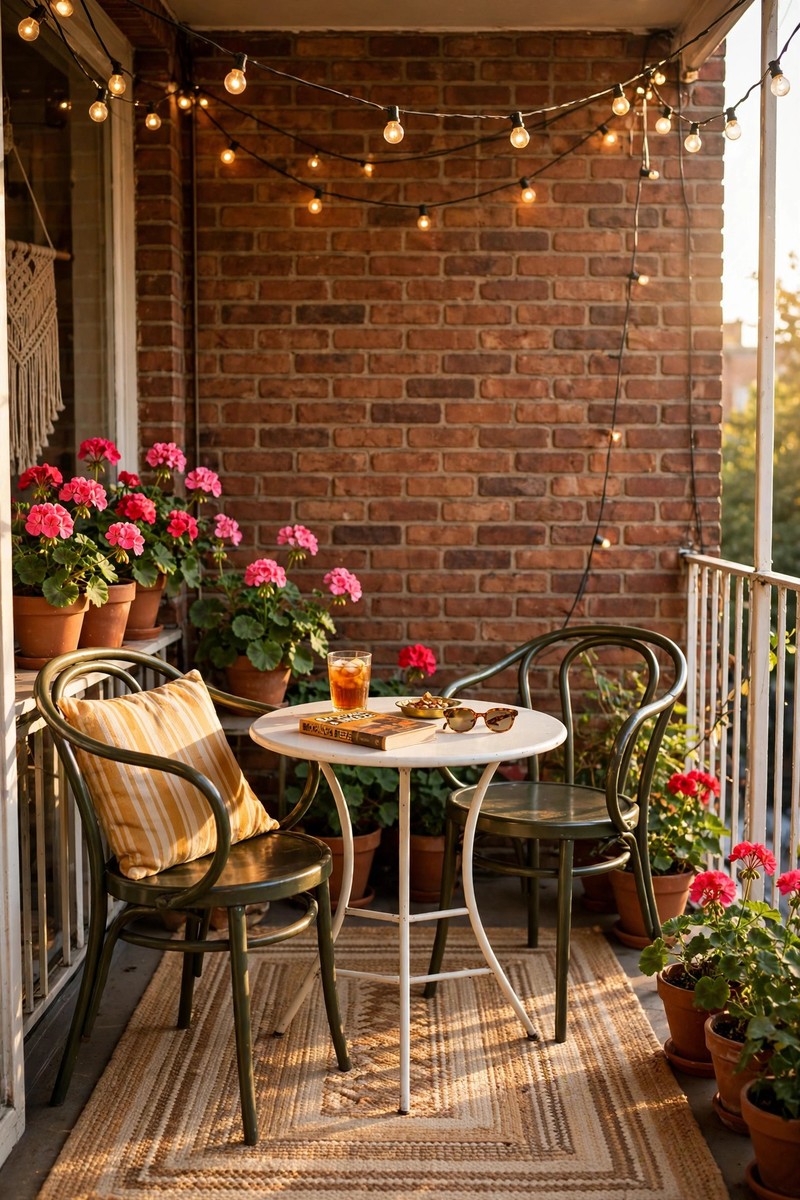
- Choose a bistro set with a 24 inch round table for a small balcony.
- Pick metal chairs with curved backs in white or sage green.
- Add terracotta pots with geraniums or herbs for color.
- Hang string lights with adhesive clips for evening glow.
A bistro set turns a forgotten balcony into a morning coffee spot, and it fits in a space barely bigger than a doorway. Pick a round table about 24 inches wide with two folding metal chairs, which tuck away flat when storms roll in. White or sage green chairs with curved backs carry the retro cafe feel, and a striped cushion on each seat adds comfort. A bistro set costs 50 to 110 dollars, and two terracotta pots with geraniums add about 15 dollars more. That is a full outdoor room for the price of one dinner out.
Style the balcony with potted plants along the railing, a small woven rug under the table, and string lights clipped overhead. Adhesive clips hold the lights without touching the railing, and solar string lights need no outlet at all. Water the plants twice a week, wipe the table after rain, and fold the chairs flat before a storm to keep them dry. On warm evenings, the balcony becomes the best seat in the apartment, with coffee in the morning and drinks at sunset. Small spaces reward the renters who actually use them.
Thrifted Lamp Revival
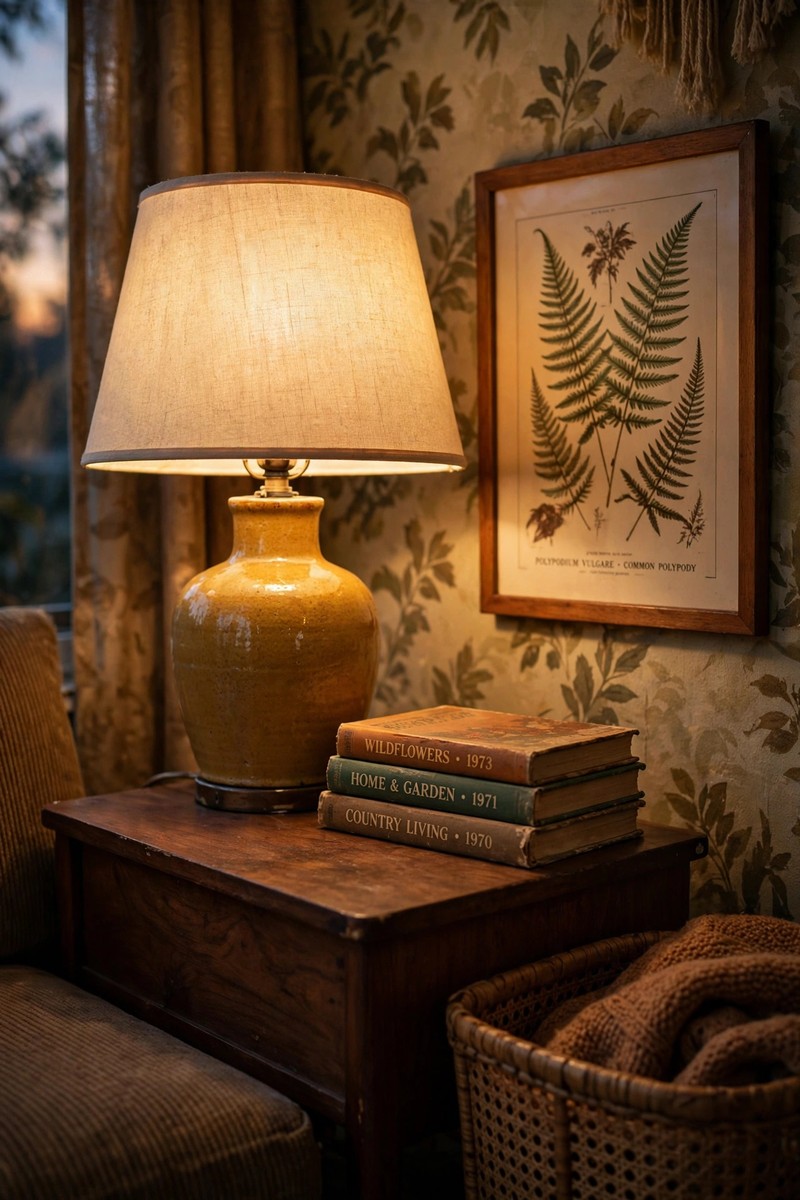
- Look for ceramic or brass lamps with solid bases at thrift stores.
- Swap a dated shade for a cream linen drum shade.
- Check the cord and socket before buying, and rewire if needed.
- Pair the lamp with vintage books for a styled side table.
A thrifted lamp is the best deal in retro decorating, because a 10 dollar find can look like a 100 dollar piece with one new shade. Look for ceramic bases in mustard or avocado glaze, brass stems, and mushroom shapes, which all scream 70s in the best way. Check the cord and socket before buying, and skip any lamp with frayed wiring or a cracked base, since safety comes first. A new cream linen drum shade costs 15 to 25 dollars, and swapping it takes five minutes with no tools at all.
Place the revived lamp on a side table or nightstand, where its warm glow anchors the corner and softens the whole room. Pair it with a stack of vintage books and a small plant, and the table starts to look like a styled shelf from a 70s magazine. Dust the shade weekly with a lint roller, and use a warm bulb under 60 watts to keep the glow soft and golden. When you move, wrap the lamp in a towel, pack it with the shade on top, and it arrives at the next apartment ready to glow.
Frequently Asked Questions
How do I get a retro look in a rental without painting?
Start with warm color and vintage shapes layered over what you already have. Swap in mustard or rust cushions, a shag rug, and a walnut or teak-look sideboard, then add thrifted ceramics and a sunburst mirror. One anchor piece per room keeps the look clear, and three shared colors tie every room together. Freestanding pieces and adhesive hooks hold the decor, so the walls stay untouched and the deposit stays safe.
What colors make a retro apartment look work?
Mustard, burnt orange, olive green, and warm brown are the core retro palette. Use cream or warm white on the largest surfaces, then add one bold color in every room through cushions, throws, and art. A 60-30-10 split keeps the mix calm: 60 percent neutral, 30 percent your main retro color, and 10 percent a sharp accent like teal or gold. Repeat the same three colors in each room so the whole apartment reads as one home.
Where do I find affordable retro furniture for a small apartment?
Thrift stores, Facebook Marketplace, and estate sales are the best sources for real vintage pieces. Side tables often run 20 to 40 dollars, armchairs 50 to 120 dollars, and a walnut dresser under 150 dollars if you check listings weekly. Measure the doorway and the spot before buying, since a 36-inch sideboard will not fit a 30-inch gap. Clean wood pieces with a damp cloth and a little furniture oil to bring the grain back.
How do I mix retro patterns without the room feeling busy?
Stick to three patterns at most and repeat one color across all of them. Pair one large-scale print, like a bold floral or geometric rug, with two smaller prints in the same color family, then break them up with solid cushions and plain wood. Keep the busiest pattern on the smallest piece, such as a throw pillow, so it reads as an accent. Step back after each addition and remove one item if the room starts to feel crowded.
Conclusion
A warm, patterned home needs no paint, no drilling, and no big budget, and these retro apartment aesthetic ideas prove the whole look comes from a few well-chosen pieces in warm colors. Pick the room you spend the most time in, add one anchor piece and two or three thrifted finds, and let the palette tie them together. Try one idea this weekend and notice how different the place feels by Sunday night. Save this guide on Pinterest so you can find it after your next thrift run, then share it with a friend who loves the 70s as much as you do.
You Might Also Like
- 30+ Small Apartment Decor Ideas for Renters (No Paint, No Holes)
- 25+ Renter-Friendly Gallery Wall Ideas Without Drilling (No Nails Needed)
- Start Here
- More Small Spaces Ideas
New guides land every week.