25+ Shoe Storage Ideas for Small Spaces (No Floor Space Needed)
Shoes by the door multiply fast, and in a small apartment the pile takes over the whole entry in days. These shoe storage ideas for small spaces give every pair a home that fits the space you actually have: a slim cabinet against the wall, a tray by the door, boxes under the bed, and hooks on the closet door. Every idea below is freestanding or adhesive, so nothing needs a drill and nothing leaves a mark when you move. Start with the pair you wear daily, then give the rest a spot that keeps the floor clear and the entry calm. Pick the fix for your biggest shoe pile and try it this weekend.
Shoe Tray Station

- A 30 inch tray holds three adult pairs side by side without crowding.
- Raised edges keep mud and rain off the floor after wet walks.
- Costs about $18 to $25 for a sturdy rubber or metal tray.
- Wipe it clean in two minutes with a damp cloth.
Your shoes need a home the second you walk in, or they end up everywhere. A tray gives every pair a clear spot and stops dirt from spreading across the floor. Put it right by the door, at a right angle to the wall, so shoes land there without thinking. A 30 inch tray fits three adult pairs, and two trays side by side cover a family of four. Choose rubber for rain boots and metal for dress shoes, since both wipe clean fast. The tray also protects wood floors from salt, grit, and wet soles in winter.
Renters love this setup because nothing attaches to the wall and nothing leaves a mark. The tray sits on the floor, moves in seconds, and comes with you on moving day. Pair it with a small hook rail on adhesive strips for keys and a bag, and the whole corner works harder. Keep only daily shoes here, and store the rest in the closet, so the tray never overflows. A $20 tray beats a stained rug and a lost deposit deduction every single time. That habit keeps the entry clear and the floor clean.
Slim Shoe Cabinet
- A 9.5 inch deep cabinet fits flush against most entryway walls.
- Holds 12 to 18 pairs depending on shoe size and shelf spacing.
- Costs $70 to $140 for a solid two or three tier model.
- Takes about 30 minutes to build with no wall fixing needed.
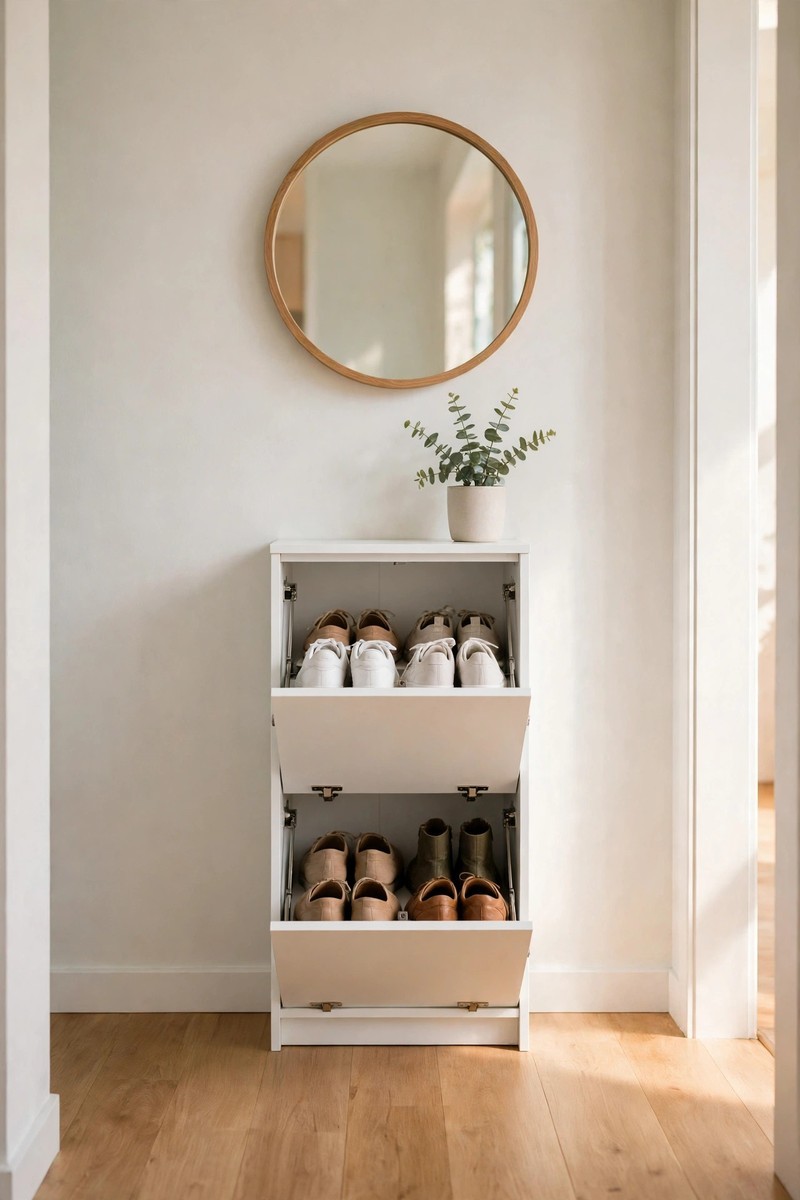
That pile of shoes by the door makes the whole apartment feel messy, even when the rest looks tidy. A slim cabinet hides the pile behind closed doors and gives the entryway a calm, finished look. Measure the wall first, since a 9.5 inch deep unit fits most narrow halls without blocking the walkway. Tilt out doors work best here, because they open without swinging into your path. Keep daily pairs on the top tier, so you grab them fast and put them back just as fast. A quick wipe each week keeps the front clean and the doors smooth.
Watch out for the renter trap with this one, because many cabinets ship with wall fixing hardware in the box. Skip that hardware and let the cabinet stand free, since a filled unit stays stable on a flat floor. Add adhesive felt pads under the feet to stop scratches and sliding on wood floors. Put a small tray on top for keys, mail, and sunglasses, and the cabinet becomes a full landing zone. Your landlord sees clean walls, and you get hidden shoe storage that moves with you. That habit keeps the cabinet steady and the floor safe.
Over Door Shoe Rack
- Hooks over any standard door in under five minutes with no tools.
- Holds 8 to 12 pairs on racks that clear the door frame easily.
- Costs about $22 to $35 for a sturdy metal model.
- Works on bedroom, closet, and bathroom doors too.
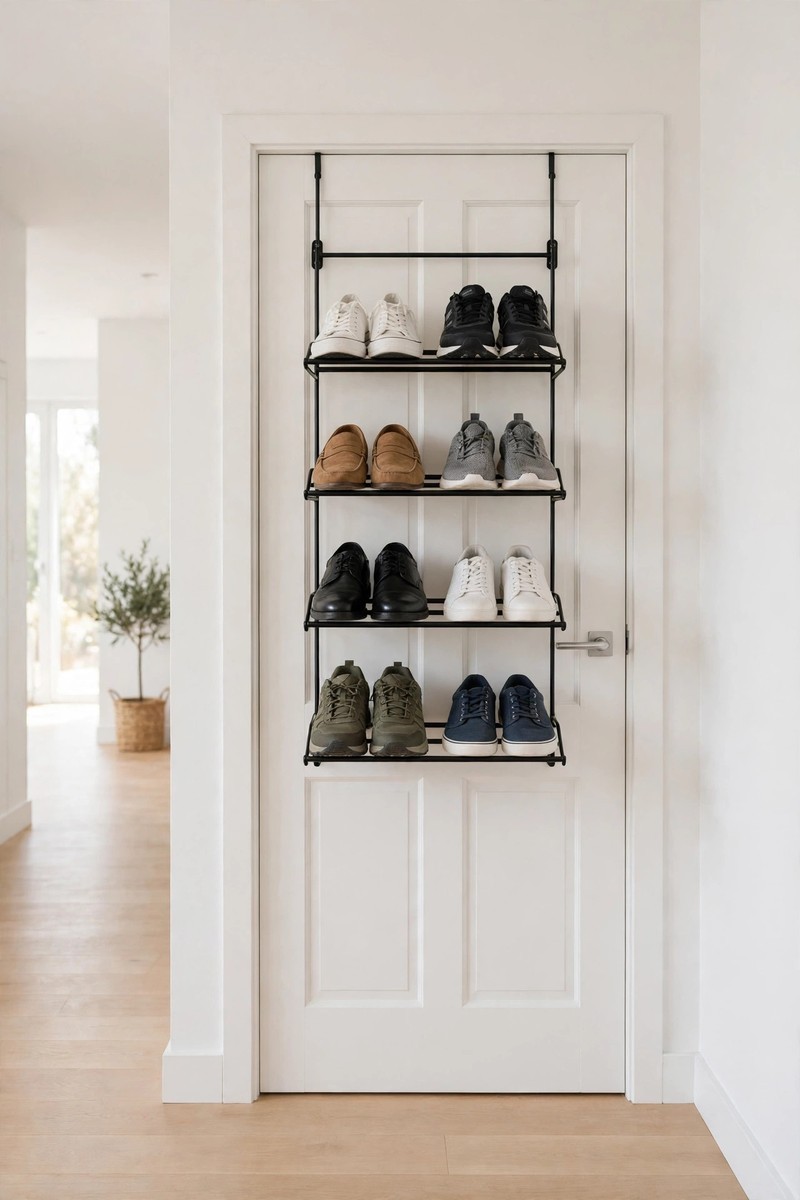
The back of a door is wasted space in most small homes, and shoes fit there perfectly. An over door rack turns that blank surface into storage for eight to twelve pairs without touching the floor. Hang it over the bedroom or closet door, then test the swing to make sure shoes clear the frame. Flat shoes, sneakers, and sandals sit best here, while tall boots need a different spot. Keep the heaviest pairs low, so the rack stays balanced and the door still closes smoothly. That quick check takes seconds and saves a lot of daily frustration.
This is a renter favorite because the hooks lift off in seconds and leave zero marks behind. No adhesive, no holes, and no landlord approval needed for a rack that just hangs there. Add a small adhesive hook beside it for a shoehorn or a lint roller, and mornings get faster. Check the door width before buying, since most racks fit doors up to 1.75 inches thick. For under $35, you gain a full shoe shelf that costs no floor space at all. That small habit keeps the door smooth, the rack steady, and mornings much easier.
Entryway Shoe Bench
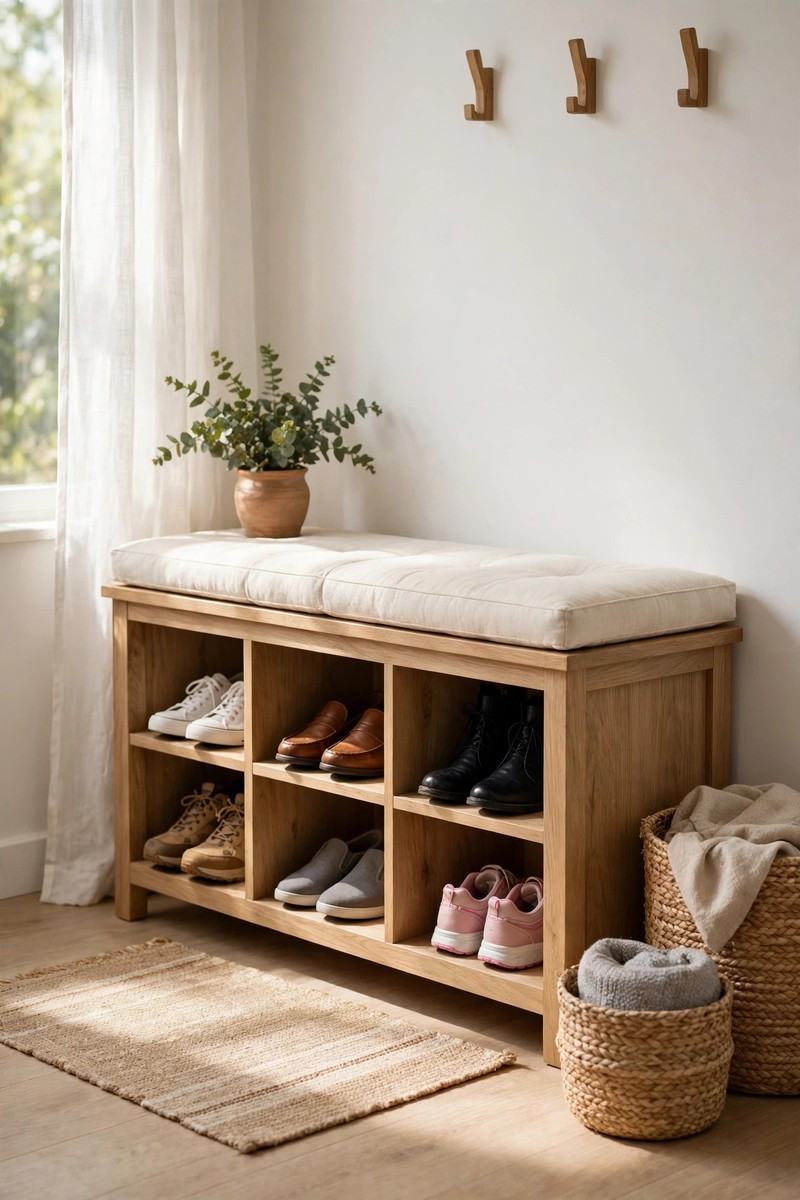
- A 36 inch bench seats one person and stores six to eight pairs.
- Open cubbies keep shoes visible, so pairs get used and rotated.
- Costs $90 to $160 for a solid wood or sturdy metal frame.
- Sitting to put shoes on saves about two minutes every morning.
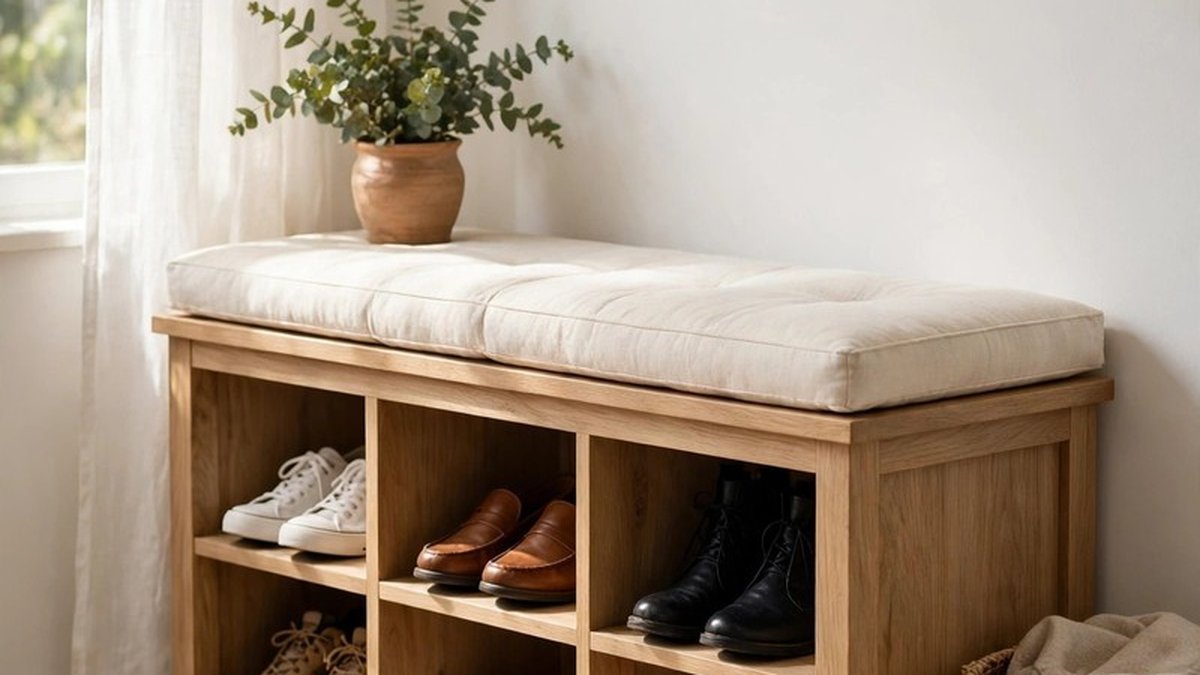
Sitting on the floor to tie shoes gets old fast, especially with boots in winter. A bench gives you a seat and a shoe shelf in one piece of furniture, which matters when floor space is tight. A 36 inch bench fits most entryways and holds six to eight pairs in open cubbies below the seat. Keep daily shoes in the front cubbies and seasonal pairs further back, so the bench never turns into a junk pile. Add a cream cushion on top for comfort, and the bench looks like decor, not just storage.
Freestanding benches suit renters perfectly, since nothing bolts to the wall or floor. Move it to the bedroom or living room later, and it still works as extra seating. Put adhesive felt pads under the legs to protect wood floors from scuffs. A small basket on top holds gloves, hats, and dog leashes, so the whole entry stays tidy. For around $120, you get a seat, a shelf, and a calmer morning routine in one buy. That simple care keeps the bench sturdy, the floor safe, and the entry welcoming for guests and family alike.
Stackable Shoe Racks
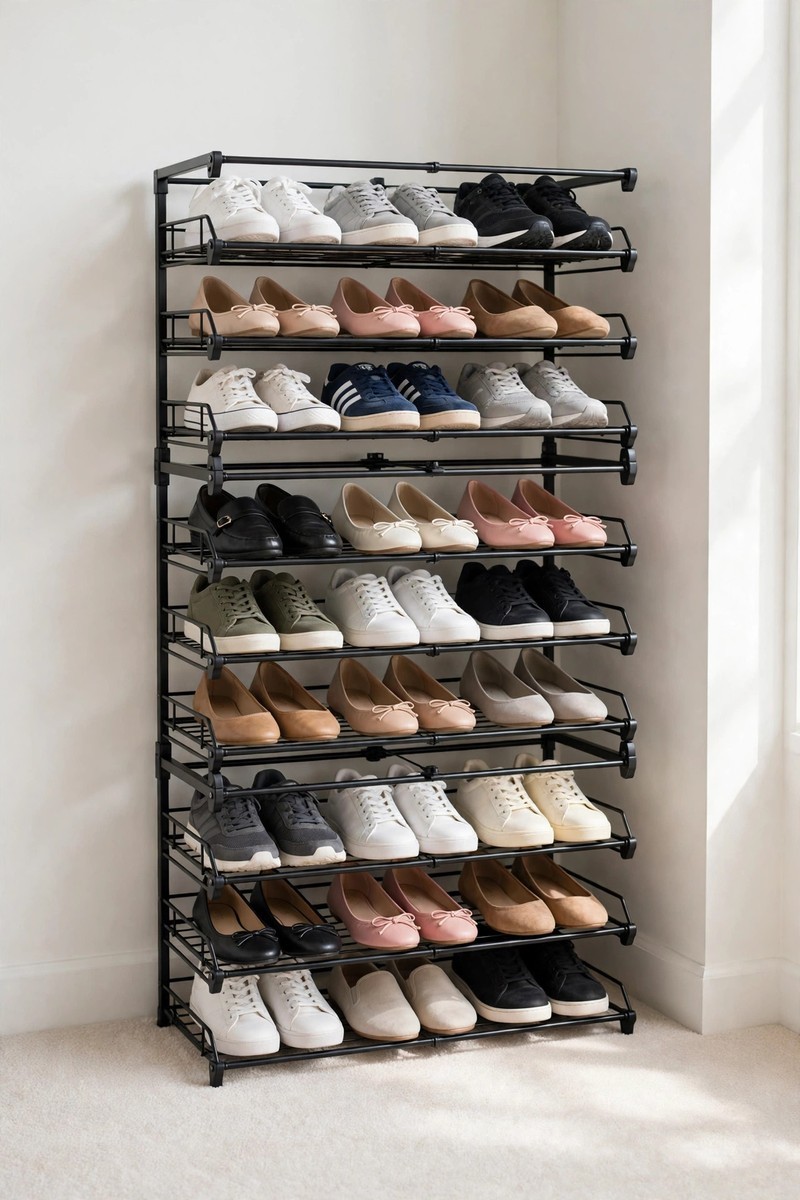
- Each rack is about 24 inches wide and holds three pairs per tier.
- Stack two or three high to store 9 to 12 pairs in one column.
- Costs $15 to $25 per rack, so a three high tower runs under $75.
- Sets up in about ten minutes with no tools at all.
Cheap shoe racks often wobble, sag, and end up in the trash within months. Stackable metal racks are different, because you can build them as tall as your space allows and take them apart just as fast. Start with two tiers by the door, then add a third when your collection grows. Each 24 inch rack holds three pairs per tier, so a three high tower stores nine to twelve pairs in one narrow column. Keep heavy boots on the bottom tier for stability, and lighter flats up top. That habit keeps the tower steady and easy to use.
Renters get a lot from this simple system, since the racks need no wall support and no adhesive. They stand free, move in seconds, and split into separate units for different rooms when needed. Put one tier in the closet for off season shoes, and keep the rest by the door for daily pairs. A quick wipe keeps metal frames clean, and the open design lets wet shoes dry faster. For under $50, this is the cheapest way to double your shoe space. That simple split keeps daily pairs close and off season pairs out of the way.
Closet Floor Shoe Shelves

- Low shelves sit under hanging clothes and use wasted floor space.
- A 36 inch unit holds 8 to 10 pairs in two tidy rows.
- Costs $35 to $60 for a two tier wood or metal shelf.
- Builds in about 20 minutes with no wall attachment needed.
The floor of a closet is prime shoe space, yet most people just toss pairs in a pile there. Low shelves turn that pile into neat rows you can actually see and reach. A 36 inch two tier shelf slides under hanging clothes and holds eight to ten pairs without crowding. Measure the height of your longest coats first, since the shelf must clear them by at least two inches. Keep everyday sneakers at eye level on the top tier, and dress shoes below where they stay clean and dust free. That gap stops scuffs.
This setup works well for renters because the shelf stands free and leaves the closet walls untouched. Pull it out on moving day, wipe it down, and set it up in the next place. Add a small tray on the top shelf for shoe care items like spray and brushes. Rotate seasonal shoes to the back, so the front row always holds what you wear now. For about $45, you turn a messy closet floor into a proper shoe shelf that actually stays tidy. That quick rotation keeps the front row useful and the closet floor clear.
Closet Door Shoe Organizer
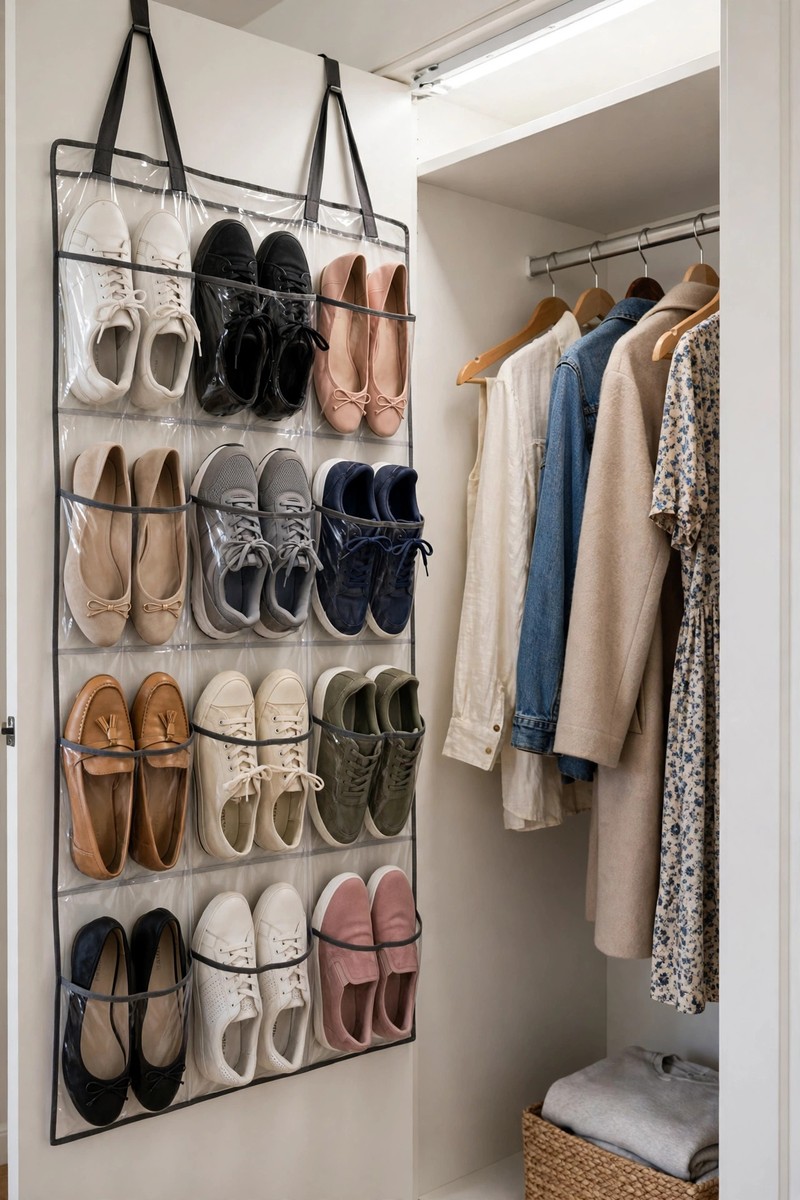
- Clear pockets hold 12 to 24 pairs depending on the organizer size.
- Hangs over the door in about three minutes with no tools.
- Costs $12 to $20 for a clear vinyl or fabric model.
- See through pockets make finding the right pair fast.
Closet doors hide a full wall of storage that most renters never use. A pocket organizer hangs over the door and holds twelve to twenty four pairs of flats, sneakers, and sandals in clear view. Slip the hooks over the top, smooth the fabric flat, and fill the pockets from the bottom up. Heavy pairs go low to keep the door balanced, while light flats and sandals fill the top rows. Clear pockets beat solid fabric here, because you can spot the right pair in seconds without digging. That habit keeps the door light and shoes easy to find.
The organizer lifts off in seconds at move out, with no marks and no damage to the door. That makes it one of the safest renter options for shoe storage in a small home. Use a few pockets for shoe care, socks, or laces, so nothing else clutters the closet floor. Check that the door still closes fully before you fill every pocket, since bulky sneakers can block the swing. For under $20, you gain a whole shoe wall that uses zero floor space. That quick test saves trouble and keeps the closet door working smoothly every day.
Tilt Out Shoe Cabinet
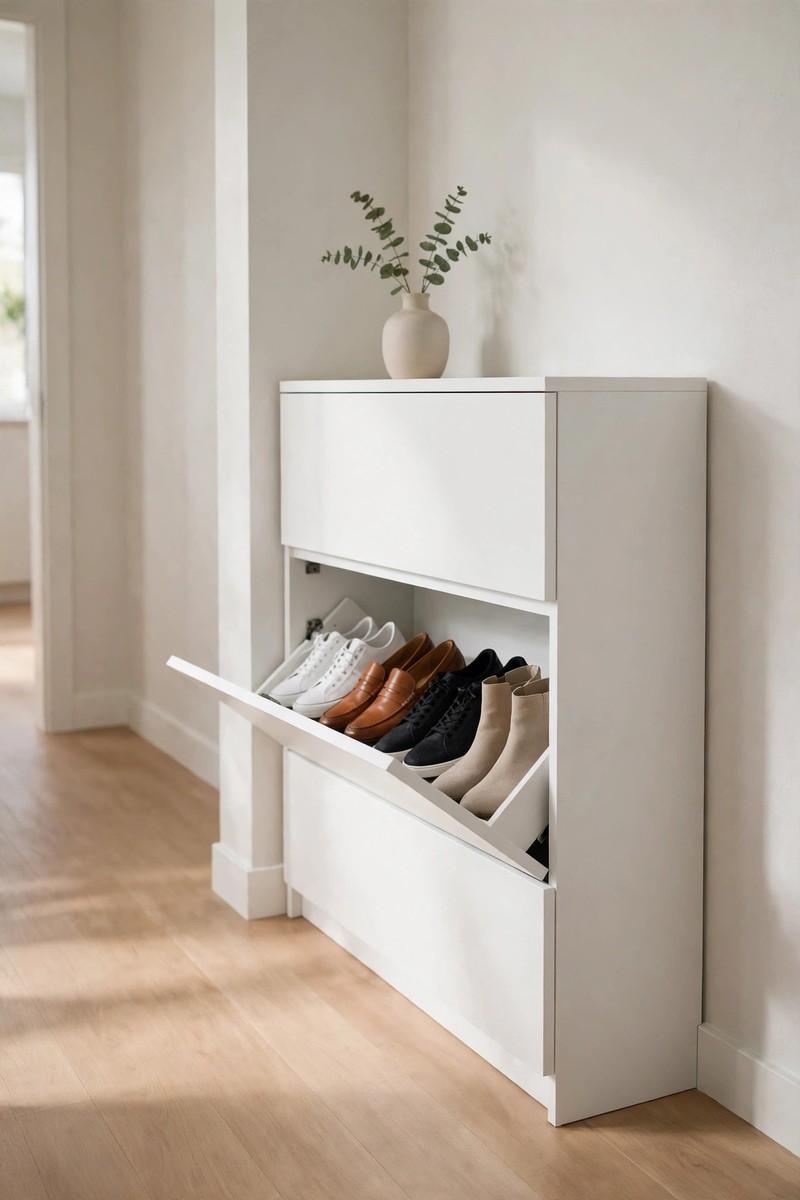
- Tilt out doors hide shoes and keep dust off every pair.
- A two compartment unit holds 8 to 12 pairs in a slim frame.
- Costs $85 to $150 for a well built wood cabinet.
- Measures about 10 inches deep, so it fits narrow halls.
Open shoe racks look messy fast, even when the shoes are lined up neatly. A tilt out cabinet solves that by hiding every pair behind a clean front, so the hallway always looks calm. Pull the top of the door toward you, slip shoes in toe first, and push it closed in one smooth motion. A two compartment unit holds eight to twelve pairs, with trainers fitting best at 12.5 inches long or less. Keep the pairs you wear most in the top compartment, so you reach them without bending down low.
Many tilt out cabinets include wall fixing hardware, so check the box and leave that hardware out. A full cabinet stands steady on its own, especially with heavier shoes stored low for balance. Add adhesive pads under the base to stop sliding on smooth floors and to protect the finish. Put a small mirror or a plant on top, and the cabinet reads as hallway furniture, not a shoe box. Your deposit stays safe, and your shoes stay hidden and dust free. That balance keeps the cabinet steady, the floor safe, and the hallway looking clean.
Shoe Storage Basket
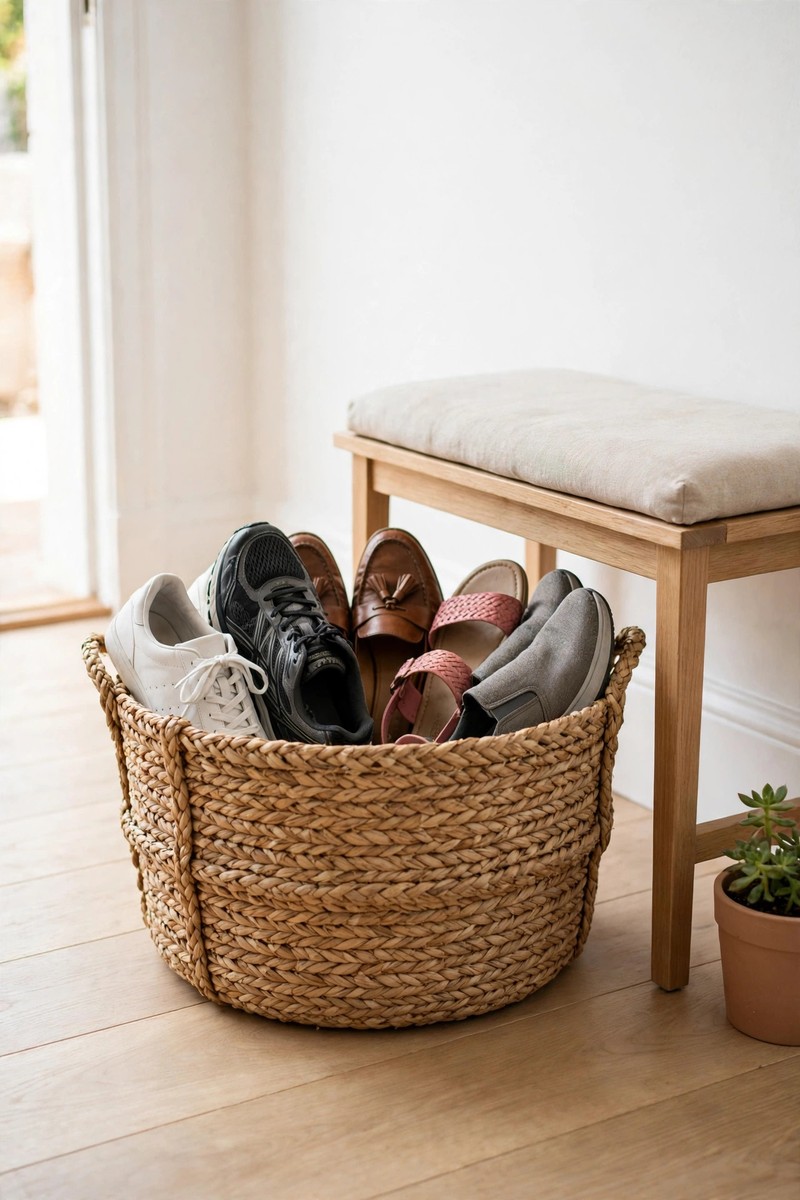
- A 20 inch basket holds four to six pairs of casual shoes.
- Woven sides let air flow, so shoes dry faster and smell less.
- Costs $25 to $45 for a sturdy seagrass or cotton rope basket.
- Move it anywhere in about ten seconds, no setup needed.
Not every shoe needs a shelf, and not every entry needs furniture. A big basket by the door catches daily shoes in one soft, simple spot that looks good doing it. A 20 inch basket holds four to six pairs of sneakers, flats, and sandals without crushing them. Toss shoes in toe first, and they stay visible enough to grab fast on the way out. Woven sides let air move through, so damp shoes dry faster and odors stay lower than in a closed box. That simple habit keeps the basket tidy and shoes easy to grab.
Baskets are perfect for renters because they need no install, no adhesive, and no wall contact at all. Carry the basket to the bedroom, the car, or the next apartment with zero effort. Keep one basket for daily shoes and a second in the closet for slippers and sandals, so pairs never mix. A quick shake outside keeps dirt from building up inside. For about $30, you get the simplest shoe storage that still looks intentional and tidy. That quick shake stops dirt building up and keeps the basket fresh for daily use.
Entryway Boot Tray

- A 32 inch tray holds two pairs of tall boots with room to spare.
- Deep sides catch water, snow, and mud before they reach the floor.
- Costs $20 to $35 for a heavy duty rubber or plastic tray.
- Rinse clean in about three minutes under a tap or hose.
Tall boots do not fit on most shoe racks, and they drip all over the floor when they come inside wet. A boot tray gives them a tall, sturdy home that catches every drop before it stains the floor. A 32 inch tray holds two pairs of tall boots side by side, with space left for a pair of sneakers at one end. Stand boots upright so water drains down and air reaches the insides. Deep sides matter here, since shallow trays overflow fast after a snowy walk home. That habit keeps boots dry and ready.
Renters should love this simple fix, because the tray sits on the floor and touches nothing else. It protects wood and carpet from salt stains that can cost part of a deposit at move out. Pair it with a small adhesive hook for a boot brush, and cleaning takes seconds after each trip outside. Store off season boots in the closet, and keep only current pairs on the tray. For under $30, a boot tray saves floors, saves time, and keeps winter mess in one place. That routine keeps the tray working and the floor dry.
Rolling Shoe Cart

- Four small wheels let you roll the cart out and back in seconds.
- A three tier cart holds 9 to 12 pairs in a narrow 16 inch frame.
- Costs $30 to $55 for a sturdy metal cart with locking wheels.
- Rolls into a closet gap as narrow as 18 inches wide.
Fixed shelves stay put, but a rolling cart goes where you need it, when you need it. Roll it out to pick shoes in the morning, then tuck it back into a closet gap or beside the bed. A three tier cart holds nine to twelve pairs in a narrow 16 inch frame, so it fits gaps that waste space now. Lock the wheels once it sits in place. Keep daily pairs on the middle tier at easy reach, and seasonal pairs on the bottom. That habit keeps the cart handy.
This cart suits renters because it needs no wall fixing and no adhesive to stay put. The wheels do the work, and the whole unit moves to the next apartment in one trip. Add a small basket on the top tier for socks, laces, and shoe spray. Measure your closet gap before buying, since most carts need at least 18 inches of width to roll in cleanly. For about $40, you get shoe storage that moves with you, literally, every single day. That quick check saves frustration and keeps the cart rolling smoothly into its gap.
Shoe Cubby Bench

- Six cubbies hold six to eight pairs, one pair per cubby.
- A 42 inch bench seats two people at once for busy mornings.
- Costs $110 to $180 for a solid wood cubby bench.
- Each cubby fits trainers up to 12.5 inches long with ease.
A bench with cubbies beats a plain bench, because every pair gets its own square instead of piling up in a shared space. Six cubbies hold six to eight pairs, with one pair per cubby keeping shoes easy to find and put away. A 42 inch bench seats two people at once, which helps on busy mornings when everyone leaves at the same time. Keep kids shoes in the low cubbies they can reach, and adult pairs up higher. Add a cushion on top, and the bench feels like a proper seat, not just a storage box.
Cubby benches stand free, so renters can move them without touching a wall. Put felt pads under the feet to stop scuffs on wood floors, and the bench stays put without sliding. A small basket in one cubby holds hats, gloves, and scarves, so winter gear stays close to the door. Wipe the cubbies clean in five minutes each week to stop dust and dirt building up. For around $140, you get seating, storage, and a tidier entry in one piece. That weekly wipe stops dust, keeps cubbies fresh, and makes the bench last longer.
Under Stairs Shoe Nook
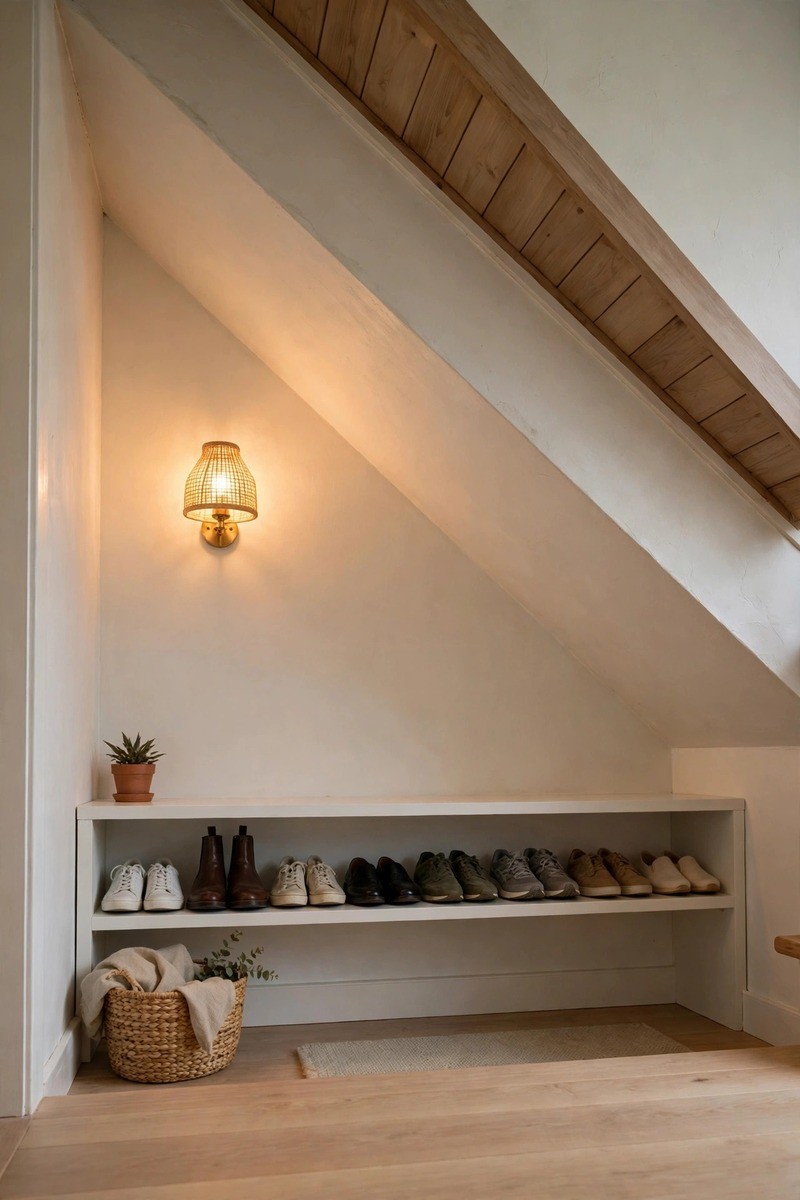
- Low shelves fit under stairs as short as 24 inches high.
- A three shelf nook holds 10 to 14 pairs in a small footprint.
- Costs $40 to $70 for freestanding shelves or stackable racks.
- Turns dead space into useful storage in about 30 minutes.
The space under the stairs often holds dust, boxes, and nothing useful. Low shelves turn that awkward triangle into a proper shoe nook that uses space you already pay rent for. Measure the lowest point first, since shelves must fit under stairs as short as 24 inches high at the back. A three shelf setup holds ten to fourteen pairs, with flats and sneakers on the low shelves and boots standing at the taller end. Keep a small basket at the front for slippers, so the nook stays tidy and easy to use. That habit keeps the nook tidy.
Freestanding shelves work best here, because nothing needs to attach to the stair wall or the sloped ceiling. Slide the shelves in, load them up, and pull them out at move out with no marks left behind. Add a battery light or a small adhesive light strip for visibility in the darker corner. A quick wipe each week keeps dust from settling on shoes stored low. For about $55, you turn dead space into a shoe nook that feels built in, without touching the structure at all. That wipe keeps shoes clean and shelves fresh.
Under-Bed Shoe Boxes
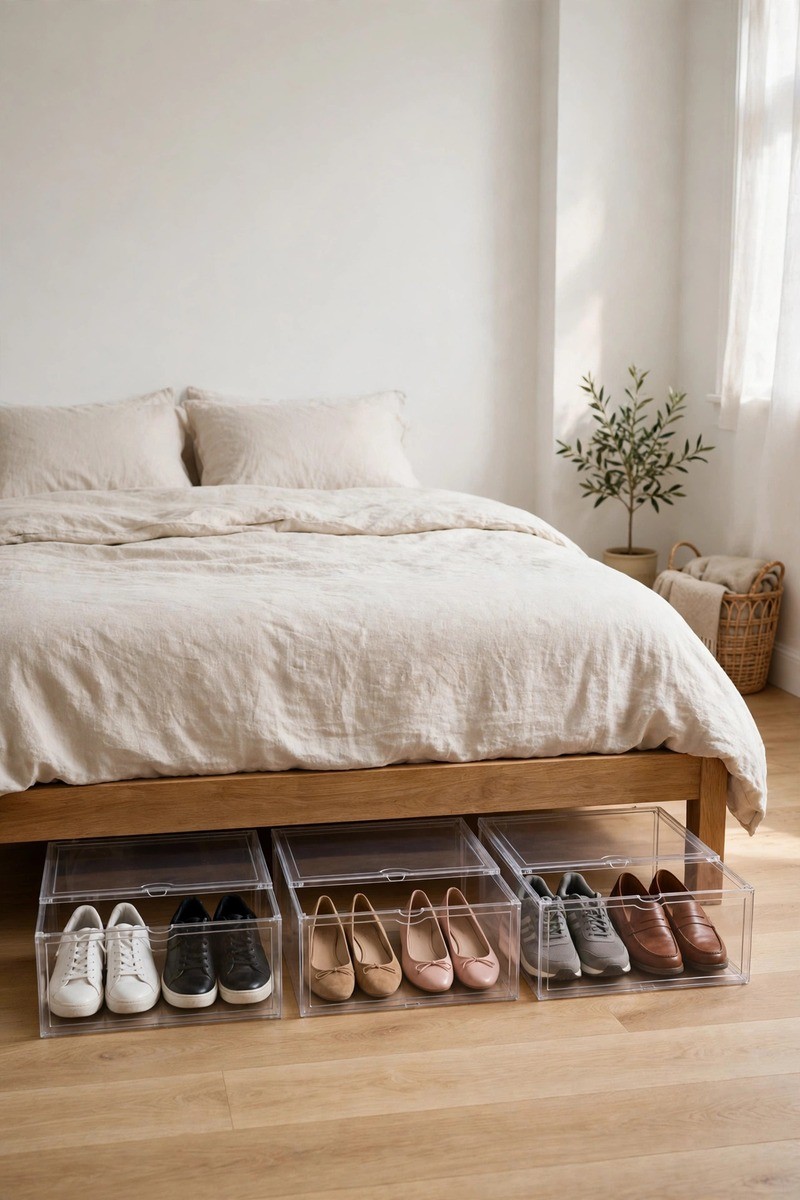
- Pick low boxes under 6 inches tall so they slide under most bed frames without catching.
- Clear lids let you spot the right pair in seconds, no digging through a dark pile.
- A set of 6 boxes costs about $25 and holds 6 pairs, or 12 if you stack singles.
- Label each end with a small sticker so you grab shoes without pulling every box out.
Your bed hides the best shoe storage you already own. That dead space under the frame fits at least 6 pairs in low boxes. Measure the gap first, since most frames leave 7 to 9 inches of clearance. Boxes under 6 inches tall slide in and out without catching. Clear lids matter here, because you need to spot black flats versus brown boots fast. Cheap sets run about $25 for 6 boxes. Keep daily shoes here and store the rest in a closet. Your floor stays clear, your shoes stay dust-free, and your landlord never hears a thing.
Dust is the real enemy under a bed, so lids beat open trays every time. Open bins collect dust fast. Lidded boxes keep shoes clean for months with zero effort. Slide them out once a month and wipe the lids. That takes about 5 minutes total. If your bed sits low, look for boxes under 5 inches tall, or use flat zip bags instead. They hold one pair each and fold flat when empty. Add a small label on the short end facing out, so you never pull three boxes to find one pair. Simple, cheap, and completely damage-free.
Under-Bed Shoe Drawers

- Rolling drawers on wheels pull out in one smooth motion, no lifting or dragging.
- One wide drawer holds 8 to 10 pairs, so two drawers cover most shoe collections.
- Expect to pay $40 to $70 for a sturdy pair with wheels and a dust cover.
- Measure your bed gap first, since most drawers need at least 7 inches of clearance.
Those floppy fabric bins under your bed always collapse. A proper rolling drawer fixes that, because it holds its shape and glides out on wheels. You pull it toward you, grab your shoes, and push it back in about 10 seconds. Most drawers measure around 30 inches wide and 24 inches deep, which fits 8 to 10 pairs per drawer. Two drawers hold a full rotation of daily shoes. Look for a clear top or mesh window so you can see inside without opening it. Your shoes stay dust-free, your floor stays clear, and nothing touches your walls.
Wheels make all the difference on carpet, so skip drawers without them. Dragging a fabric bin across carpet strains the seams and scuffs the floor. Good wheels roll smoothly even when the drawer holds 10 pairs of boots. A sturdy set costs $40 to $70, and that beats replacing collapsed bins every few months. Check the height before you buy, since most need 7 inches of clearance under the bed. If your frame sits lower, risers can add 3 inches for about $15. Check your lease first, since some landlords dislike bed risers. Otherwise, this setup stays fully renter-safe.
Wall-Mounted Shoe Rack
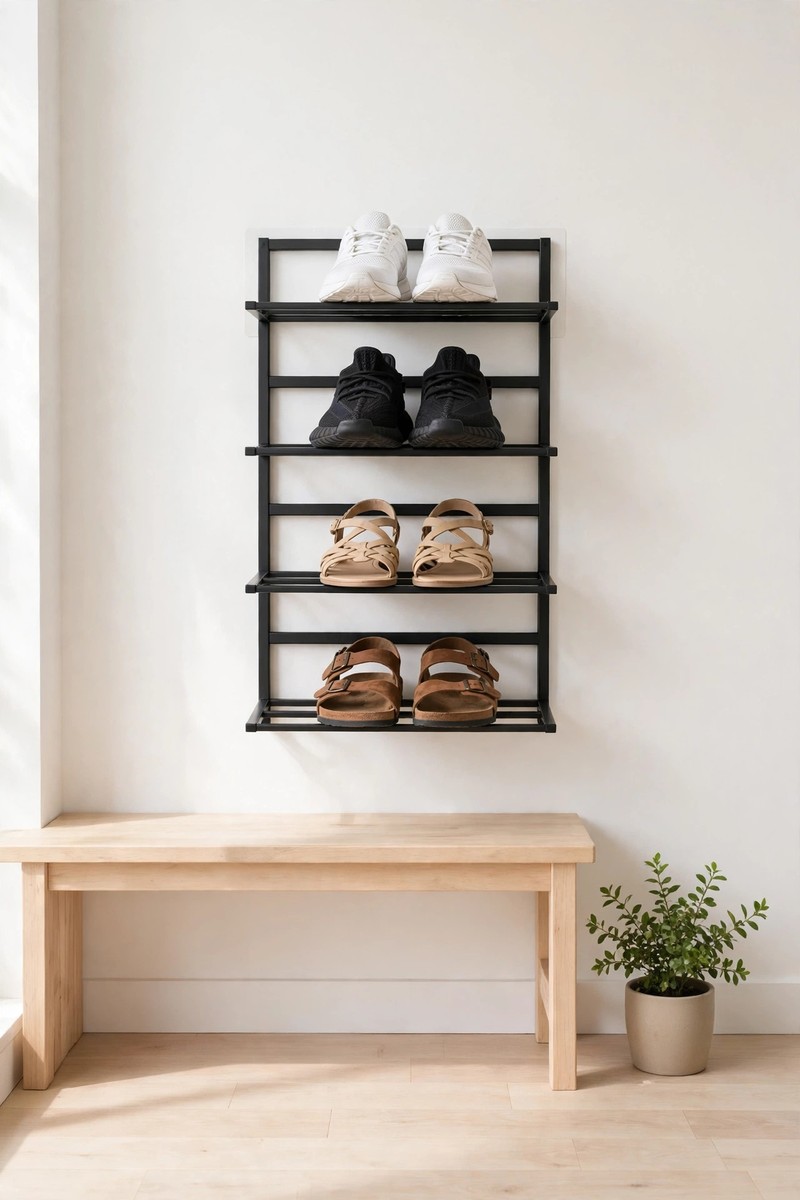
- Adhesive strips rated for 15 pounds per hook hold sneakers and flats with ease.
- Mount the rack at ankle height, about 12 inches off the floor, for easy grab-and-go.
- A 4-pair adhesive rack costs $20 to $35 and installs in about 15 minutes.
- Removal takes 5 minutes with a hair dryer and leaves no marks on the walls.
Wall space beats floor space when your entryway measures barely 3 feet wide. An adhesive-mounted rack lifts 4 pairs off the floor with no holes at all. Heavy-duty strips rated for 15 pounds per hook handle sneakers, flats, and sandals. Mount the lowest rail about 12 inches off the floor, so shoes sit low enough to grab fast. Installation takes about 15 minutes, mostly wall cleaning. Wipe the spot with rubbing alcohol, let it dry, then press each strip firm for 30 seconds. Your shoes gain a home, your floor gains space, and your deposit stays safe.
Watch for this renter trap. Many shoe cabinets and wall racks in stores need wall fixing, which means holes in the wall. Skip those and buy adhesive-only or tension-mounted versions instead. Check the box, since some kits hide extra hardware in the bag. If the instructions mention wall fixing at all, put it back on the shelf. A good adhesive rack holds 4 pairs and costs $20 to $35. When moving day comes, warm each strip with a hair dryer for 30 seconds and peel slowly. The finish stays put, the wall stays clean, and you keep your full deposit.
Vertical Shoe Tower
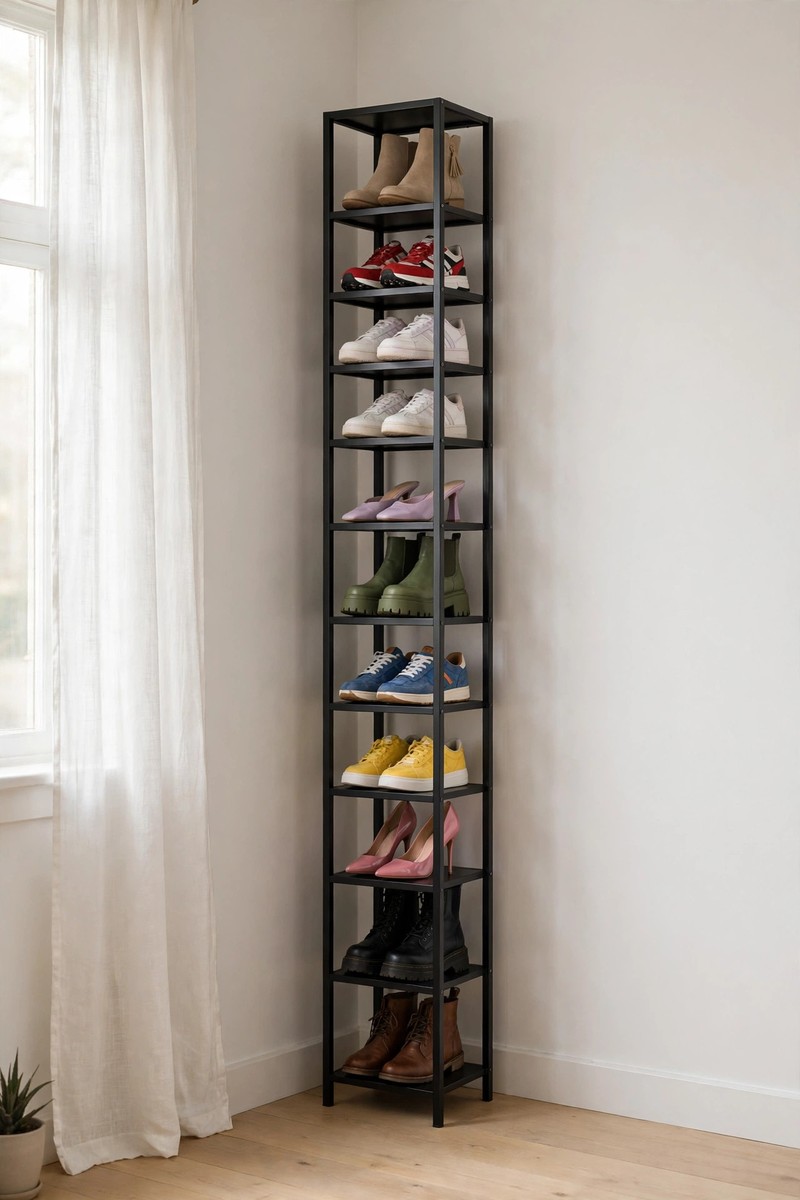
- A 10-tier tower holds 20 to 30 pairs in a footprint just 12 inches wide.
- Freestanding towers need zero wall contact, so landlords have nothing to object to.
- Expect to pay $30 to $60 for a sturdy metal tower with adjustable shelves.
- Place it in a corner so it feels built in, not like a random stack in the room.
A vertical tower turns one square foot of floor into storage for 20 pairs. That math wins in a studio where every inch counts. Ten tiers stack upward, and each shelf holds 2 to 3 pairs. The whole unit measures about 12 inches wide and 10 inches deep, so it tucks into a corner or beside a dresser. Metal frames beat fabric ones, because they stay straight under the weight of boots. Assembly takes about 20 minutes with no tools beyond the included wrench. Your shoes stay visible, your closet stays free for clothes, and your floor stays clear.
Stability matters when a tower stands 60 inches tall, so load it smart. Put heavy boots on the bottom two shelves and light flats up top. That keeps it steady. If your tower feels tippy on carpet, slide a flat board underneath for about $10. Some towers include a small anti-tip strap, but skip it if it needs wall fixing. A freestanding tower works fine without one when loaded bottom-heavy. Dust the shelves once a week, since open towers collect dust fast. That takes about 3 minutes. For $30 to $60, you get serious capacity with zero wall damage.
Hanging Shoe Organizer
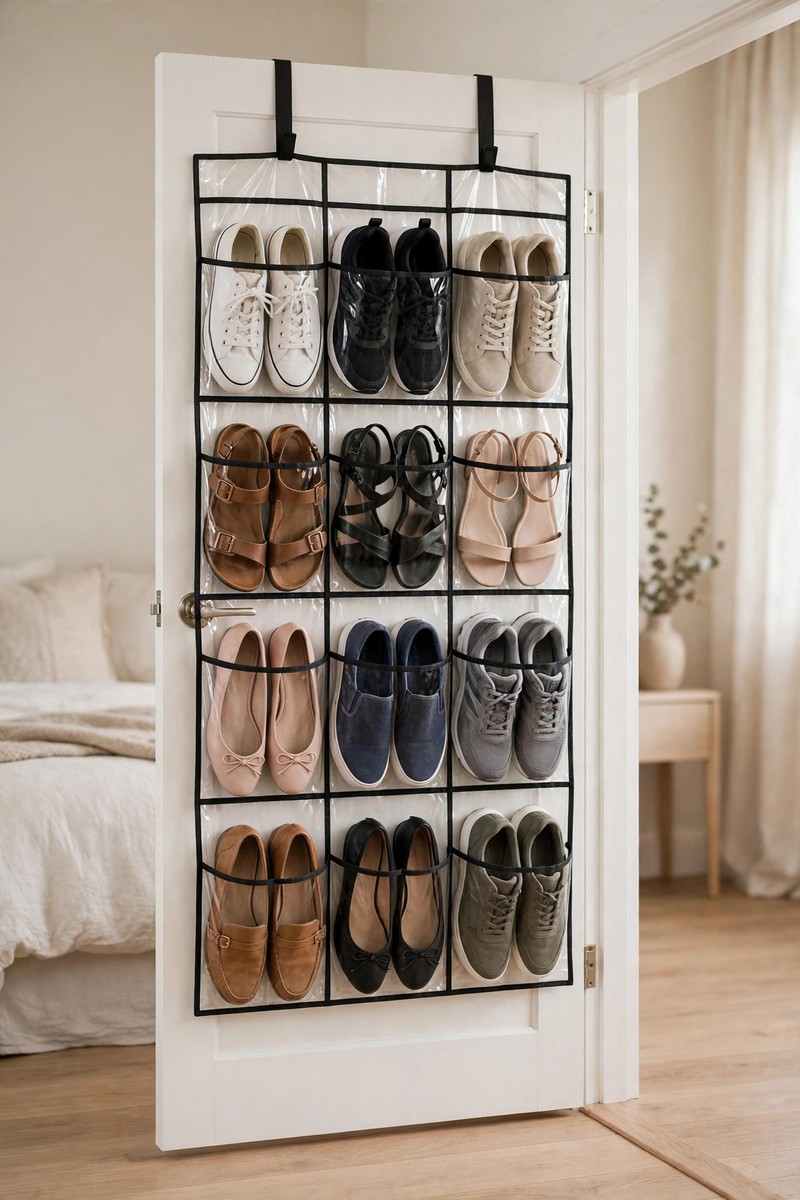
- Over-door pockets hang from a standard door in 2 minutes with no tools at all.
- A 24-pocket organizer holds 12 pairs, one shoe per pocket, in clear view.
- Expect to pay $12 to $20 for a sturdy clear organizer with strong hooks.
- Use it on a closet door, bedroom door, or the back of any flat interior door.
The back of a door holds 12 pairs without touching a single inch of floor. Most renters ignore that free space. An over-door organizer hooks over the top of any standard door in about 2 minutes. No tools, no adhesive, no holes, nothing to explain. Clear pockets matter, because you need to see your shoes at a glance. A 24-pocket version holds 12 pairs, one shoe per pocket. Sneakers fit fine, and so do flats, sandals, and low heels. Keep tall boots elsewhere. Your closet stays roomy, your floor stays clear, and setup costs less than lunch.
Door fit is the only thing to check before you buy. Most over-door hooks fit standard doors. If your door runs thicker, look for adjustable hooks for about $5 extra. Test the door after hanging it, since an organizer adds weight and can stop a door from closing fully. If it sticks, shift a few heavy pairs to lower pockets. That balances the weight and lets the door swing free. A good organizer costs $12 to $20 and lasts for years. When you move, lift it off the door and pack it flat. Zero marks, zero fuss, zero deposit risk.
Shoe Storage Ottoman

- A storage ottoman hides 6 to 8 pairs inside while doubling as a seat or footrest.
- Expect to pay $50 to $90 for a sturdy ottoman with a hinged lid and strong base.
- Place it near the door so shoes go straight inside instead of piling on the floor.
- Pick a wipe-clean fabric or faux leather, since shoe storage always picks up scuffs.
An ottoman that hides shoes pulls double duty in a small living room. You sit on it, rest your feet on it, and stash 6 to 8 pairs inside it. That beats a shoe pile by the door. Look for a hinged lid that stays open while you load shoes. Inside dimensions matter more than outside looks, so check the depth before you buy. Most ottomans measure about 15 inches deep inside, which fits sneakers and flats. Keep boots in a closet. A sturdy ottoman costs $50 to $90 and handles daily sitting without sagging.
Fabric choice decides whether this idea stays tidy or turns grimy fast. Shoe soles bring in dirt, so pick faux leather or a tight wipe-clean weave. Darker tones hide scuffs better, and a quick wipe takes about 2 minutes. Add a thin tray or liner inside the base for about $8, to catch dirt. Shake the liner outside once a week and your ottoman stays fresh. Place it within 3 feet of the door, so shoes go straight inside instead of landing on the floor. Your entry stays clear, your living room gains a seat, with zero landlord worries.
Seasonal Shoe Rotation
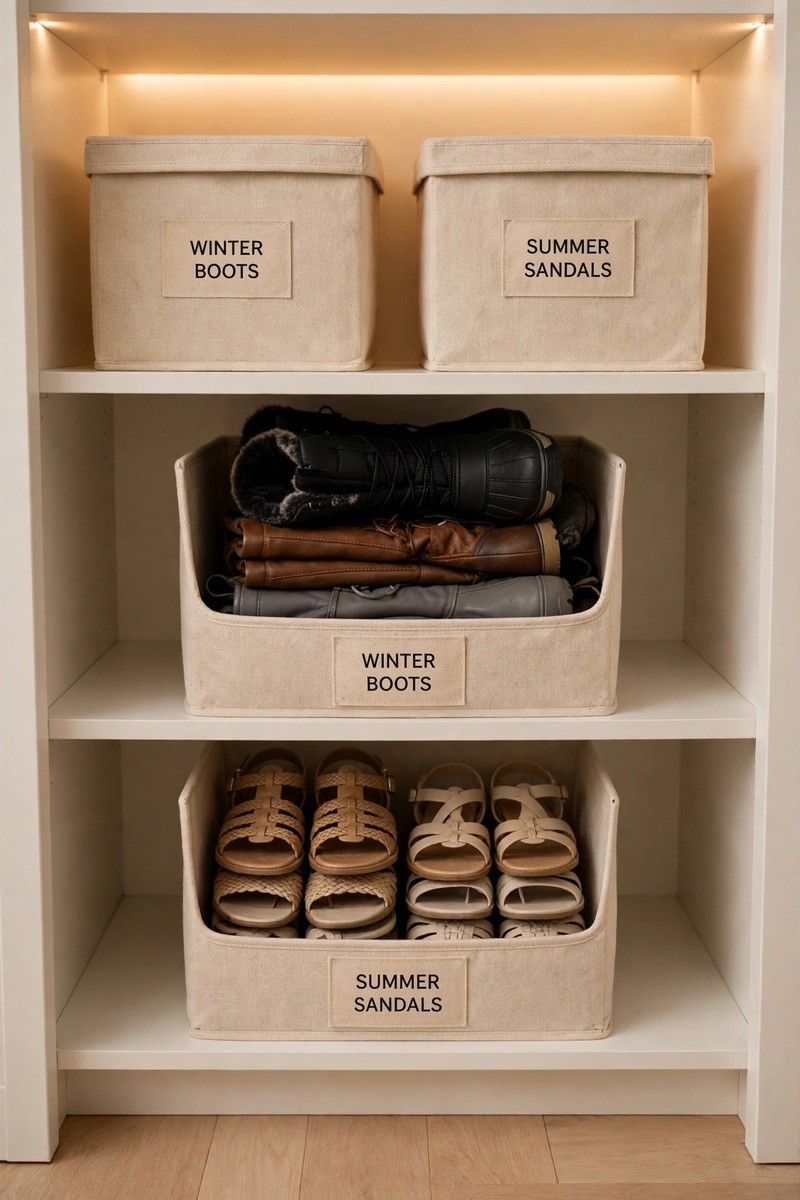
- Rotating shoes by season frees up to half your daily shoe space in seconds.
- Store off-season pairs in labeled bins on a high closet shelf or under the bed.
- A set of 4 labeled bins costs $20 to $30 and holds 8 to 12 pairs total.
- Swap seasons in about 30 minutes, twice a year, and your entryway stays calm.
Your entryway feels crowded because every season lives there at once. Boots beside sandals beside rain shoes eats space fast. Rotation fixes that in about 30 minutes, twice a year. Pull every pair out, sort by season, and box the off-season set. Boots go up high in spring, sandals in fall. Daily shoes stay near the door, and the rest wait their turn. A set of 4 bins costs $20 to $30 and holds 8 to 12 pairs. Label each bin, so you never open three boxes to find one pair. Your daily space doubles and your home feels calmer.
Off-season storage needs a dry spot. Damp basements ruin leather fast. A high closet shelf or under-bed space works best in most rentals. Toss a silica gel pack into each bin for about $1, and your shoes stay dry and fresh for months. Clean each pair before you store it, since dirt left for six months stains and stiffens leather. That cleaning takes about 3 minutes per pair. When the season turns, swap the bins and wipe the shelf. That habit keeps 12 pairs in rotation without crowding your door. Your shoes stay fresh and your mornings stay easy.
Shoe Sling Shelves

- Fabric sling shelves cradle each pair gently, so leather and suede stay scuff-free.
- Three slings hold 6 pairs and mount with adhesive hooks rated for 10 pounds each.
- Expect to pay $25 to $45 for a set of 3 slings with hooks included.
- Hang them in a row at eye level, about 48 inches off the floor, for easy reach.
Sling shelves look softer than metal racks. Canvas straps cradle each pair instead of pressing hard edges into leather. That matters for suede, which scuffs fast on wire racks. A set of 3 slings holds 6 pairs and mounts with adhesive hooks rated for 10 pounds each. Hang them in a row at eye level, about 48 inches off the floor, for easy reach. Installation takes about 20 minutes. Use a level or a phone app to keep the row straight. Your wall gains style, your shoes stay safe, and your deposit stays intact.
Weight limits matter more here than with metal racks. Chunky boots can weigh 4 pounds, and two pairs push a 10-pound hook near its limit. Keep heavy boots in a closet instead. Sneakers, flats, loafers, and sandals suit slings best. Check the adhesive bond after 24 hours, since strips need a full day to set. If a hook feels loose, replace the strip before it fails. That costs about $1 per strip and takes 2 minutes. When moving day comes, warm each strip with a hair dryer and peel slowly. No holes, no wall damage, no awkward landlord chat.
Tension Rod Shoe Rack
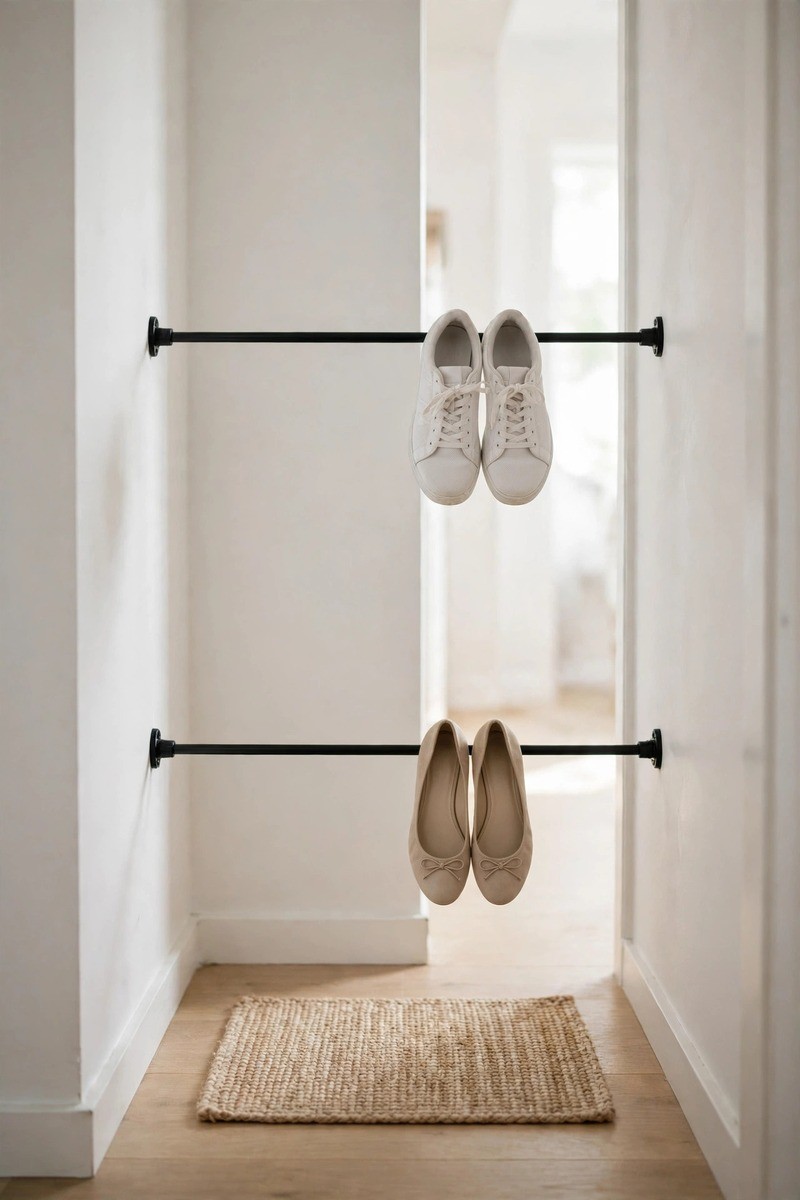
- Tension rods wedge between two walls with pressure alone, so zero holes or marks result.
- Two rods spaced 10 inches apart hold 4 to 6 pairs in a hallway nook.
- Expect to pay $15 to $25 for a pair of sturdy rods rated for 20 pounds each.
- Measure your gap first, since most rods extend from 24 to 40 inches wide.
A tension rod turns a hallway nook into a shoe rack in about 10 minutes. The rod wedges between two walls with pressure alone, with zero holes. Two rods spaced 10 inches apart create a shelf that holds 4 to 6 pairs. Heels hook over the front rod, flats rest across both. Measure your gap first, since most rods extend from 24 to 40 inches. Twist to extend it, press it into place, and test it with a firm tug. If it holds your pull, it will hold your shoes. Your hallway gains order and your walls stay untouched.
Rod quality decides whether this idea works or drops shoes at 2 a.m. Cheap rods slip under weight, especially on smooth walls. Look for rods rated for 20 pounds each, with rubber ends that grip the wall. A good pair costs $15 to $25. Add a rubber pad behind each end for about $3. Test the setup with your heaviest pair first, then load the rest. If a rod sags, shorten the span. Check the tension once a month, since temperature shifts can loosen the fit. That check takes about 30 seconds. Simple, cheap, and fully damage-free.
Shoe Ladder Shelf

- A leaning ladder shelf holds 8 to 10 pairs across 4 wide rungs with zero mounting.
- Expect to pay $45 to $80 for a solid wood ladder shelf about 60 inches tall.
- Lean it at a slight angle against the wall, so gravity keeps it stable and secure.
- Place heavier boots on the bottom rung to keep the center of gravity low.
A ladder shelf leans against the wall and asks nothing of your landlord. No hooks, no adhesive, no holes, just gravity. Four wide rungs hold 8 to 10 pairs. Most ladder shelves measure about 60 inches tall and 24 inches wide, so they fit a bedroom corner or hallway end. Assembly takes about 25 minutes. Place heavier boots on the bottom rung to keep the center of gravity low. Add a plant on the top shelf, so it reads as furniture. Your shoes gain a home, your room gains style, and your walls stay clean.
Lean angle matters for safety. Most ladder shelves lean at about 75 degrees, which keeps them stable without any wall fixing. If your floor runs slick, add rubber pads under the feet for about $5. Check that each rung sits level before you load shoes, since an uneven rung lets shoes slide off. Dust the rungs once a week, which takes about 3 minutes. A solid wood ladder costs $45 to $80 and lasts for years across multiple rentals. When you move, fold it flat or carry it out in one piece. No marks, no repairs, no deposit drama.
Clear Shoe Boxes
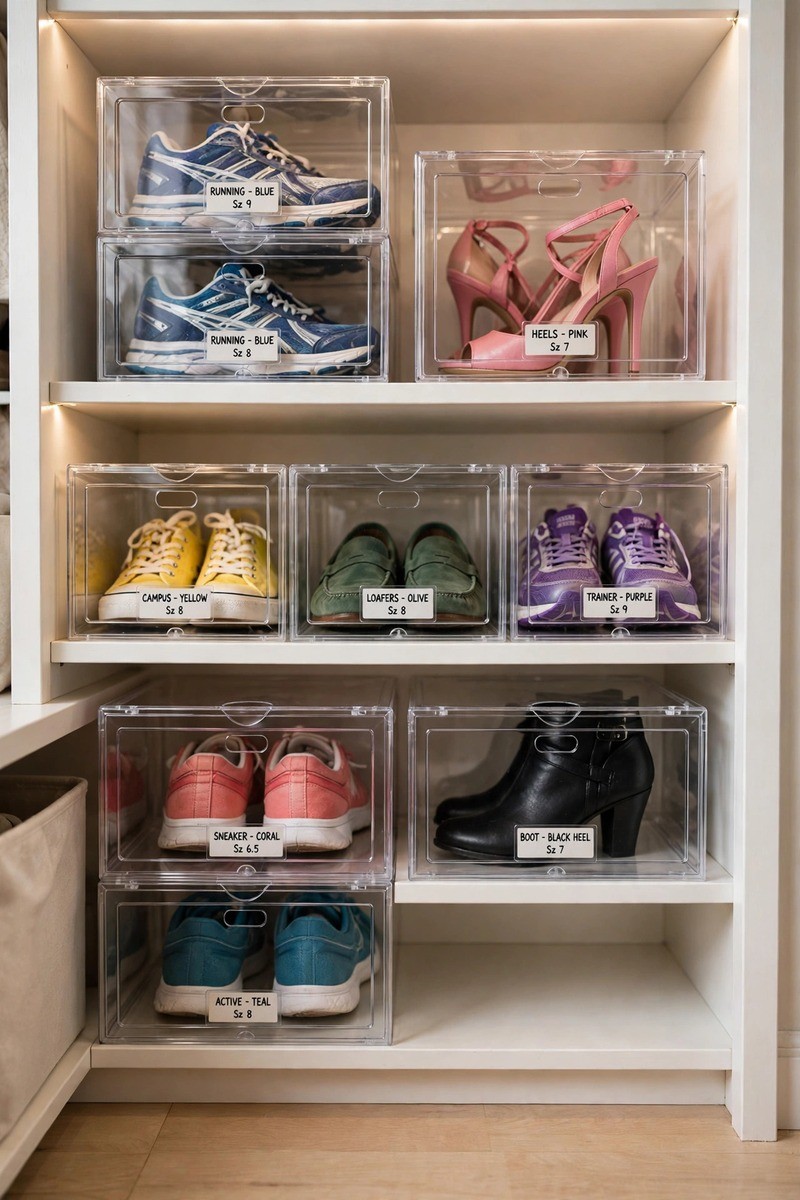
- Clear boxes stack 5 high safely, so 10 pairs fit on one closet shelf.
- A set of 10 clear boxes costs $30 to $45 and protects shoes from dust.
- Front-drop doors let you grab one pair without unstacking the whole tower.
- Pick boxes at least 13 inches long, since trainers measure about 12.5 inches.
Clear boxes turn a messy closet shelf into a shoe shop display. You see every pair at a glance, so you stop buying duplicates. A set of 10 boxes costs $30 to $45. Front-drop doors matter here, because they let you grab shoes without unstacking five boxes. Measure before you buy, since trainers run about 12.5 inches long and need boxes at least 13 inches deep. Stack them 5 high on a closet shelf, so 10 pairs fit in a space barely 2 feet wide. Your shoes stay dust-free, your closet looks tidy, and your mornings get faster.
Respect the stacking height limit. Five boxes high stays stable on a shelf, but taller stacks can topple. Keep heavy boots on the bottom of the stack and light flats up top. That keeps the tower steady. Ventilation holes matter too, since sealed boxes trap moisture and odors fast. Pick boxes with side vents, or crack the lid for an hour after wearing shoes. That airs them out and stops smells. Label each box end, so you find the right pair in seconds. For $30 to $45, you get dust protection, easy access, and a closet that looks sharp.
Shoe Storage Pouf
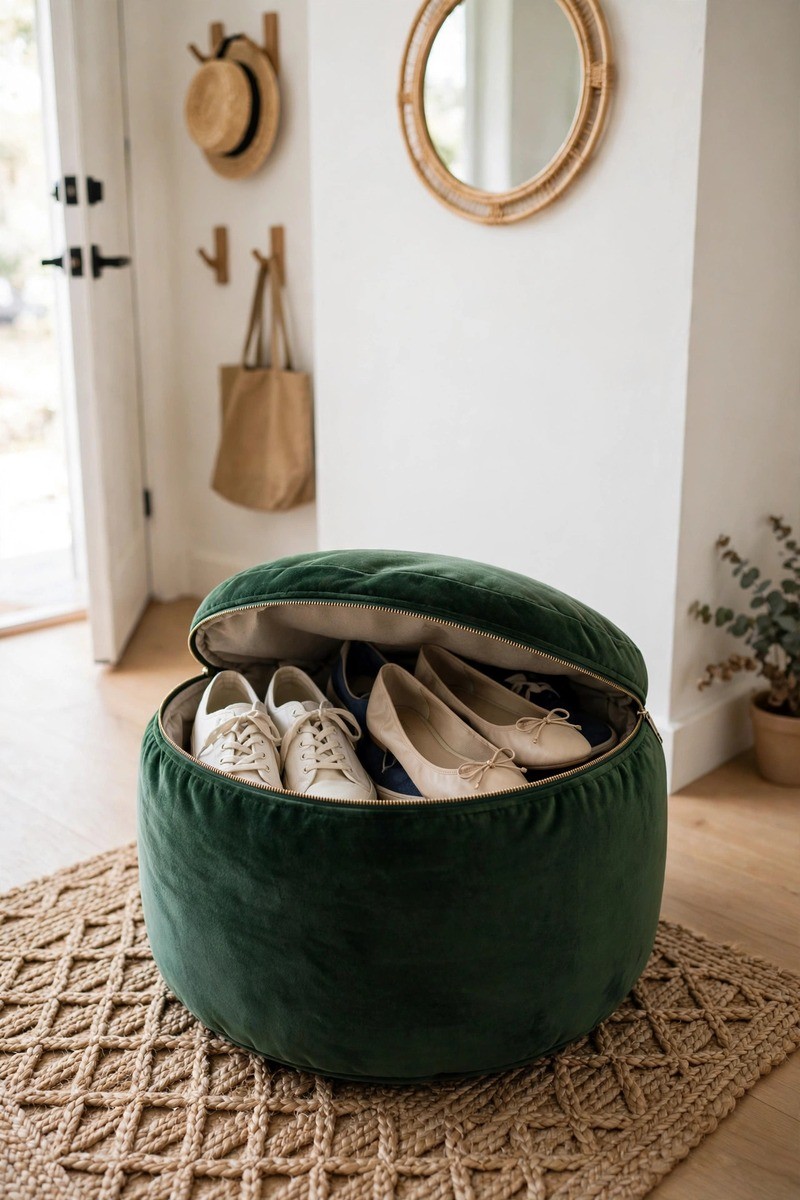
- A storage pouf hides 4 to 6 pairs inside while giving you a seat to lace up.
- Expect to pay $35 to $65 for a sturdy pouf with a zip lid and firm base.
- Place it by the door so you sit, lace up, and stash shoes in one spot.
- Pick a dark wipe-clean fabric, since shoe storage near a door always picks up dirt.
A pouf by the door solves the awkward hop of putting shoes on while standing. You sit down, lace up, and stash yesterday's pair inside the same piece of furniture. Most poufs measure about 18 inches wide and 16 inches tall inside, which fits 4 to 6 pairs. Look for a zip lid rather than a loose top, so shoes stay hidden. A sturdy pouf costs $35 to $65. Place it within arm's reach of the door, so the habit sticks from day one. Your entry stays tidy, your mornings feel easier, and your landlord sees just a seat.
Durability decides whether a pouf lasts or collapses after a month of daily sitting. Cheap poufs use thin foam that flattens fast under adult weight. Look for a firm base and dense foam rated for at least 200 pounds. Daily sitting wears soft foam down quickly. Pick a dark wipe-clean fabric, since a pouf near the door picks up dirt fast. A quick wipe takes about 2 minutes and keeps it looking fresh. Add a small fabric liner inside for about $6, to catch dirt. Your shoes stay hidden, your entry stays calm, and your deposit stays safe.
Frequently Asked Questions
Where should shoes go in a tiny apartment?
Give every pair a spot within one step of the door, since shoes left anywhere else spread across the floor. A tray holds the daily two or three pairs, a slim cabinet hides six to eight pairs behind closed doors, and the closet floor takes the rest. Keep the pair you wear daily at the front and move seasonal pairs to under-bed boxes. Boots go low, where their weight steadies the tray, and the walkway stays clear.
How do I store shoes without drilling into the walls?
Stick to freestanding and adhesive options. Slim tilt-out cabinets stand on the floor, over-door racks hang on the door, and adhesive hooks hold slippers and light pairs on smooth walls. Tension rods between closet walls make extra shelves without a single hole. Skip any cabinet that needs wall fixing, since that is a renter trap, and check the weight rating on every adhesive hook before you load it.
How many pairs can a slim shoe cabinet hold?
A slim tilt-out cabinet 6 to 8 inches deep with two compartments holds 6 to 8 pairs, which covers daily shoes for one or two people. A three-compartment model holds 9 to 12 pairs but stands taller, so check the ceiling and the walkway before you buy. Keep seasonal pairs in under-bed boxes and the daily pairs in the cabinet, so the count stays honest and the doors still close.
What is the cheapest way to organize shoes in a small space?
Start with a rubber boot tray and a row of adhesive hooks, which together cost under 25 dollars and take ten minutes to set up. The tray stops the shoe pile from spreading, and the hooks get slippers and light pairs off the floor. Next, add clear boxes under the bed for seasonal pairs, one pair per box so you can see what is inside. Buy one piece at a time and live with it for a week before adding the next.
Conclusion
Shoes stop taking over the entry the moment every pair has a spot, and these shoe storage ideas for small spaces prove the fix needs no drilling and no new furniture. Pick the idea that fits the space you have, whether that is a tray by the door, a slim cabinet, or boxes under the bed. Try one idea this weekend and keep the daily pair at the front. Save this guide on Pinterest so you can find it when the shoe pile grows again, then share it with a friend who still trips over trainers at the door.
You Might Also Like
- 30+ Small Apartment Kitchen Ideas for Renters (No Drilling Needed)
- 25+ Dollar Store Home Decor Ideas for Renters (Mostly Under $5)
- 25+ Small Bathroom Storage Ideas for Renters (No Holes, No Damage)
- Start Here
- More Small Spaces Ideas
New guides land every week.