

25+ Small Bathroom Storage Ideas for Renters (No Holes, No Damage)
A small bathroom beats you before the day starts. The counter is covered, the cabinet door will not close, and the spare toilet roll has no home at all. These small bathroom storage ideas for renters fix that without a single screw: 25 ways to use the wall over the toilet, the corner of the shower, the back of the door, and the space around the pipes under the sink. Every idea is no-drill, deposit-safe, and cheap enough to try this weekend, and every one of them comes off clean when you move. You do not need a bigger bathroom. You need to use the space you already have. Start with the idea that matches your worst clutter, and work from there.
Over-Toilet Etagere
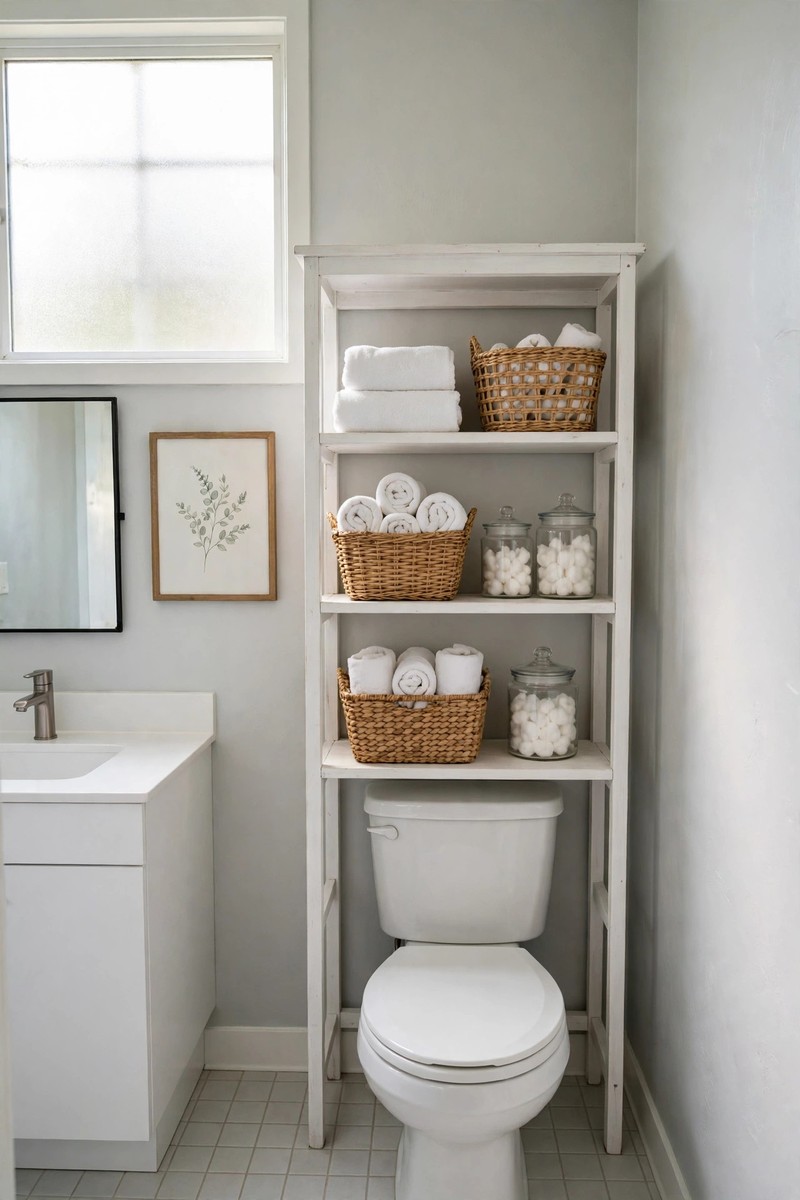
- Turns the empty wall above the toilet into three shelves of storage, no drilling.
- Most etageres are 24 to 30 inches wide, so measure the space before you buy.
- Keep everyday items at arm level and spare towels and refills up top.
- Skip the screw-in anti-tip strap; load the bottom shelf heaviest instead.
The wall above your toilet is the biggest storage space your bathroom is wasting. In a small rental bathroom, that empty stretch of wall sits bare while towels pile on the floor and toiletries crowd the sink edge. A freestanding etagere changes that in one move: it straddles the toilet tank, needs no screws, and adds three open shelves for towels, baskets, and everyday bottles. Most models are 24 to 30 inches wide and cost 40 to 70 dollars, and they assemble in under half an hour with nothing more than the wrench in the box.
Stability is the only real worry, and it is easy to handle. Many etageres ship with an anti-tip strap meant to screw into the wall, which a renter should never use, so skip the strap and keep the heaviest items on the bottom shelf instead. Test the fit before you load it: the legs must clear the tank and sit flat on the floor, and the shelves should leave room to lift the tank lid. Wipe the shelves weekly, since bathroom steam leaves a film on everything. When you move, it comes apart in minutes and leaves the wall untouched.
Tension-Pole Shower Caddy
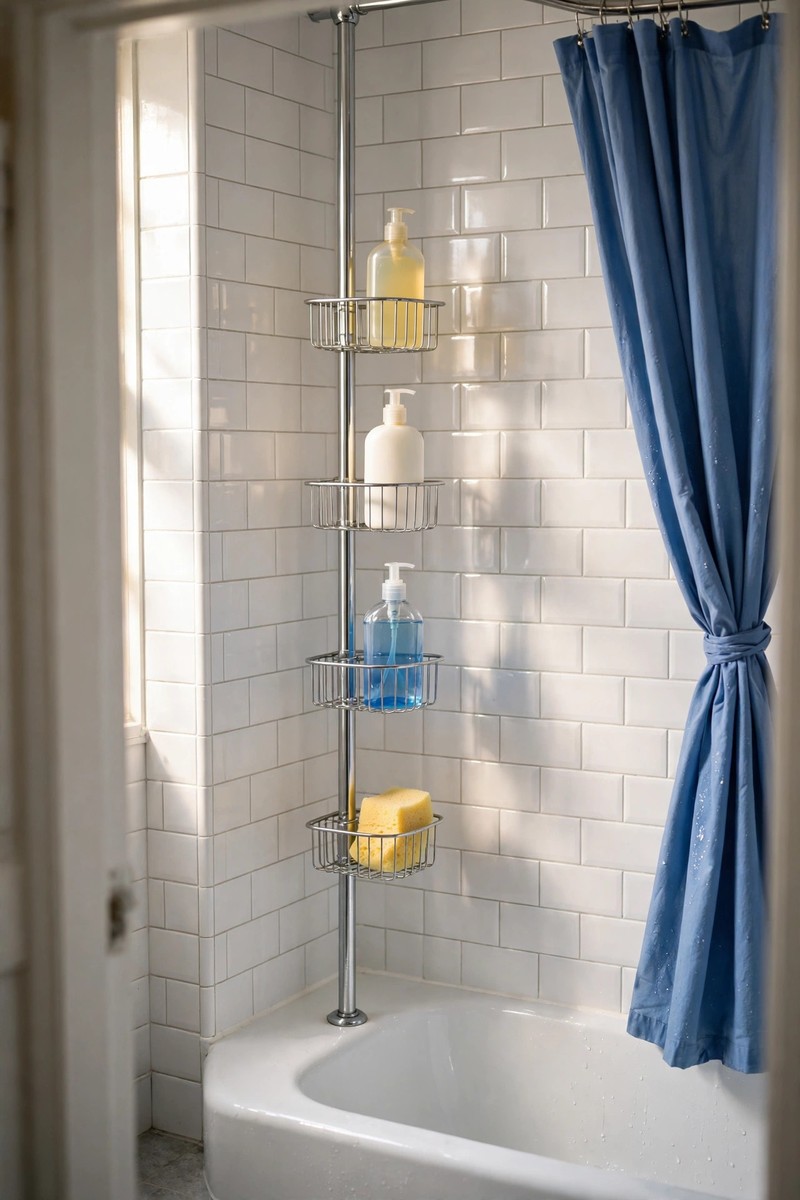
- Holds every bottle in the shower without a single hole in the tile.
- The pole wedges between the tub floor and the ceiling with spring tension.
- Put the heaviest bottles on the lowest basket so the pole stays steady.
- Check the tension every few weeks, since steam and damp air loosen it.
Every bottle in your shower is fighting for the same two inches of tub edge. Shampoo, conditioner, body wash, and face wash line up along the rim, and one wrong move sends the whole row sliding into the tub. A tension-pole caddy ends that in ten minutes: a spring-loaded pole wedges between the tub floor and the ceiling, and four wire baskets hold every bottle at arm height. No drilling, no adhesive, nothing stuck to the tile. Most poles adjust from about five feet to nine feet and cost 25 to 45 dollars.
Damp air is the pole's only enemy, so check it often. Steam softens the grip at the ceiling over time, and a pole that felt rock solid in week one can start to slide by week six. Give the pole a firm twist every few weeks to re-tension the spring, and wipe the rubber feet dry so they grip instead of slipping. Load the heaviest bottles low, where the weight steadies the pole, and keep the top basket light. If the ceiling is textured or sloped, test the pole empty first, because some surfaces will not hold it at all.
Over-Showerhead Organizer

- Hangs over the showerhead pipe in seconds, no tools and no adhesive.
- Two shelves hold the bottles you reach for every day.
- Pick one with a rubber grip so it never slides down the pipe.
- Keep the load light, since the pipe was never meant to carry weight.
Your showerhead pipe is a shelf waiting to happen. It sticks out of the wall at exactly the right height, and an organizer that hooks over it puts shampoo and conditioner right where your hand lands. The basket hangs in seconds, needs no tools, no adhesive, and no holes, and it lifts off just as fast when you need to clean behind it. Look for a model with a rubber-lined hook that grips the pipe, because a bare metal hook slides down the moment the water starts. Most organizers cost 15 to 30 dollars.
Weight is the limit here, so keep the basket honest. A showerhead pipe was built to carry water, not a full shelf of bottles, and overloading it can loosen the fitting inside the wall. Two or three everyday bottles plus a washcloth is the right load; the big refill jugs belong on the floor or in a caddy. Rinse the basket weekly, because shampoo drips dry into a sticky film that traps grime. When you move, lift the organizer off the pipe and the shower looks exactly as it did before.
Adhesive Shower Baskets

- Stick straight onto tile and hold bottles right where you shower.
- Only buy baskets rated for wet, steamy bathrooms, not plain adhesive hooks.
- Press each basket onto clean, dry tile and wait a full day before loading it.
- Skip suction cups here: steam makes them slide off the wall.
The corner of your shower is dead space, and adhesive baskets turn it into a shelf. Two wire baskets stuck to the tile hold shampoo, conditioner, and body wash at arm height, so the bottles finally leave the tub edge and stop falling over. The trick is buying baskets rated for wet rooms, because a plain adhesive hook gives up in the steam within weeks. Clean the tile with rubbing alcohol first, press the basket on hard, and wait a full day before you load it. A pair of baskets costs 15 to 25 dollars.
Humidity decides whether these baskets stay up or come crashing down. Steam works into the adhesive edge a little more with every shower, so check each basket monthly and press any lifting corner back down before it fails. Never hang a basket on grout lines or textured tile, because the adhesive needs a smooth, flat surface to grip. And skip suction cups entirely in the shower: they look neat on day one and slide off the wall by week two. When you move, warm the adhesive with a hair dryer and peel slowly.
Shower Rod Storage

- S-hooks on the curtain rod hold baskets, bottles, and washcloths.
- Costs almost nothing: a pack of hooks and one wire basket is under $15.
- Hang the lightest items on the rod and keep heavy bottles lower down.
- Works on a tension rod or a fixed rod, as long as it sits tight.
Your shower curtain rod is already a storage rail, and nobody uses it that way. A few S-hooks slid over the rod hold wire baskets, a sponge, and washcloths right above the tub, where they drip dry instead of puddling on the floor. The whole setup costs less than 15 dollars: a pack of metal S-hooks and one or two small wire baskets from any home store. Hang the baskets toward the ends of the rod, where the rod is strongest, and keep the middle clear so the curtain still slides freely.
Weight is the one thing to watch, because a curtain rod was built to hold fabric, not bottles. A tension rod sags first, so if yours is the spring-loaded kind, twist it tight before you hang anything and keep the total load under a few pounds. Heavy shampoo bottles belong in a caddy on the floor or a basket on the wall, not swinging from the rod. Rinse the baskets weekly so soap never builds into a sticky layer. When you move, slide the hooks off and the rod looks exactly as it did before.
Towel Ladder
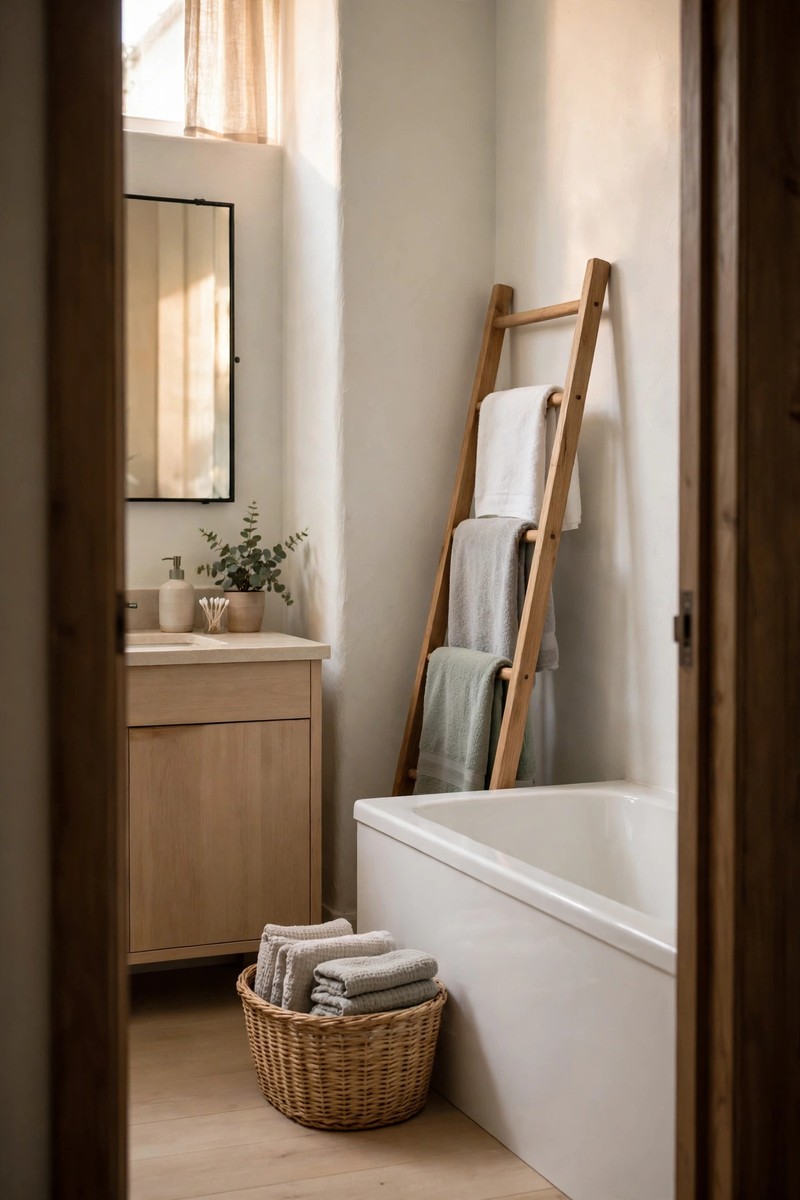
- Leans against the wall and holds three or four towels without a single hole.
- Fits in the narrow gap beside the tub or vanity that nothing else uses.
- Pick a ladder with wide, flat rungs so towels dry fast and stay put.
- Stick felt pads on the feet and the top so it never marks the wall or floor.
A towel bar holds two towels, and a family of four needs more than that. A ladder leaning against the wall solves the math in a minute: three or four wide rungs hold a towel each, and the whole thing fits in the narrow gap beside the tub that nothing else uses. Wooden ladders cost 25 to 50 dollars, fold flat for the move, and need no screws, no adhesive, and no wall damage at all. Hang the towel you use every day on the lowest rung, where it is easiest to grab.
The lean is what keeps it safe, so set it up right. The feet should sit about a foot out from the wall, which gives the ladder a stable angle that will not tip when you pull a towel off. Stick felt pads on the feet and on the top rail, so the ladder never scuffs the floor or marks the paint. Keep the heaviest, wettest towel on the lowest rung, where the weight sits near the floor. When you move, fold the ladder flat and carry it out, and the wall looks exactly as it did before.
Adhesive Towel Hooks
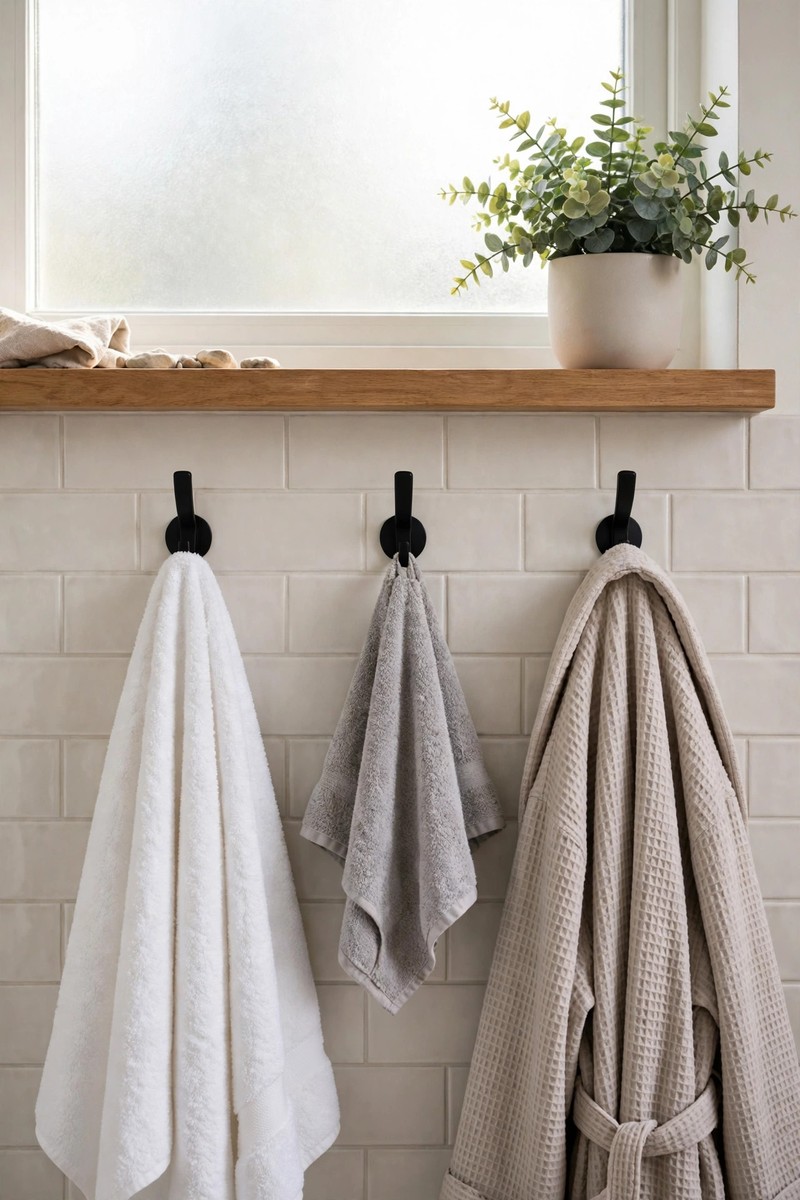
- Give every person their own towel hook, so towels stop piling on the floor.
- Stick to tile or smooth painted walls with no drilling and no holes.
- Buy hooks rated for damp rooms and for the weight of a wet towel.
- Wait a full day after sticking them on before you hang anything heavy.
One towel bar is never enough when two people share a bathroom. Towels end up draped over the shower door, the toilet tank, and the back of a chair, and none of them dries properly. Three adhesive hooks on the wall fix that in ten minutes: one hook per person, each holding a towel where the air can reach it. Buy hooks rated for damp rooms and for at least five pounds, because a wet bath towel is heavier than you think. A set of three costs 10 to 20 dollars.
Steam is what kills a weak hook, so the setup matters more than the hook itself. Wipe the tile with rubbing alcohol and let it dry completely, then press the hook on hard for thirty seconds and leave it alone for a full day before hanging a towel. Never stick a hook on grout, textured paint, or wallpaper, because the adhesive needs a smooth, flat surface to grip. If a hook ever feels loose, take the towel off and press it back on with a fresh adhesive pad. At move-out, warm it with a hair dryer and peel slowly.
Wall-Mounted Baskets
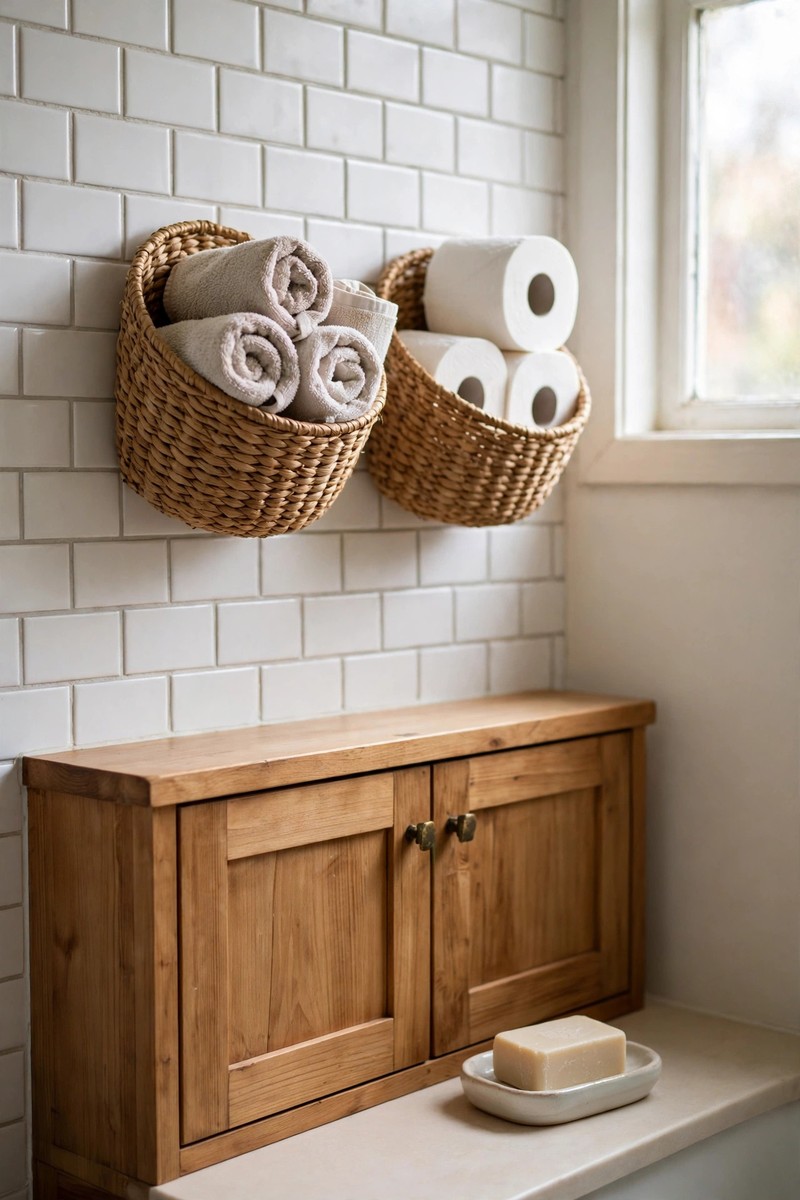
- Turn bare wall space into storage for towels, toilet paper, and toiletries.
- Adhesive or hook-over baskets need no drilling and lift off clean.
- Roll towels instead of folding them so each basket holds more.
- Keep the load light: baskets are for soft goods, not heavy bottles.
Bare bathroom walls are storage you already own. Every small bathroom has a stretch of empty wall beside the mirror or above the toilet, and it just sits there while the counter overflows. Two adhesive baskets on that wall hold rolled hand towels, spare toilet paper, and the small things that never find a home. Roll the towels instead of folding them, and each basket holds twice as much. Woven baskets cost 12 to 25 dollars each and look like a design choice, not a workaround. Hang them at arm height, where you can reach a towel without stretching.
Weight decides what belongs in a wall basket and what does not. Soft goods are the right load: towels, washcloths, toilet paper, and cotton pads all weigh almost nothing and sit neatly in an open basket. Heavy bottles and jars belong on a solid shelf, because a basket full of glass pulls at the adhesive all day and will eventually give way. Check the adhesive monthly and press any lifting edge back down. When you move, warm the strips with a hair dryer, peel slowly, and the wall looks untouched.
Over-Tank Tray

- Turns the flat toilet tank into a tidy surface for a plant, candle, or spare roll.
- A tray keeps everything contained so nothing slides off the tank.
- Pick a tray that fits the tank with room to lift the lid.
- Keep it light: a tray is for display and small items, not storage boxes.
The top of your toilet tank is a shelf hiding in plain sight. It is flat, it is right there, and most people leave it bare or pile things on it that slide off at the worst moment. A tray across the tank fixes that: a small plant, a candle, a folded hand towel, and a spare roll all sit in one tidy row instead of scattered across the bathroom. Pick a tray that fits the tank with an inch to spare on each side. Wooden or bamboo trays cost 10 to 20 dollars.
The tank lid still needs to lift, so leave room for it. A tray that covers the whole lid turns a simple fix into a wrestling match every time the toilet runs, so size the tray to the tank and keep the heaviest items at the back. Wipe the tray weekly, because bathroom steam leaves a damp film on wood and a tray that stays wet will warp. If the tank lid is rounded, add small felt pads under the tray so it sits level. When you move, lift the tray off and the tank looks untouched.
Bath Caddy

- Gives the tub a flat surface for a book, candle, and drink during a soak.
- Doubles as storage: hang it on the wall or lean it behind the tub when not in use.
- Pick a caddy with adjustable arms so it fits any tub width.
- Choose bamboo or sealed wood so steam and splashes never warp it.
A bath without a caddy means balancing a book on the tub edge and hoping it stays dry. A wooden caddy across the tub gives you a flat surface for a book, a candle, and a glass of water, and it turns an ordinary soak into the best half hour of the week. Most caddies have adjustable arms that slide out to fit any tub width, and a slotted rest holds a book or tablet upright. Bamboo caddies cost 20 to 40 dollars and handle steam far better than plain wood.
Storage is the caddy's second job, and it is the one renters forget. When the bath is done, the caddy does not have to live on the tub: hang it from a hook on the wall, lean it behind the tub, or slide it under the bed. Wipe it dry after every soak, because a caddy left wet grows a musty smell fast, and oil the bamboo once or twice a year so it never dries out and cracks. Check the arms stay tight before each use, so the caddy never slides mid-bath.
Shower Door Hooks

- Hang over a glass shower door in seconds and hold towels right where you step out.
- No adhesive, no drilling, and they lift off when you need to clean the glass.
- Pick hooks with a rubber lining so they never scratch the door.
- Check the door thickness first: hooks come in sizes for framed and frameless doors.
Stepping out of the shower to a towel three feet away is a small annoyance that adds up every single day. Two hooks over the top of the glass shower door fix it: your towel hangs right where you step out, and the washcloth dries beside it instead of balled up on the tub edge. The hooks need no adhesive and no tools, and they lift off in seconds when you clean the glass. Look for hooks with a rubber lining, so the metal never scratches the door. A pair costs 10 to 18 dollars.
Fit is everything with these hooks, so measure the door before you buy. Framed glass doors are thicker than frameless ones, and a hook made for one will wobble or jam on the other. If your shower has a curtain instead of a glass door, skip this idea and use S-hooks on the curtain rod, which do the same job. Keep the load to one towel and one washcloth per hook, so the door still slides or swings freely. When you move, lift the hooks off and the glass looks untouched.
Corner Floor Shelf

- Turns an empty bathroom corner into five tiers of storage with no holes.
- Narrow triangular or fan-shaped shelves fit corners nothing else can use.
- Keep everyday towels at arm level and spare rolls and refills up top.
- Load the bottom tier heaviest so the unit stays steady on tile.
The corner of your bathroom is the most wasted space in the room. It is too narrow for a cabinet and too awkward for a cart, so it sits empty while towels pile up everywhere else. A tall corner shelf changes that in one move: five narrow tiers hold folded towels, baskets, and spare rolls in a footprint smaller than a dinner plate. Triangular shelves fit tight corners best, and fan-shaped ones suit a corner beside the tub. Most units cost 30 to 60 dollars and assemble in minutes without tools.
Tile floors make tall shelves tippy, so stability always comes first. Load the heaviest items on the bottom tier, where the weight sits near the floor, and keep the top tier light with a plant or a small basket. Stick felt pads under the feet so the unit never slides on wet tile or scratches the floor. If the shelf wobbles, wedge a folded washcloth under the short leg until it sits level. When you move, the shelf comes apart flat and the corner looks exactly as it did before.
Shelf With Towel Bar

- A shelf on top for baskets and a towel bar below doubles one wall spot.
- Adhesive-mounted shelves hold firm on tile and smooth walls, no drilling.
- Keep the shelf load light and the towels on the bar, not piled on top.
- Mount it above the toilet or beside the sink, where the wall is empty.
One wall spot can do two jobs if the shelf is built right. A shelf with a towel bar underneath gives you a flat surface on top for baskets and jars, and a bar below that holds two hand towels where they dry fast. Adhesive-mounted models stick to tile or smooth painted walls with no drilling, and they lift off clean at move-out. Hang it above the toilet or beside the sink, where the wall is empty and the towels stay within reach. Most shelves cost 20 to 40 dollars.
The adhesive carries everything here, so respect its limit. Check the weight rating before you buy, then always stay well under it: a shelf rated for ten pounds should carry five, because steam weakens the bond a little every day. Press the shelf onto clean, dry tile and wait a full day before loading it, and never mount it on grout or textured paint. Keep heavy bottles off the shelf and save it for light baskets and jars. At move-out, warm the adhesive with a hair dryer and peel slowly.
Under-Sink Pull-Out Organizer

- Slides the back of the cabinet to the front, so nothing gets lost behind the pipes.
- No screws needed: most pull-outs sit on the cabinet floor or stick on with adhesive.
- Measure around the pipes first, so the organizer slides without catching.
- Keep cleaning supplies on one tier and spares on the other.
The back of your under-sink cabinet is where bottles go to be forgotten. Cleaning sprays, spare shampoo, and the extra toothpaste slide behind the pipes, out of sight, and you buy a second one because you cannot see the first. A pull-out organizer fixes that with one slide: the shelf glides toward you, so the bottle at the back is as easy to reach as the one at the front. Most pull-outs sit on the cabinet floor with no screws, and a two-tier version doubles what the cabinet holds. Measure around the pipes first, so the organizer slides without catching.
Sort by how often you use each thing, not by type alone. Everyday sprays go on the top tier where your hand lands first, spare toilet paper and refills sit below, and the items you use once a month go at the very back. Raised edges keep bottles from tipping when the shelf moves, and a wipe-clean base handles the odd drip without staining the cabinet floor. Check the pipes for leaks once a month, because a slow drip under a full organizer can go unnoticed for weeks. When you move, the organizer lifts out and the cabinet looks untouched.
Stackable Under-Sink Bins
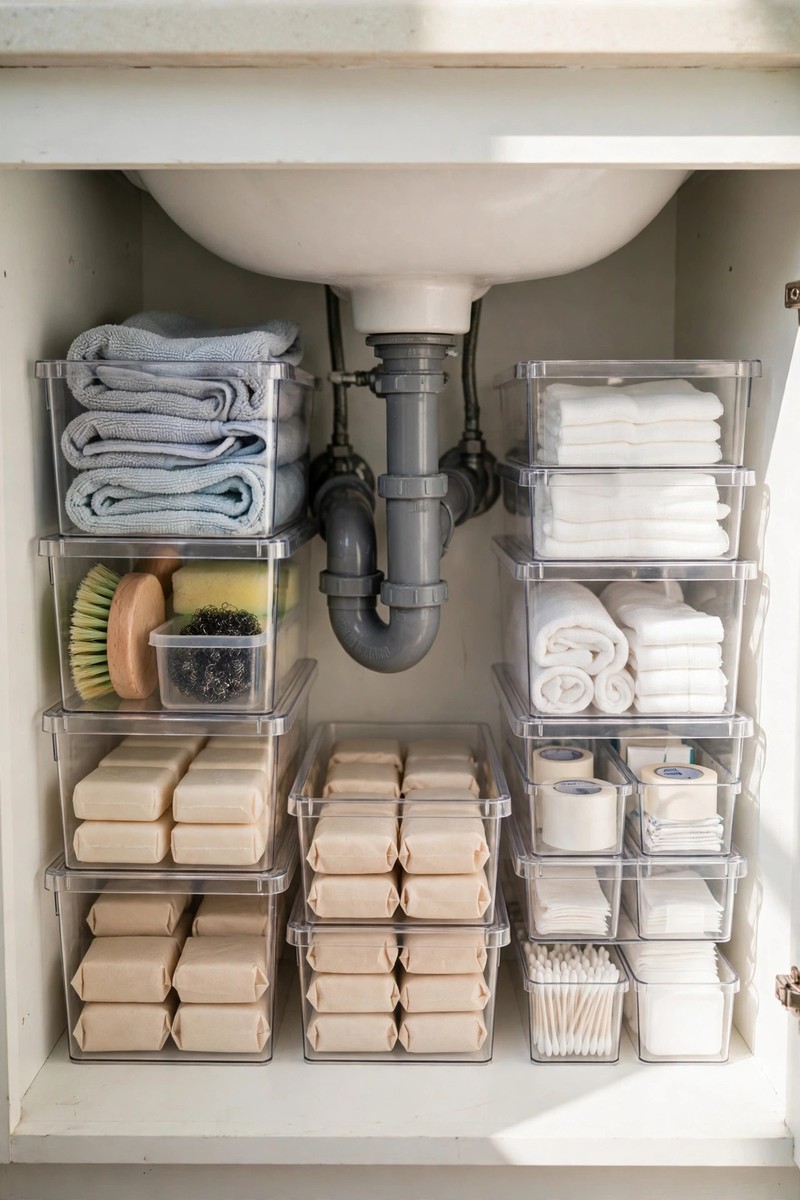
- Bins turn the awkward space around the pipes into neat, stackable storage.
- Clear bins show what is inside, so you stop buying duplicates.
- Stack them two high to use the full height of the cabinet.
- Label each bin so everyone puts things back in the right place.
The pipes under your sink steal the best storage in the bathroom. They run right through the middle of the cabinet, leaving odd-shaped gaps that no shelf fits and every bottle falls into. Stackable bins work around that problem instead of fighting it: small clear bins tuck into the gaps on each side of the pipes, and a second layer stacks on top to use the full height. Measure the space on each side of the pipes first, then buy bins that fit those exact gaps. Clear bins show what is inside, so you stop buying cleaner you already own.
Group the bins by job, not by size. One bin holds the cleaning sprays, one holds spare soap and toothpaste, and one holds the first aid kit and medicines, so a single pull brings the whole group to you. Keep the heaviest bin on the bottom so the stack stays steady, and never stack higher than two bins, or the top one gets hard to lift out. Wipe the bins monthly, because the space under a sink stays damp and bottles leave rings. When you move, the bins lift out and pack flat, and the cabinet looks untouched.
Vanity Tray Corral

- One tray turns counter clutter into a display that looks planned.
- Keeps soap, lotion, and daily items together in one spot.
- Pick a tray with a raised edge so drips stay on the tray.
- Wipe the tray weekly so water never leaves marks underneath.
A bare bathroom counter collects clutter like a magnet. The soap, the toothbrush cup, the lotion, and the hairbrush each land wherever they fall, and by the end of the week the whole counter is covered. A tray fixes that with one move: everything you use every day sits inside a single border, and the counter suddenly looks styled instead of messy. Pick a tray with a raised edge, so drips and spills stay on the tray instead of spreading across the counter. Wood, stone, or ceramic work, and a round tray softens the hard lines of a square vanity.
Less is more on a tray, because every item is on display. Keep the soap dispenser, one lotion, and the toothbrush cup, and move everything else into a drawer or cabinet, where nobody sees it. A small vase or a rolled hand towel fills the empty corner and makes the tray look finished instead of bare. Wipe the tray once a week and lift it to dry the counter underneath, because water trapped under a tray leaves marks on stone and wood. When you move, the tray lifts off the counter and packs flat, and the vanity looks untouched.
Vanity Drawer Dividers

- Splits one deep drawer into neat sections for makeup, hair ties, and skincare.
- Expandable dividers adjust to fit drawers of any width.
- Plastic or bamboo both wipe clean after spills.
- Keep everyday items at the front and the extras at the back.
One deep bathroom drawer without dividers is a junk drawer waiting to happen. Hair ties tangle with cotton pads, the tweezers hide under the sunscreen, and every morning you dig through the whole mess to find one lip balm. Dividers fix that in five minutes: they expand to fit the drawer, split it into neat sections, and suddenly every item has a home you can see. Measure the drawer first, then pick a set that expands to its full width so nothing slides around when you open and close it. Plastic dividers wipe clean after a spill, which matters here.
Sort by routine, not by type alone. Morning items go at the front of the drawer where your hand lands first, evening skincare sits in the middle, and the extras you use once a week go at the back. Keep one small section for the odds and ends, the bobby pins and cotton swabs that never fit anywhere else, so they stop spreading across the drawer. Wipe the dividers down monthly, because makeup and lotion leave a film that builds up fast. When you move, the dividers lift out and fit the next drawer, and the drawer looks untouched.
Over-Door Pocket Organizer

- Turns the back of the door into 20 or more pockets of storage.
- Hooks over the door, no screws, and lifts off in seconds.
- Clear pockets show what is inside, so you grab the right bottle fast.
- Best for shampoo, sunscreen, brushes, and spare toiletries.
The back of your bathroom door is a whole closet nobody uses. Every bathroom has it, and almost nobody hangs anything there, because the door looks like a flat surface with nothing to offer. An over-door pocket organizer changes that in a minute: it hooks over the top of the door, needs no screws, and adds twenty clear pockets for the small things that crowd your shelves. Shampoo, sunscreen, brushes, and spare toiletries all fit neatly, and because the pockets are clear, you can see every bottle without digging. Check the door still closes flat once it is loaded.
Hang it on the inside of the door if you want it hidden, or the outside if you share the bathroom and need quick access. Load the lightest items at the top so the door swings easily, and keep the pockets you reach for every day at eye level, where you can see them without bending. Wipe the pockets out once a month, because shampoo and lotion leak, and a sticky pocket is no fun to reach into. When you move, lift the organizer off the door and fold it flat, and there is nothing to patch or explain.
Over-Door Towel Rack

- Adds a full towel bar without a single screw in the wall.
- Hooks over the door in seconds and lifts off at move-out.
- Holds two bath towels plus a hand towel within reach of the shower.
- Pick a rack with felt pads so it never scratches the door.
One towel bar is never enough in a small rental bathroom. Most rentals give you a single bar, which holds one bath towel if you are lucky, and the rest end up draped over the shower door or piled on the toilet lid. An over-door towel rack fixes that in seconds: it hooks over the top of the door, needs no screws, and adds a full bar for two bath towels plus a hand towel. Pick a rack with felt pads on the hooks, so it never scratches the door or rattles when it swings.
Airflow decides whether your towels dry or go musty. Hang the rack on the inside of the door, close to the shower, and spread each towel flat across the bar instead of bunching it, so air reaches both sides. A damp towel folded in half takes twice as long to dry, and a bathroom that never dries out is how mildew starts. Wash the towels every three or four uses, and swap the hand towel daily if two people share the bathroom. When you move, lift the rack off the door and pack it flat, and the door looks untouched.
Labeled Bins Per Person
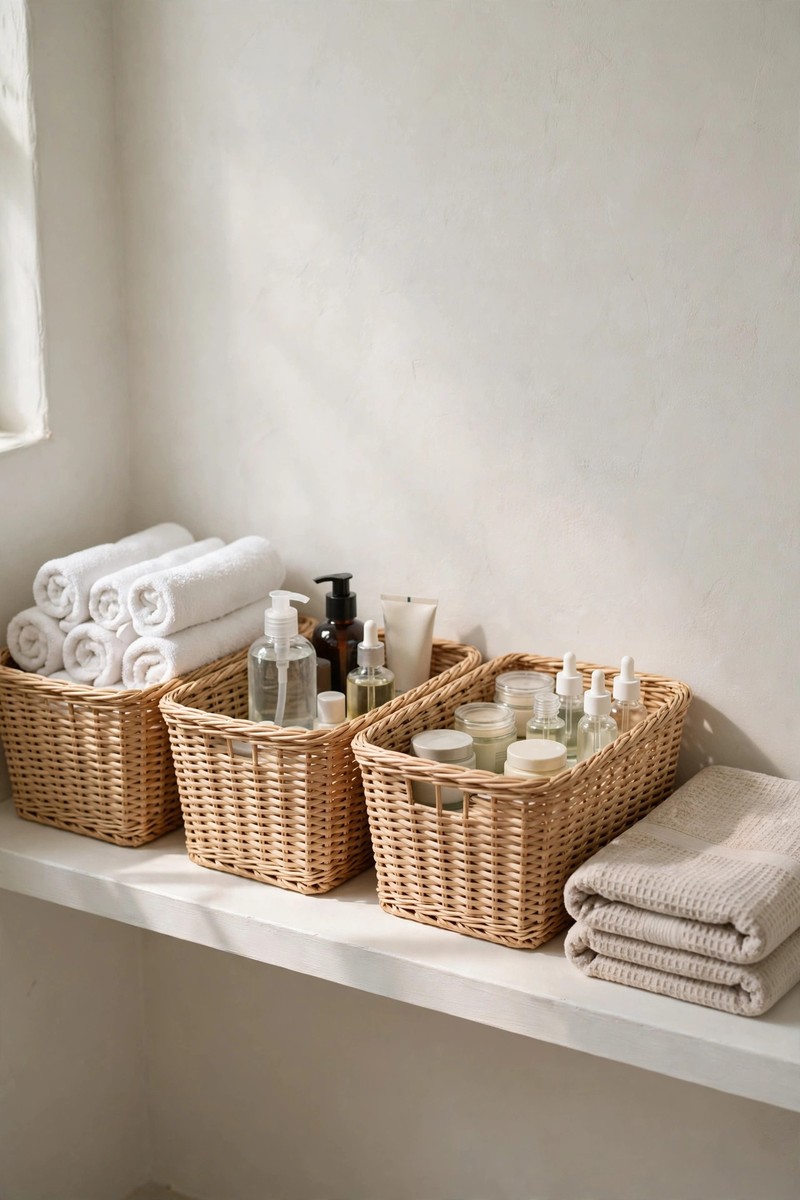
- One bin per person ends the morning fight over counter space.
- Labels keep everyone's things separate, even in a shared bathroom.
- Pick bins that fit your shelf, and keep them the same size.
- Each person owns their bin, so clutter has a clear owner.
Sharing a small bathroom means sharing the mess, unless everyone has their own bin. When two or three people use one vanity, the counter fills with bottles nobody owns, and the morning routine turns into a hunt for your own toothpaste. One labeled bin per person fixes that in an afternoon: each person gets a bin for their own things, the bins sit side by side on a shelf, and the counter stays clear. Label each bin with a name or a color, so nobody guesses. Keep the bins the same size, so the row looks tidy.
The rule is simple: if it does not fit in your bin, it does not live in the bathroom. Each person keeps their daily items in their own bin and takes the bin to the counter when they get ready, then puts it back when they are done. Shared items like toilet paper and hand soap stay on a separate shelf, so nobody's bin gets crowded with things everyone uses. Wipe the bins out once a month, because lotion and toothpaste leave a film. When you move, the bins lift off the shelf and pack into a box, labels included.
Medicine Cabinet Makeover

- The cabinet you already have is the best storage in the room.
- Clear out expired items first, then sort what is left by routine.
- Small baskets inside keep tiny items from tipping over.
- Keep daily items at eye level and spares on the top shelf.
Your medicine cabinet is the best storage in the bathroom, and it is probably a mess. It sits at eye level, behind a mirror, with shelves nobody thinks about, and it fills up with expired pills, half-used tubes, and samples you will never open. Start by taking everything out and tossing what is expired or empty, because a makeover on top of clutter is just tidier clutter. Then sort what is left by routine: morning items on one shelf, evening items on another, and first aid together at the top. Small baskets keep tiny items from tipping over.
Height decides what goes where. Daily items like toothpaste and face wash belong at eye level, where your hand lands without thinking, and spares go on the top shelf, where you only reach once a week. Line the bottles up by height, tallest at the back, so you can see every label without moving anything. Wipe the shelves down once a month, because steam leaves a film on glass and metal. When you move, the baskets lift out and the cabinet looks exactly as it did before, and you take the system with you.
Narrow Gap Shelving
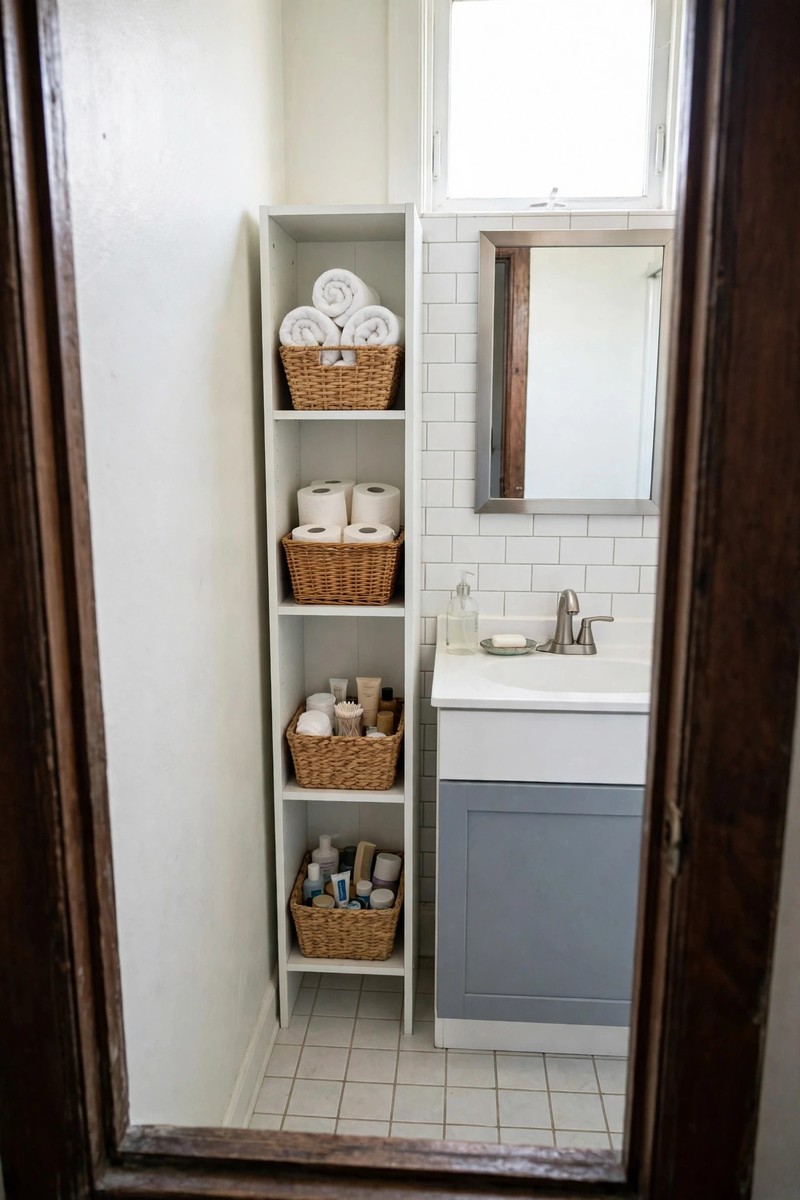
- Turns the dead gap beside the vanity or toilet into four shelves.
- Slim units under 8 inches wide fit gaps most furniture cannot.
- Freestanding, no screws, and it slides out at move-out.
- Keep heavy items low so the tall unit stays steady.
Every small bathroom has a gap nobody uses. Between the vanity and the wall, or beside the toilet, there is a strip of floor a few inches wide that collects dust and nothing else. A narrow shelving unit slides into that gap and turns it into four shelves of storage, with no screws. Measure the gap first, then buy a unit that fits with an inch to spare, so it slides in and out without scratching the vanity or the wall. Rolled towels, spare toilet paper, and baskets of toiletries all fit neatly, and most units cost under $40.
Stability matters more than looks with a tall, narrow unit. Keep the heaviest items on the lowest shelf so the weight sits near the floor, and never load the top shelf with anything heavy, or the unit can tip when you reach for a towel. A unit with adjustable feet stays level on a tiled floor that is not quite flat, which most bathroom floors are not. Wipe the shelves once a month, because a narrow gap traps dust and steam. When you move, slide the unit out and take it with you, and the gap looks untouched.
Cleaning Caddy Station
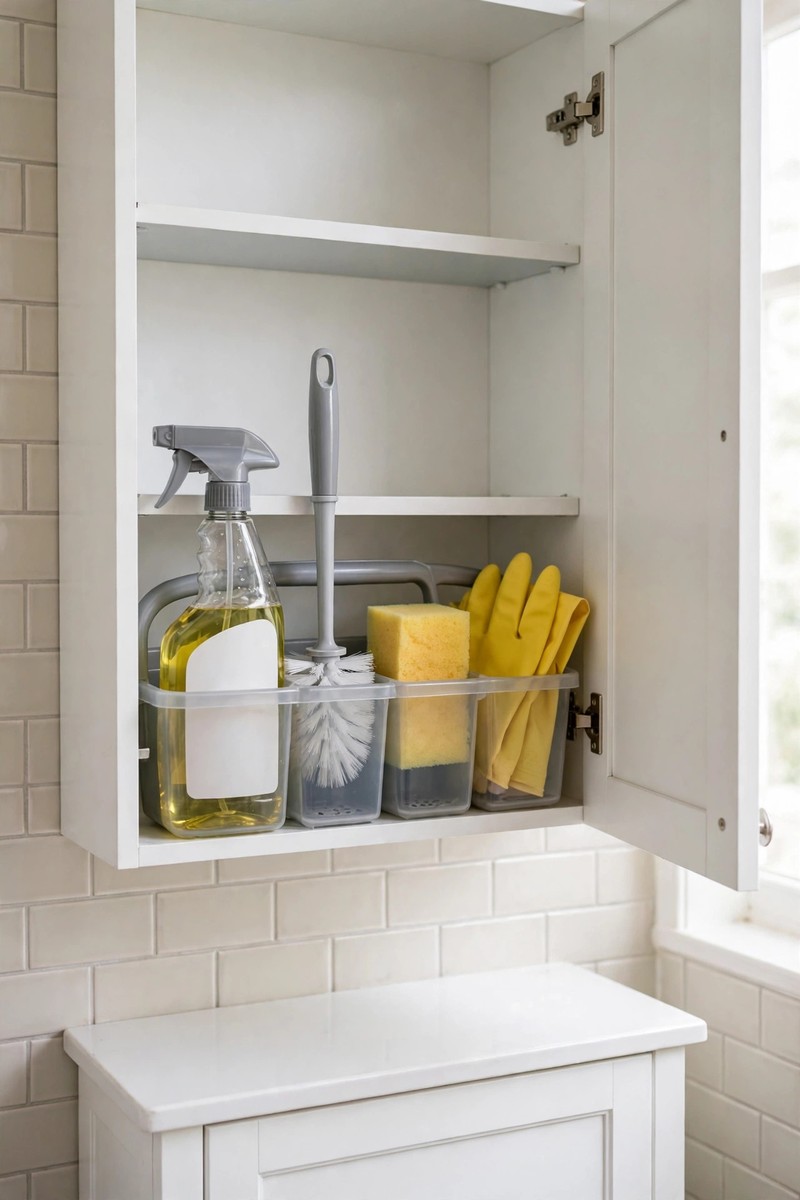
- Keep every cleaning supply in one portable caddy under the sink.
- Pull the whole caddy out on cleaning day, no hunting for bottles.
- A plastic caddy with a handle costs about $5 to $10.
- The caddy protects the cabinet floor from drips and spills.
Cleaning supplies spread across a bathroom cabinet are a mess waiting to happen. The spray bottle tips over, the sponge dries out in a puddle, and the toilet brush leans against the pipes where it collects dust. A cleaning caddy station fixes that: one portable plastic caddy with a handle holds the spray, the brush, the sponge, and the gloves in a single spot under the sink. Pull the caddy out on cleaning day and everything you need is in your hand, then slide it back when you finish. A caddy costs about $5 to $10 and fits vanity cabinets.
The caddy also protects the cabinet you do not own. Cleaning sprays leak, bleach drips, and a wet sponge left on bare wood stains it fast, and those marks come out of your deposit. A plastic caddy catches every drip before it reaches the cabinet floor, and it wipes clean with a damp cloth in seconds. Keep the caddy on the side of the cabinet away from the pipes, so nothing presses against a joint or blocks the shut-off valves. Check the bottles monthly for leaks, and toss any sponge that smells musty. At move-out, the caddy lifts out clean.
Woven Linen Basket

- Holds spare towels, washcloths, and the bath mat in one spot.
- A basket on the floor uses space no shelf can reach.
- Rolled towels fit more per basket than folded ones.
- Pick a basket with handles so you can carry it to the laundry.
Spare towels have no home in most small bathrooms. The linen closet is full or does not exist, the clean towels pile on the washer, and the bath mat ends up folded over the toilet lid. A tall woven basket on the floor fixes that in one move: rolled towels, washcloths, and the spare bath mat all fit inside, and the basket itself looks like a design choice instead of storage. Roll towels instead of folding them, because rolled towels fit more per basket and you can see every color at once. Pick a basket with handles for laundry trips.
Keep the basket off the wet floor, or the bottom stays damp. A small tray or a folded towel underneath lifts the basket just enough to let air flow, and a basket with a wipe-clean liner handles the odd splash without soaking through. Do not pack it full: leave room at the top so you can grab a towel without pulling the whole stack out. Wash the basket liner once a month and air the basket out on laundry day, because a closed basket in a humid bathroom can pick up a musty smell fast.
Hair Tool Holder

- Keeps the dryer and straightener off the counter and out of the drawer.
- Heat-safe holders mount inside a cabinet door with adhesive, no screws.
- Cord hooks underneath stop the cables from tangling.
- Let hot tools cool for a few minutes before you put them away.
Hot tools take over the counter the moment you plug them in. The dryer, the straightener, and the curling iron each need a spot to cool, and by the time you are done, the whole vanity is covered in cords and hot metal. A heat-safe holder mounted inside the cabinet door fixes that fast: the tools slide into their slots, the cords wrap around hooks below, and the counter stays clear. Pick an adhesive holder rated for bathroom use, and press it onto a clean, dry door. Let hot tools cool first, so the heat never warps the holder.
Check the door closes flat before you load the holder, because a full holder adds weight and depth to the door. Keep the heaviest tool, usually the dryer, in the lowest slot, so the weight sits near the hinge and the door swings easily. Never wrap a cord tight around a hot tool, because the heat can melt the cord coating over time. When you move, warm the adhesive with a hair dryer, peel the holder off slowly, wipe the door clean with warm soapy water, and the door looks untouched.
Frequently Asked Questions
How do I add storage to a small bathroom without drilling?
Use freestanding pieces and no-drill fixes: an over-toilet shelf that stands on its own legs, a tension-pole caddy in the shower corner, an over-door organizer on the back of the door, a slim cart in the gap beside the vanity, and adhesive hooks rated for damp rooms. None of these need a screw, and all of them come off clean at move-out.
What is the best storage for a bathroom with a pedestal sink?
A pedestal sink leaves you with no cabinet, so the storage has to come from everywhere else. Start with a slim rolling cart beside the pedestal for daily items, add an over-toilet shelf for towels and backstock, and use the back of the door for a pocket organizer. Wall baskets and a narrow gap unit fill whatever is left.
Will adhesive hooks and shelves hold up in a steamy bathroom?
Yes, if they are rated for damp rooms and you prep the surface. Clean the tile with rubbing alcohol, let it dry fully, press the adhesive on firm, and wait a full day before loading it. Never stick adhesive on grout or textured tile. Suction cups are the ones that fail in steam, not good adhesive. At move-out, pull the strip straight down slowly and the tile looks untouched.
Where should I start if my bathroom has almost no storage?
Start over the toilet, because that wall is the biggest empty space in most small bathrooms and a freestanding shelf needs no permission. Next, sort out the space under the sink with a pull-out organizer or bins around the pipes. Then use the back of the door. Measure each spot before you buy anything, because a bin that is two inches too wide is the most common waste of money.
Conclusion
A small bathroom does not have to stay a daily fight. These small bathroom storage ideas for renters show that the space you need is already there, over the toilet, under the sink, behind the door, and in the corner of the shower. Each idea costs little, needs no drill, and leaves nothing behind at move-out. Save this guide on Pinterest for later, try the one idea that fixes your worst clutter this week, and share it with a friend whose bathroom counter looks like yours. Your bathroom is small. It does not have to feel small too.

One Comment