25+ Open Entryway Ideas (No Walls Needed)
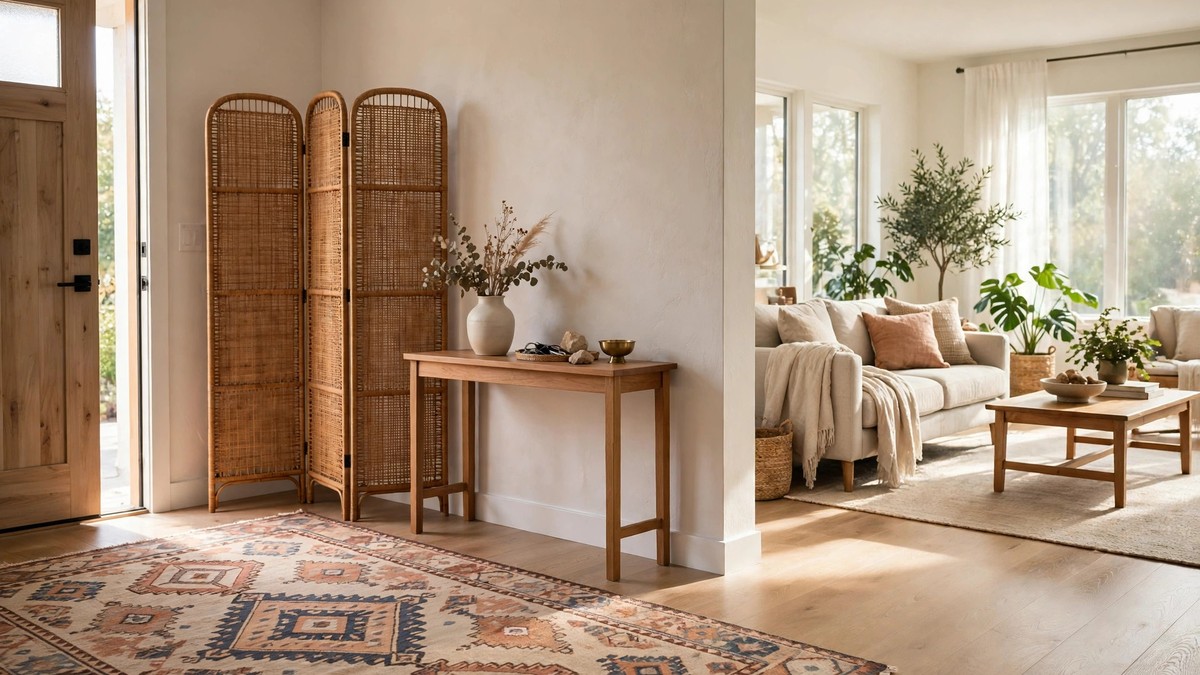
You can carve a real entryway out of an open-plan apartment with a rug, a divider, or a console turned sideways, and these open entryway ideas show you how. Most open-plan rentals open straight into the living room, so coats land on the sofa and shoes pile up by the door. A defined entry zone fixes that without a single wall, because the eye reads a rug edge or a screen as a boundary. The trick is picking one strong marker and letting it do the work.
Every idea below is renter-safe, so nothing needs drilling, painting, or landlord approval. A folding screen, a low bookshelf, or a bold rug can mark the zone in under an hour, and most setups cost less than 100 dollars. Move the pieces when you move out, and the apartment looks untouched. Pick the marker that fits your floor plan, then add one storage piece behind it. Your front door finally gets a proper welcome, and your living room stops doubling as a hallway.
Folding Room Divider
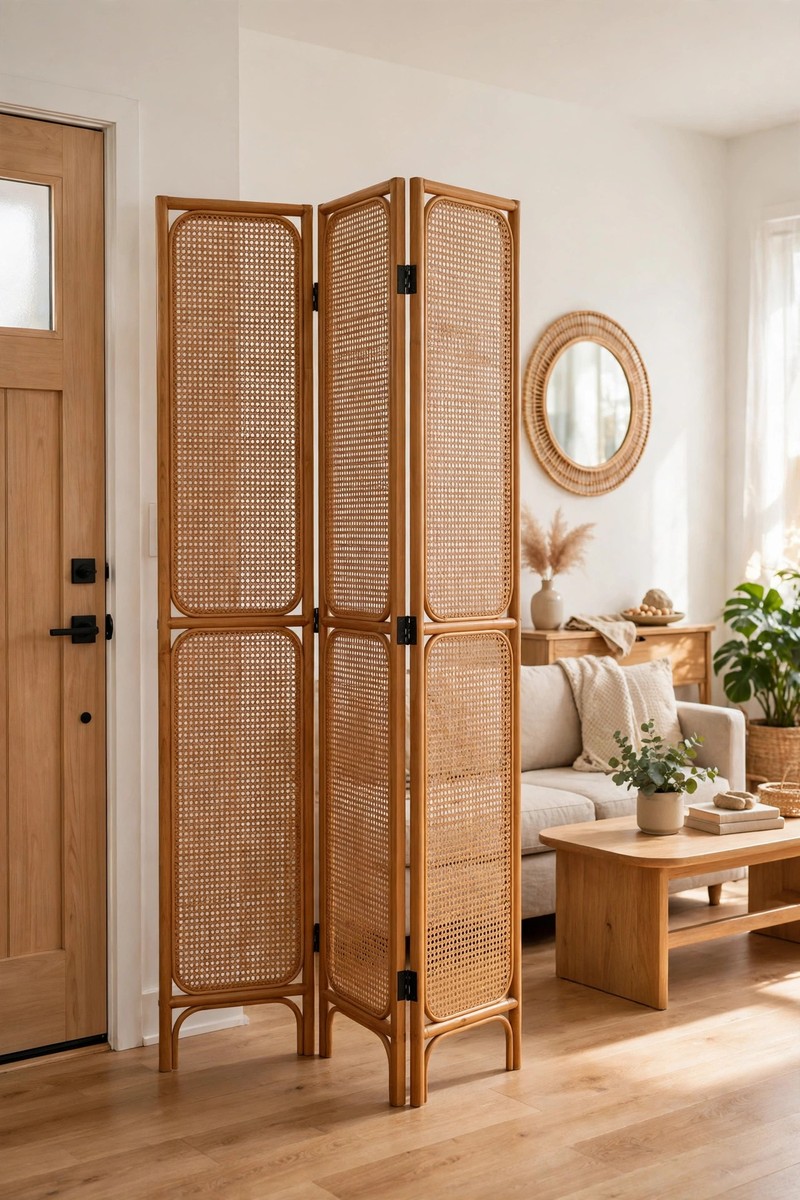
- A three-panel divider marks the entry in about 5 minutes, with no tools and no wall contact.
- Rattan or cane panels let light through, so the zone feels defined but never boxed in.
- Most folding dividers cost 60 to 120 dollars and fold flat when you move.
- Angle the panels slightly to guide foot traffic toward the living room, not the door.
A folding divider is the fastest way to give an open-plan entry a wall without building one. Set a three-panel screen at a slight angle just inside the door, and the space behind it reads as a hallway, with no wall at all. Rattan and cane panels work best because they let light pass through, so the entry stays bright instead of turning into a dark corner. Most cost 60 to 120 dollars and fold flat for moving day. Put a tray behind the screen for keys and mail, and the zone starts working the moment the divider goes up.
The divider also hides the mess that collects by every front door. Shoes, bags, and coats sit behind the screen, so guests see a calm room, not a pile of stuff. Choose a divider at least 68 inches tall, or the boundary reads as decoration rather than a wall. Weigh the base with a sandbag if the door drafts, since a light screen can wobble when the door slams. When guests arrive, fold one panel back to open the space up again. The whole setup moves to your next apartment in one trip, and your landlord never sees a mark.
Backwards Sofa Anchor

- Turning the sofa back to the door draws a line between entry and living room for zero dollars.
- The sofa back becomes a surface for a slim console or a row of baskets.
- Leave at least 30 inches between the sofa and the door swing so nobody squeezes past.
- A throw over the sofa back softens the hard line and adds color.
Your sofa is the biggest piece of furniture you own, so use it as the wall your apartment never had. Turn it so its back faces the front door, and the space behind it becomes an entry zone guests read at a glance. The sofa back also gives you a surface for a slim console or two baskets for shoes. Keep at least 30 inches between the sofa and the door swing, so nobody has to squeeze past with grocery bags. This move costs nothing, takes 10 minutes with a friend, and changes how the whole apartment flows.
The trick is making the sofa back look intentional, not like furniture shoved in the wrong spot. Drape a throw over the back, add a narrow console with a lamp, and the divider reads as a design choice. If the sofa back looks plain, a 12 inch deep console table hides it completely for 40 to 80 dollars. Angle the sofa slightly if the room is wide, which opens a clear path from the door to the kitchen. Renters love this move because it uses furniture already in the room, and moving day just means pushing the sofa back.
Rug Zone Boundary
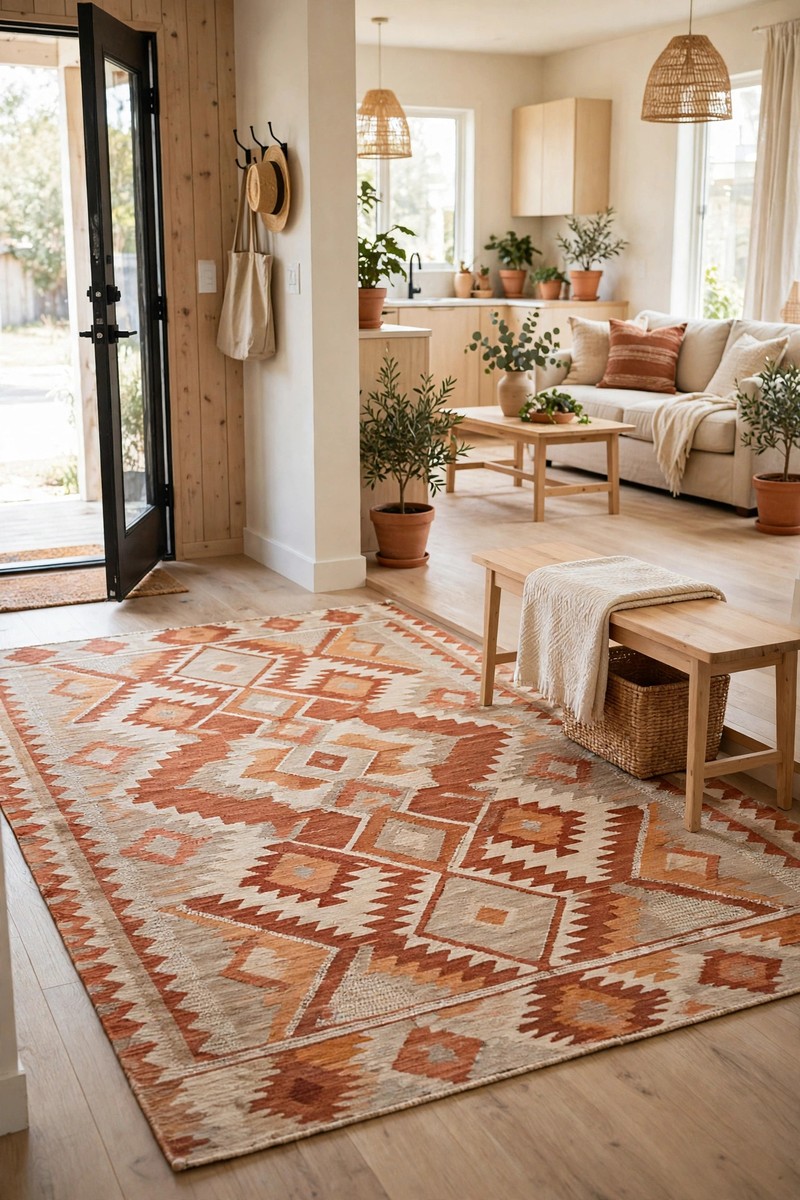
- A rug edge reads as a boundary, so feet and eyes both know where the entry ends.
- Pick a rug at least 5 by 7 feet, big enough to hold shoes, a bench, and a bag.
- Washable rugs cost 50 to 90 dollars and survive muddy shoes and pet paws.
- A bold pattern hides dirt between vacuums and marks the zone from across the room.
A rug is the simplest boundary you can buy, because the eye treats its edge as a wall. Lay a 5 by 7 foot rug just inside the door, and the entry zone appears without a single piece of furniture. Shoes stay on the rug, bags land on the rug, and the living room floor stays clean. Choose a washable rug in a bold pattern, which hides dirt and marks the zone. Most cost 50 to 90 dollars, and a non-slip pad underneath keeps it flat for about 15 dollars more. Setup takes 5 minutes.
Size matters more than pattern here. A rug smaller than 5 by 7 feet looks like a doormat, not a room, so go big even if the entry feels tight. Leave 6 inches of bare floor between the rug and the door swing so the door never catches the edge. Layer a small coir mat on top of the rug at the door for muddy days, then shake it out in under 2 minutes. When you move, roll the rug up and take the whole entry zone with you. No holes, no marks, and the deposit stays safe.
Open-Back Bookshelf Wall
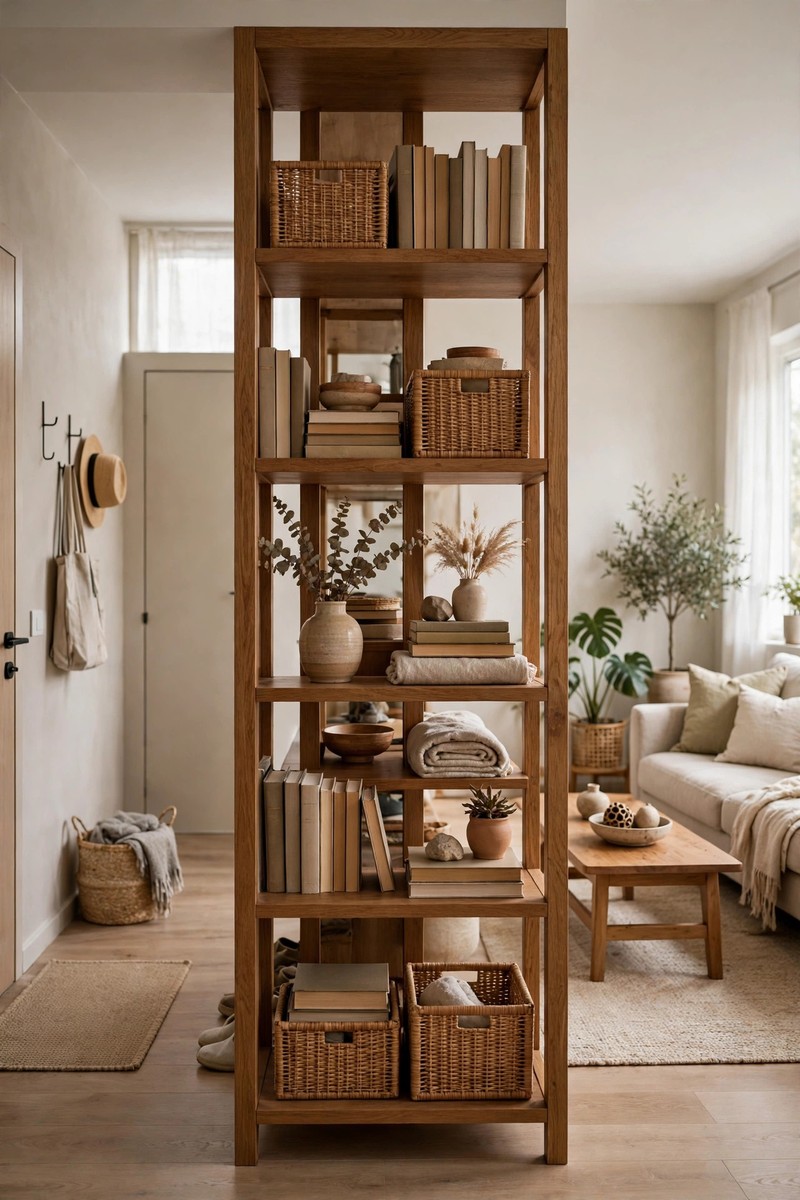
- A 72 inch bookshelf set sideways divides the entry and doubles as storage.
- Open backs let light through, so the entry never feels like a dark hallway.
- Anchor it with adhesive furniture straps, no drilling, for about 12 dollars.
- Face the finished side toward the living room and the storage side toward the door.
A tall bookshelf turned sideways is a wall that also holds your stuff. Set a 72 inch open-back unit perpendicular to the wall just inside the door, and the entry gains a boundary plus six shelves of storage. Books and baskets face the living room, while coats and bags hang on the entry side. Open backs matter here, because a solid shelf would block light and make the entry feel like a closet. Most 72 inch bookshelves cost 70 to 130 dollars and assemble in about 30 minutes with the included tool.
Safety comes first with a tall shelf standing free in the room. Stick adhesive furniture straps to the top and the wall for about 12 dollars, no drilling needed, and the unit stays put even if someone bumps it. Keep heavy books on the bottom shelves so the center of gravity stays low. Leave a 36 inch gap between the shelf end and the opposite wall so two people can pass without turning sideways. The shelf moves to a bedroom or office at your next place, so the money works twice.
Ceiling Track Curtain
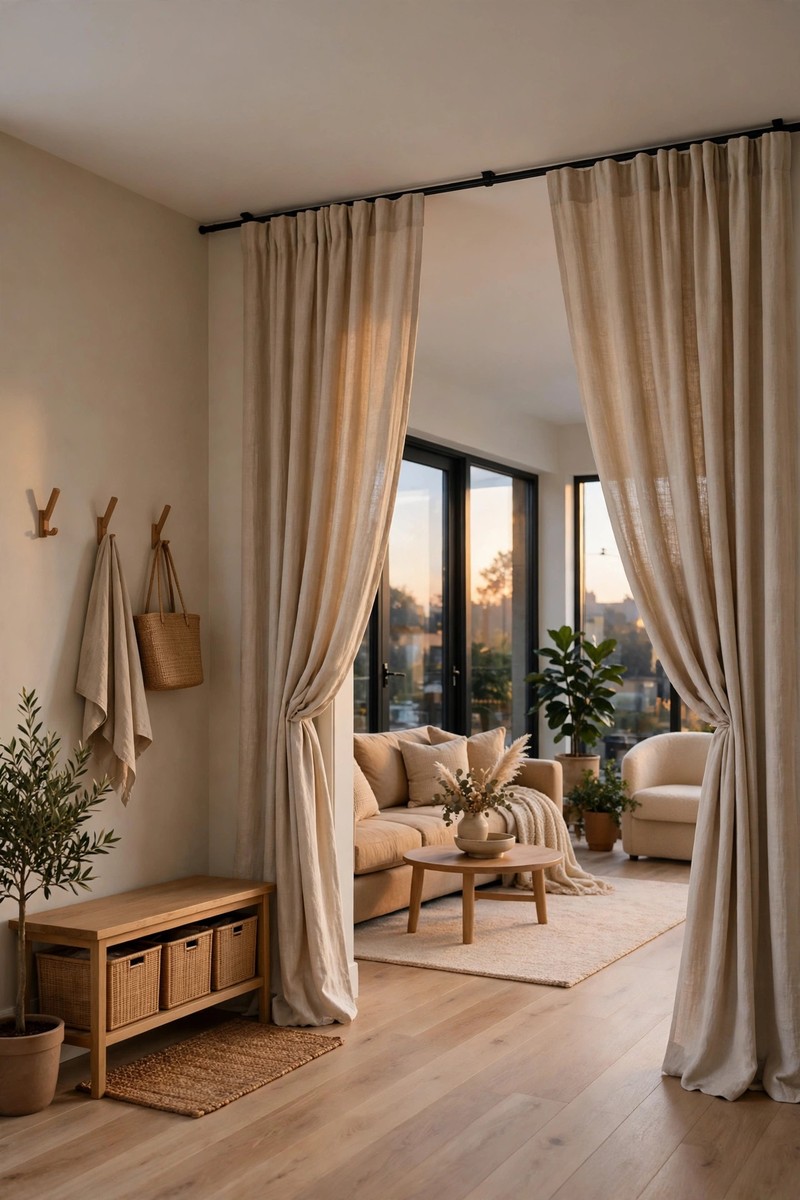
- Adhesive ceiling tracks mount without drilling and hold light linen panels.
- Curtains close for privacy and open wide when guests arrive.
- A track and two panels cost 40 to 80 dollars and install in about 20 minutes.
- Choose linen or cotton, which hangs straight and lets some light through.
A ceiling track with linen curtains gives an open entry a soft wall that opens and closes. Stick an adhesive track to the ceiling in a straight line across the entry, hang two linen panels, and the zone gains privacy in about 20 minutes. Curtains beat a solid divider here because they slide open when friends visit and close when the entry turns messy. A track and two panels cost 40 to 80 dollars, and the adhesive mounts peel off clean at move-out. Pick linen or cotton panels, which hang straight and still let daylight filter through.
Measure the ceiling height before ordering, since most tracks fit ceilings up to 10 feet and panels come in 84 or 96 inch lengths. Hang the panels 1 inch above the floor so they never drag or catch on shoes. A curtain weight of under 2 pounds per panel keeps the adhesive track secure, so skip heavy blackout fabric. If the ceiling paint feels chalky, test one adhesive pad for 24 hours before hanging the full track. The result reads like a boutique hotel entry, and nothing about it touches the walls.
Console As Divider
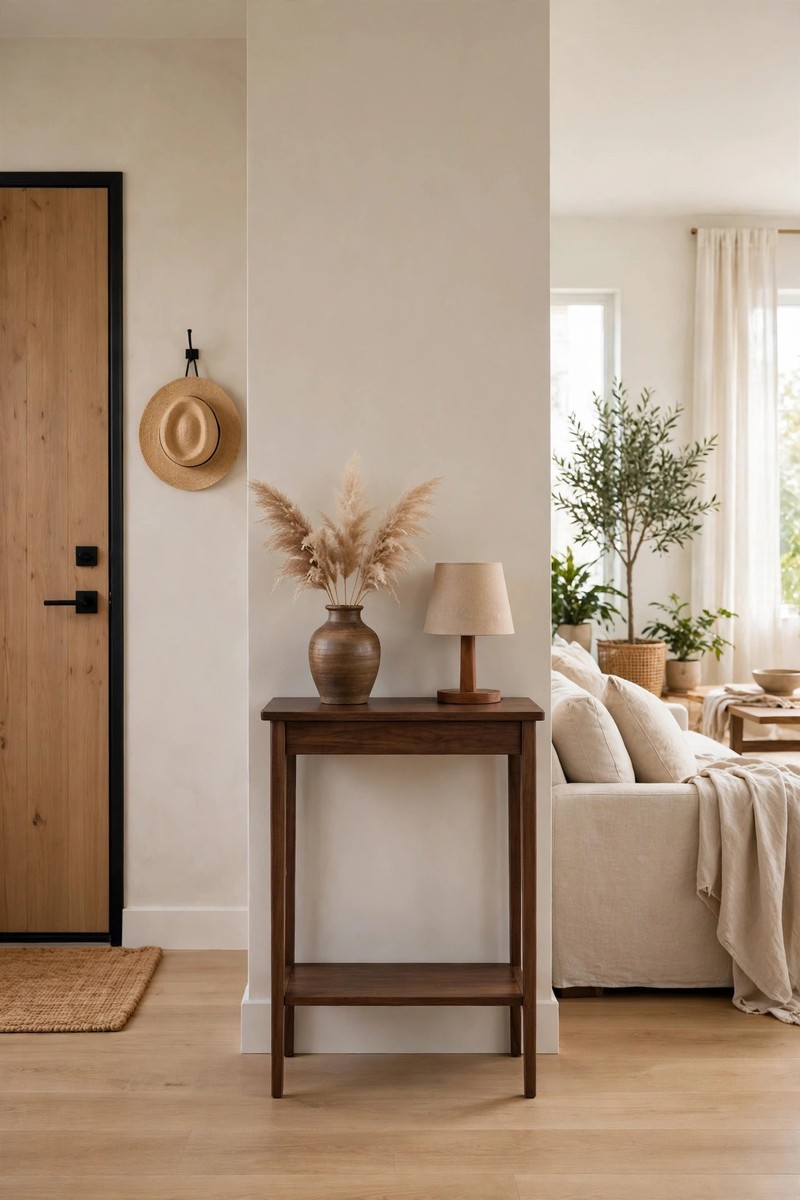
- Turn a console 90 degrees and it becomes a low wall with a useful top.
- The top holds keys, mail, and a lamp, so the entry works from day one.
- A 12 inch deep console fits tight entries without blocking the walkway.
- Add a basket underneath for shoes and the zone stays tidy.
A console table turned sideways does double duty as a divider and a drop zone. Set a slim 12 inch console perpendicular to the wall by the door, and its long edge draws the entry boundary while its top holds keys, mail, and a lamp. The setup takes 5 minutes and costs nothing if you own the table, or 50 to 90 dollars new. Place a basket underneath for shoes, and the entry stays tidy with no hooks in the wall. For what goes on top, our small apartment entryway guide covers storage and decor for a console this size.
Height matters more than length with a console divider. A 30 to 34 inch tall table reads as a boundary without blocking sight lines across the room, so the apartment still feels open. Keep the top styled with three items max, a lamp, a tray, and one plant, or the surface turns into a clutter shelf. A console with a lower shelf adds shoe storage for free, which keeps the floor clear. When you move, the table goes back against a wall in the next apartment, and the entry zone travels with it.
Washi Tape Outline
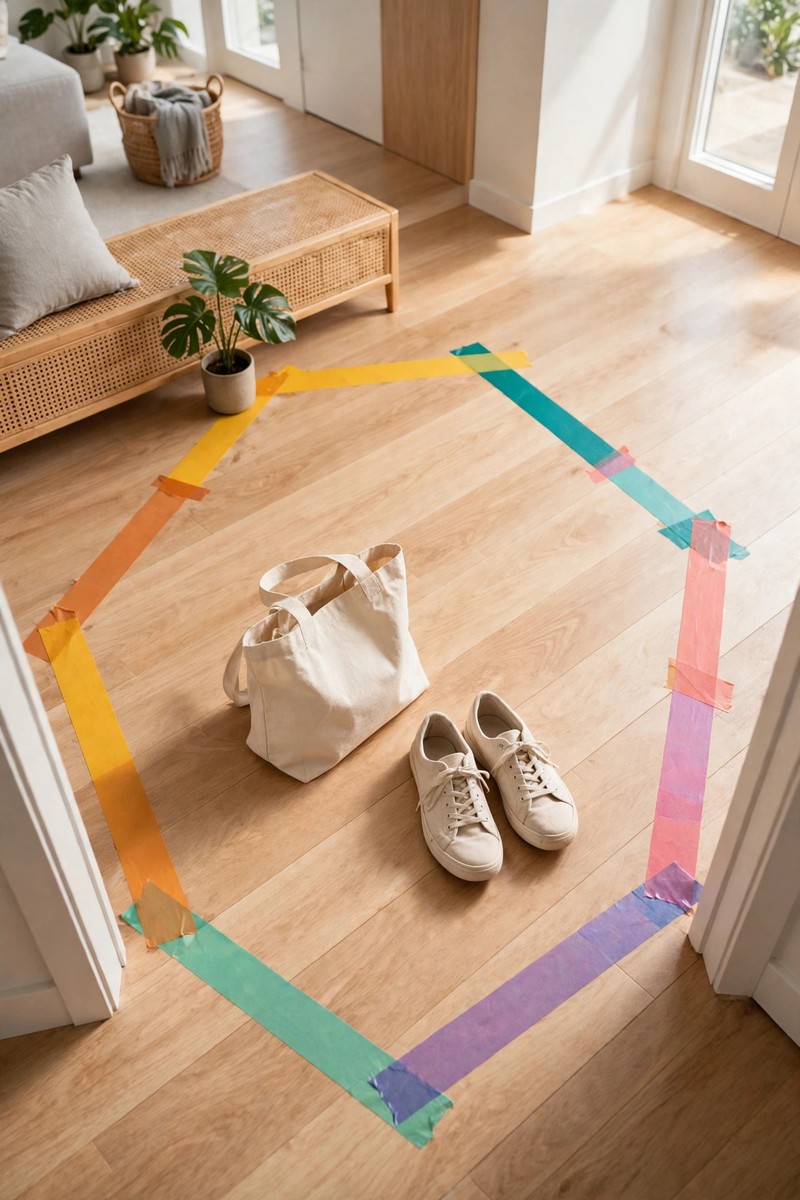
- Washi tape draws a floor boundary for about 5 dollars and peels off clean.
- A bold color or pattern makes the line visible from across the room.
- Tape the outline in 15 minutes with a ruler and a steady hand.
- Replace the tape every 2 to 3 months so the edges stay crisp.
Washi tape is the cheapest boundary on this list, and it works better than it sounds. Lay a bold geometric outline on the floor just inside the door, and the taped shape reads as a room, even though it sits flat on the wood. A roll costs about 5 dollars, and the outline takes 15 minutes with a ruler and a steady hand. Choose a strong color like black or red so the line shows from across the room. Shoes and bags land inside the tape, and the living room floor stays clear without any furniture at all.
The tape peels off clean, which is why landlords never mind it. Press the edges down firmly so vacuum wheels never lift a corner, and replace the outline every 2 to 3 months before the edges curl. A rectangle 4 feet wide and 3 feet deep fits most entries, with room for two pairs of shoes and a bag. Pair the outline with a small mat inside it for muddy days. This is the idea to try first if the budget is tight, since the whole experiment costs less than a coffee run.
Tall Plant Screen
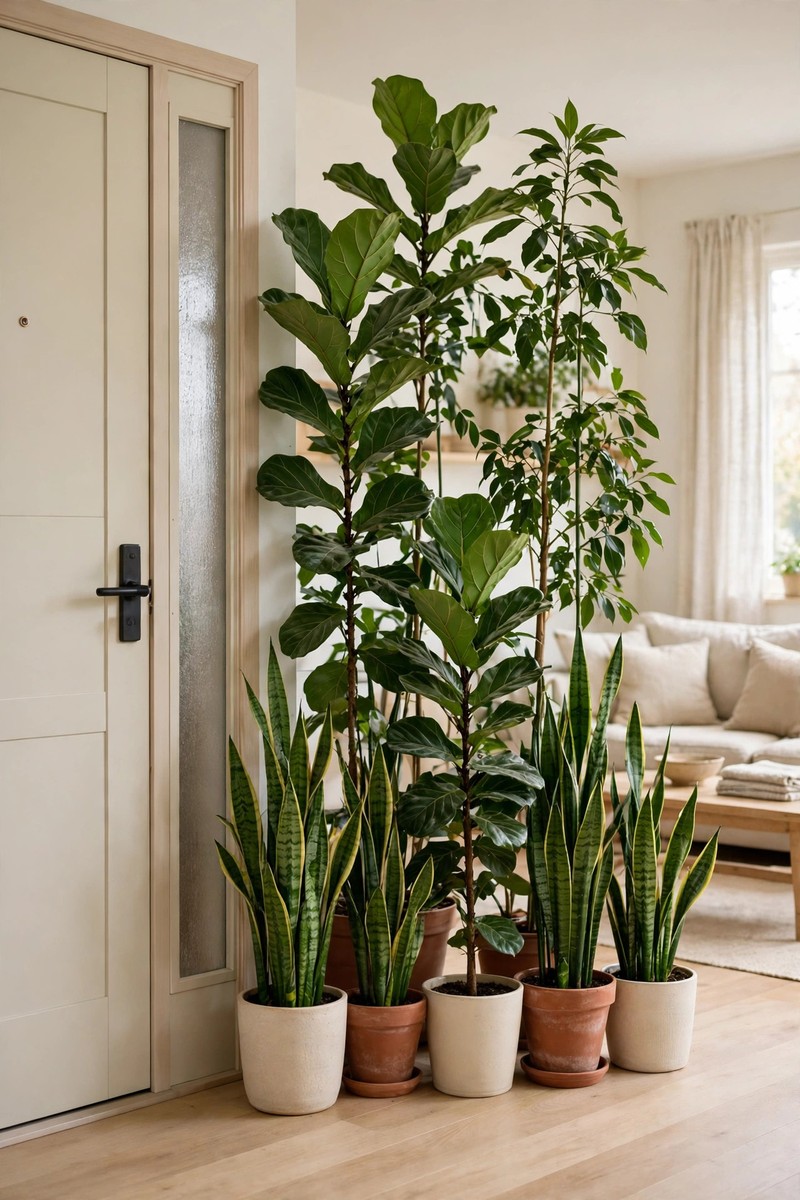
- Three tall plants in a row form a living screen that softens the entry edge.
- Snake plants and fiddle leaf figs thrive in bright entry light with little care.
- Planter stands of different heights make the screen read as one wall.
- A row of three plants costs 60 to 120 dollars, pots included.
A row of tall plants divides an entry without a single hard edge. Line up three plants of different heights, a fiddle leaf fig, a snake plant, and a tall monstera, and the green screen tells the eye where the entry ends. Plants work best in bright entries near a window, and they cost 60 to 120 dollars for the row, pots included. Use planter stands of different heights so the screen reads as one wall instead of three random pots. Water once a week, and the divider grows more solid every month.
Pick plants that forgive a missed watering, since the entry is easy to forget. Snake plants survive 2 weeks without water, and a fiddle leaf fig needs only a weekly drink and a wipe of its leaves. Set pots on cork mats or saucers so water never reaches the floor, and check the saucers after every watering. Keep the tallest plant nearest the door so the screen reads as a wall from the entrance. When you move, the plants ride in the car, and the entry zone moves with you.
Hanging Pendant Marker

- A pendant hung over the entry marks the zone with light, not furniture.
- Plug-in swag pendants need one adhesive ceiling hook and no wiring.
- A pendant and bulb cost 30 to 60 dollars and install in about 15 minutes.
- Warm 2700K light makes the entry feel welcoming after dark.
Light can draw a boundary as clearly as any wall, and a pendant over the entry proves it. Hang a plug-in swag pendant from one adhesive ceiling hook, and the pool of light below it reads as a room, even with no furniture around it. The pendant and bulb cost 30 to 60 dollars, and the whole install takes about 15 minutes with no wiring and no electrician. Choose a warm 2700K bulb, which makes the entry glow instead of glaring. Drape the cord along the ceiling with adhesive clips so it looks tidy.
Hang the pendant 7 feet above the floor, high enough to walk under and low enough to mark the zone. A brass or black shade at least 12 inches wide throws a clear circle of light on the floor below. Pair the pendant with a small rug underneath, and the light plus the rug edge define the entry twice over. When you move out, the adhesive hook peels off and the pendant packs into a box. This is the fastest way to give an open entry a focal point that guests notice the second they walk in.
Pegboard Partition
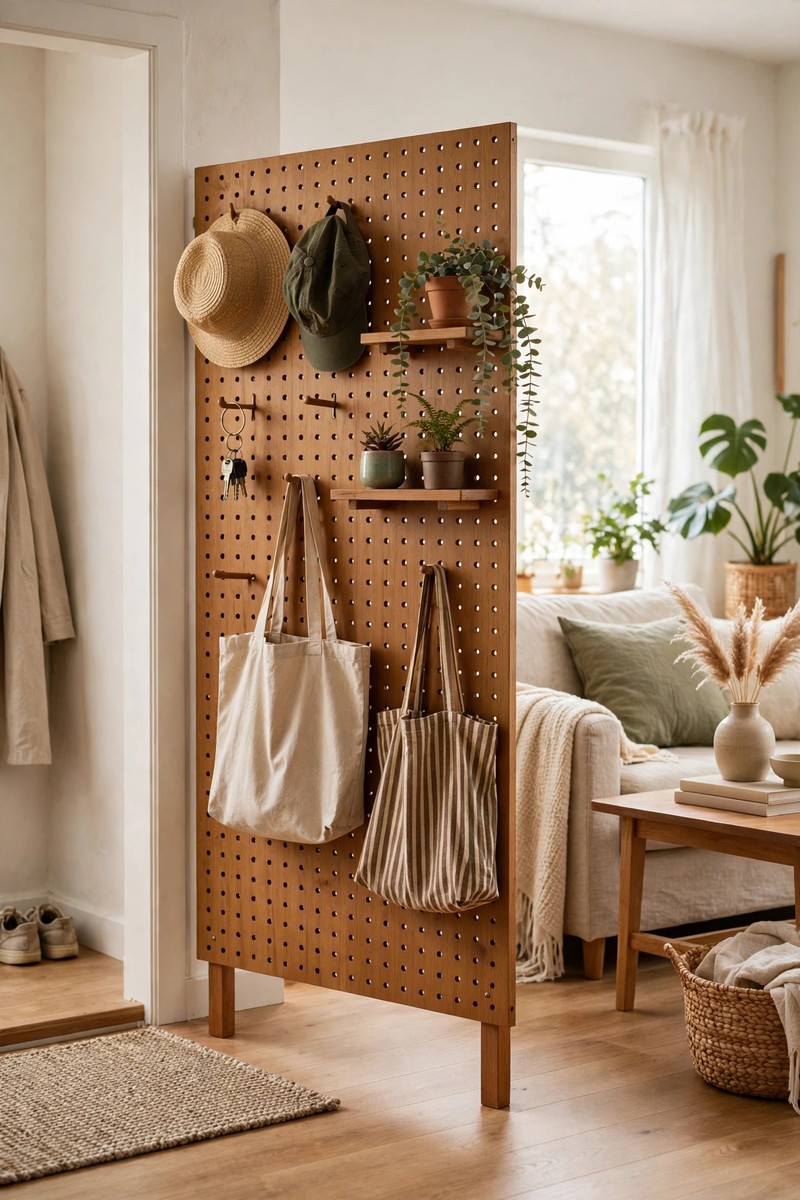
- A pegboard on legs divides the entry and holds keys, hats, and bags.
- Move hooks in seconds as seasons change, no tools needed.
- A 4 by 6 foot pegboard panel costs 50 to 90 dollars with a leg kit.
- Paint it to match your decor, or leave the wood bare for a warm look.
A freestanding pegboard is a divider that also works as a command center. Set a 4 by 6 foot panel on legs just inside the door, and the entry gains a wall covered in hooks for keys, hats, and tote bags. Small shelves clip on for sunglasses and mail, and the whole layout changes in seconds when the seasons turn. A panel with a leg kit costs 50 to 90 dollars and assembles in about 20 minutes. Paint it to match the room, or leave the wood bare for a warm, simple look.
Keep the pegboard hooks facing the entry side, so the living room sees a clean panel instead of a wall of stuff. Hang daily items at eye level and seasonal gear up high, which keeps the morning grab quick and easy. Label the hooks if two people share the entry. A pegboard with 1 inch hole spacing takes standard hooks from any hardware store, so replacements cost pennies. Anchor the legs with adhesive floor pads so the panel never slides on smooth floors. When the lease ends, the panel folds flat or moves to a home office, hooks and all.
Rolling Cube Divider
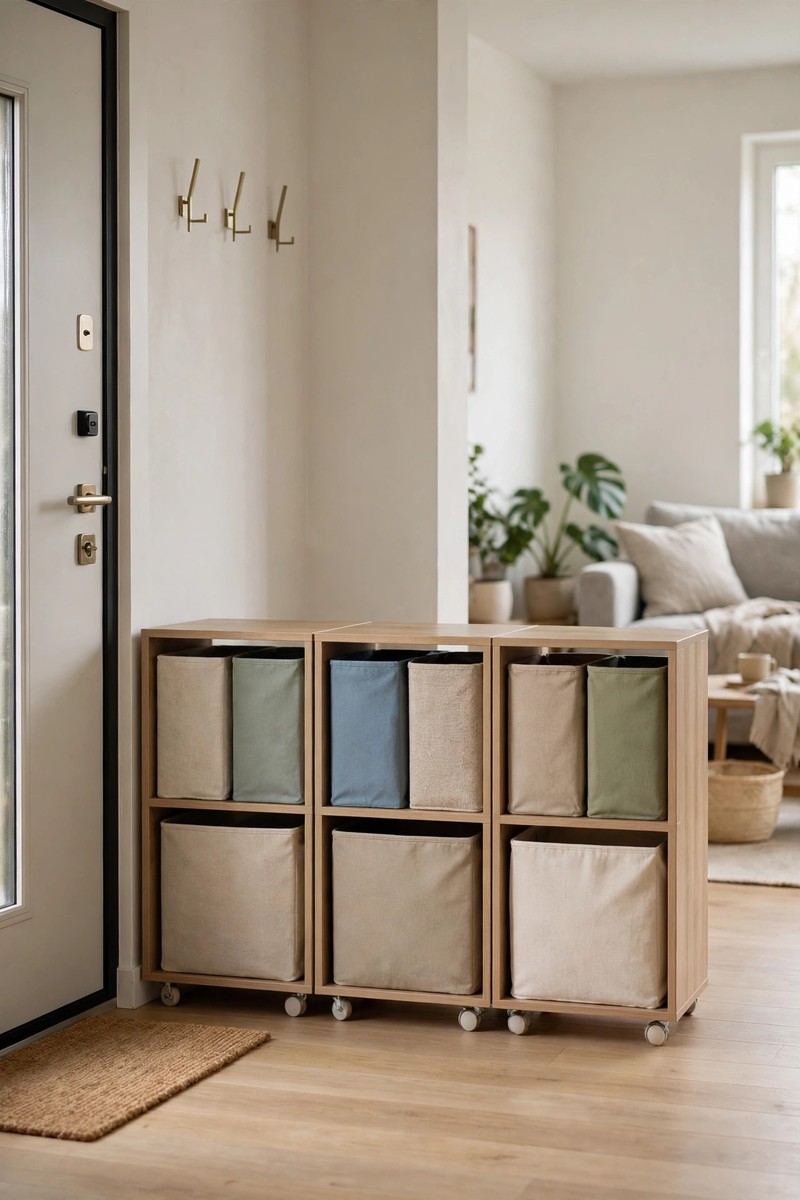
- Three rolling cubes in a row form a low wall with hidden storage inside.
- Lock the wheels once placed, then roll them aside when guests arrive.
- Each cube costs 25 to 45 dollars and holds one fabric bin.
- Fabric bins in one color keep the divider looking tidy from the living room.
Rolling cubes are the most flexible divider on this list, because they move whenever you do. Line up three cube units just inside the door, and the low wall they form marks the entry while hiding shoes, bags, and scarves in fabric bins. Each cube costs 25 to 45 dollars, and a set of three covers about 4 feet of floor. Lock the wheels once the cubes sit where you want them, then roll the whole wall aside in seconds when friends come over. Match the bin color across all three cubes so the divider reads as one piece.
Height is the trade-off with cubes, since a 16 inch unit marks the zone without blocking the view. That low profile works in small apartments, where a tall divider would shrink the room. Put a tray on top of one cube for keys and mail, and the divider doubles as a drop zone that actually gets used. Choose cubes with a smooth top so bags slide on and off without catching or snagging. When you move, the cubes stack in the car and rebuild the entry zone at the next apartment in minutes.
Low Sideboard Divider
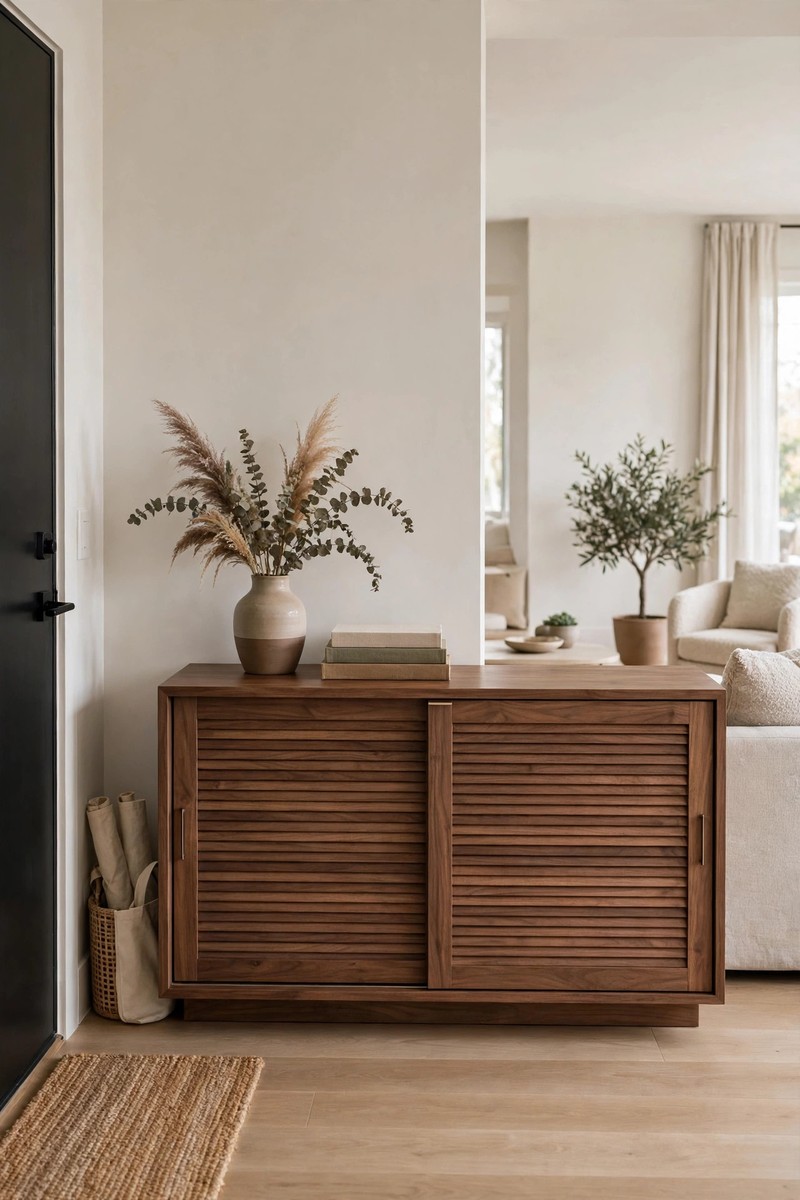
- A sideboard under 30 inches tall divides the entry without blocking sight lines.
- Sliding doors hide shoes, bags, and dog gear in one sweep.
- A 48 inch sideboard costs 90 to 180 dollars and holds a surprising amount.
- Style the top with a lamp and one plant to finish the look.
A low sideboard is the grown-up version of a console divider, with real storage behind closed doors. Set a 48 inch unit across the entry, and its top edge draws the boundary while sliding doors hide shoes, bags, and dog gear inside. The 30 inch height keeps sight lines open across the room, so the apartment still feels spacious. Most sideboards cost 90 to 180 dollars and hold far more than they look like they should. Style the top with a lamp and one plant, and the divider reads as furniture, not a barrier.
Sliding doors beat swing doors in a tight entry, since nothing swings into the walkway. Measure the door swing before buying, and leave 36 inches of clear path between the sideboard end and the nearest wall. Felt pads under the feet protect wood floors and let you slide the unit for cleaning. Keep the top mostly clear, since a cluttered sideboard top turns the divider into a junk shelf. This piece earns its keep in any room later, from a dining room to a bedroom, so the money never goes to waste.
Tension Rod Sheers
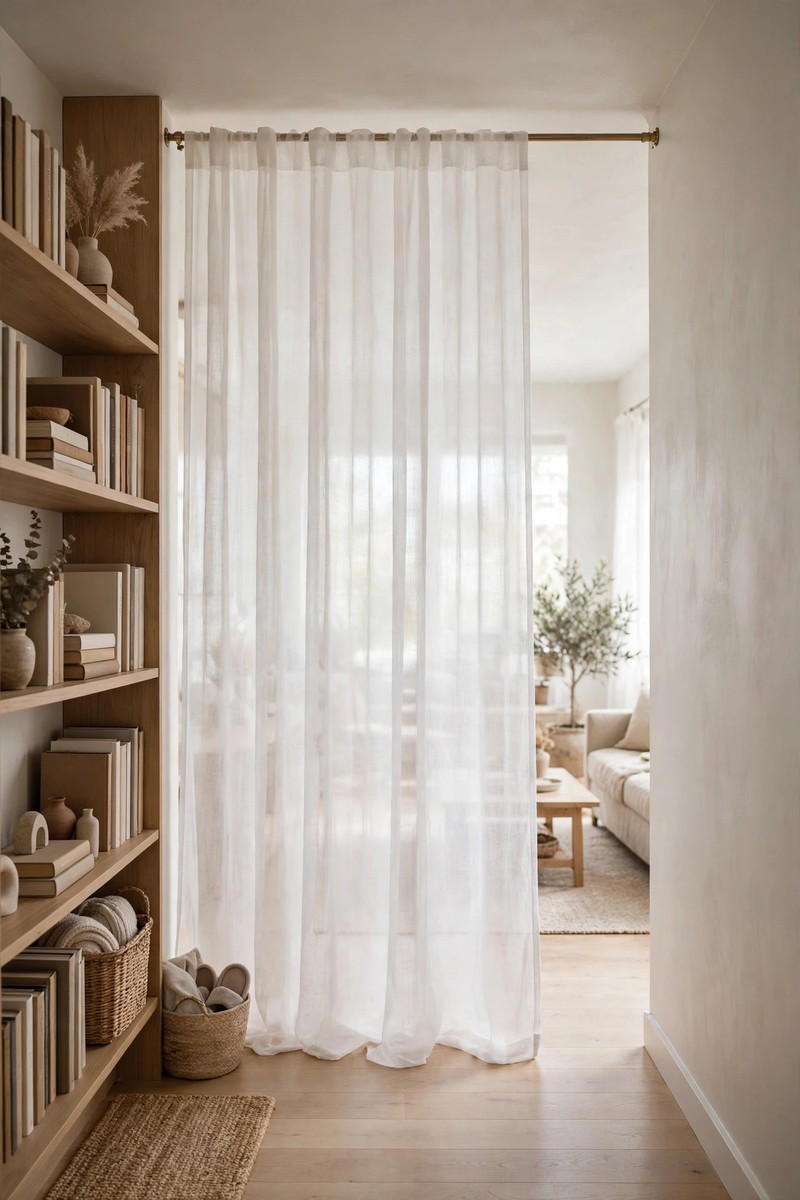
- A tension rod wedged between a shelf and a wall holds sheer curtains with no drilling.
- Sheers divide the entry while letting daylight pass through.
- A rod and two sheer panels cost 25 to 45 dollars and install in 10 minutes.
- The rod twists out clean at move-out, leaving no marks.
Sheer curtains on a tension rod divide an entry with the lightest touch possible. Wedge a brass rod between a bookshelf and the nearest wall, hang two sheer panels, and daylight still pours through while the entry gains a soft boundary. The rod and panels cost 25 to 45 dollars and install in about 10 minutes, with no drilling and no tools. Sheers work best where the gap spans 24 to 60 inches, which covers most open-plan entries. The fabric moves gently when the door opens, which makes the divider feel alive instead of stiff.
Keep the panels light, under 1 pound each, so the tension rod never slips. Twist the rod until it feels snug, then test it with a firm tug before hanging any curtains. Wash the sheers twice a year to keep them bright and airy. Hang the panels 1 inch above the floor so they never catch on shoes or the vacuum. White or cream sheers glow in daylight and disappear at night, which keeps the entry bright around the clock. When the lease ends, twist the rod free and the walls look untouched, which is exactly what a renter wants.
Floor Decal Path

- Peel-and-stick decals lay a dotted path from the door, marking the entry route.
- A pack of 24 decals costs 12 to 20 dollars and covers about 8 feet.
- Decals peel off clean from wood and tile, so the deposit stays safe.
- Space dots 12 inches apart for a clear path that still feels playful.
Floor decals turn the path from the door into a design feature that marks the entry. Stick a dotted trail of peel-and-stick decals from the front door into the living room, and guests follow the path without thinking about it. A pack of 24 decals costs 12 to 20 dollars and covers about 8 feet of floor, which is plenty for most entries. Space the dots 12 inches apart so the path reads clearly without looking crowded. The decals peel off clean from wood and tile, so the deposit stays safe.
Choose a color that pops against your floor, like terracotta on light wood or cream on dark tile. Press each decal firmly with a credit card so the edges seal flat and never catch a shoe. Replace any decal that curls after a few months, since one lifted edge makes the whole path look tired. Pair the path with a small rug at the door, and the entry gains two markers for under 30 dollars total. This idea works best in apartments where the front door opens straight into a long, open room.
Peel-And-Stick Arch
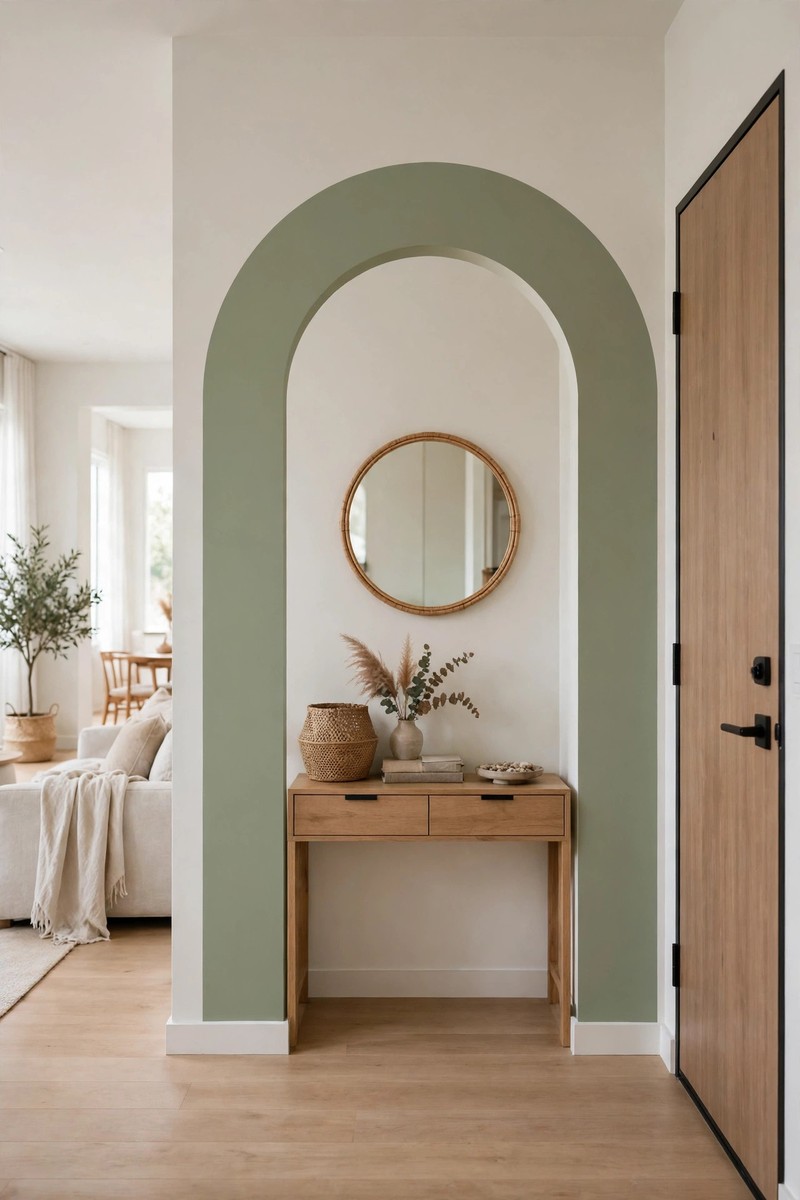
- A peel-and-stick arch decal frames the entry on a blank wall for 20 to 40 dollars.
- The arch shape reads as a doorway, so the eye sees a room where none exists.
- Decals stick in 15 minutes and peel off clean at move-out.
- Sage, terracotta, and cream arches suit most rental paint colors.
An arch decal paints a doorway onto a blank wall, and the eye believes it. Stick a large peel-and-stick arch on the wall beside the front door, and the space under it reads as an entry, even though no doorway exists. A decal costs 20 to 40 dollars, sticks on in about 15 minutes, and peels off clean when the lease ends. Place a small console table and a mirror under the arch, and the zone looks finished. Sage, terracotta, and cream suit most rental paint, so the arch blends in instead of clashing.
Size the arch to the wall, not the furniture. An arch 6 feet tall and 4 feet wide frames a console table without overwhelming a small entry. Smooth the decal from the center outward with a credit card to push out air bubbles as you go. If the wall paint feels powdery, test a small corner first and wait 24 hours before committing. The arch works even better with a rug underneath, since the wall shape and the floor shape echo each other. It is a 15 minute project with a big visual payoff.
Grid Wall Panel
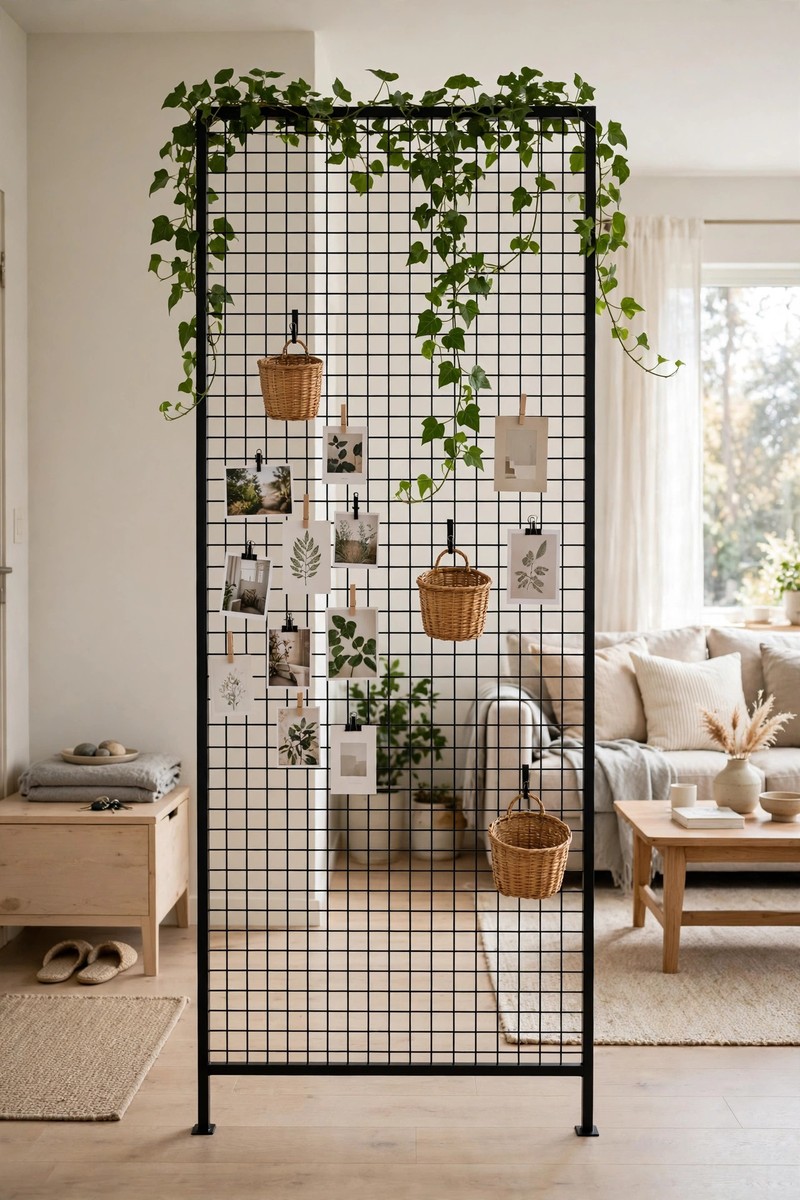
- A grid panel on feet divides the entry and works as a display board.
- Clips hold photos, notes, and small baskets without a single nail.
- A 3 by 6 foot panel costs 40 to 70 dollars with a foot kit.
- The open grid lets light through, so the entry stays bright.
A grid panel is a divider that doubles as a display board, which makes it perfect for an entry that needs personality. Set a 3 by 6 foot black metal panel on freestanding feet just inside the door, and the entry gains a wall that holds photos, notes, and small baskets on clips. The open grid lets daylight pass through, so the entry never feels boxed in. A panel with a foot kit costs 40 to 70 dollars and assembles in about 15 minutes. The grid reads modern and clean, even when the clips hold a week of mail.
Keep the display light so the panel stays stable. Three or four clips with photos and one small basket weigh under 2 pounds total, which keeps the panel steady on its feet. Use adhesive floor pads under the feet so the panel never slides on wood floors. Hang a trailing plant from the top rail for a soft touch that breaks up the metal grid. When you move, the panel folds flat and works as a mood board in a home office. It is one of the few dividers that gets more useful the longer you own it.
Peel-And-Stick Floor Tiles
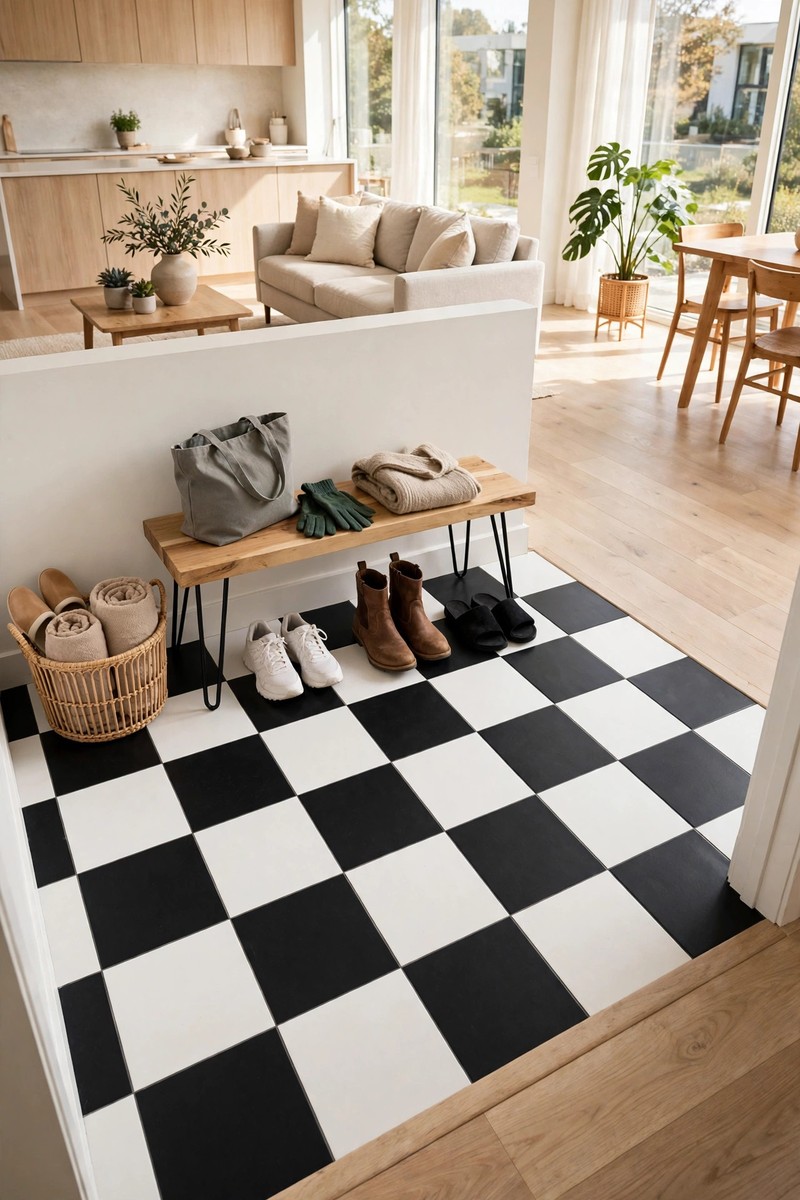
- Peel-and-stick vinyl tiles lay a new floor over the entry zone for 30 to 60 dollars.
- A bold pattern like checkerboard marks the boundary from across the room.
- Tiles lift off clean from smooth floors, so the deposit stays safe.
- A 4 by 5 foot zone needs about 20 tiles and 30 minutes to lay.
Peel-and-stick floor tiles give an entry a different floor, which is the clearest boundary of all. Lay a 4 by 5 foot patch of vinyl tiles just inside the door, and the pattern change tells everyone where the entry starts and the living room begins. A bold checkerboard or terracotta pattern marks the zone from across the room. Twenty tiles cover the zone for 30 to 60 dollars, and the whole job takes about 30 minutes. The tiles lift off clean from smooth wood or tile floors when the lease ends.
Start laying tiles from the door edge so the pattern lines up where guests first step. Press each tile firmly and roll over it with a rolling pin to seal the edges flat. Choose vinyl tiles rated for floors, not wall tiles, since floor tiles handle foot traffic and shoe grit without peeling. Sweep the zone daily and mop weekly, since grit underfoot wears the pattern faster. If one tile gets damaged, peel it up and stick a spare down in 2 minutes. Keep a few spares in a closet for exactly that day.
Rope Hanging Screen
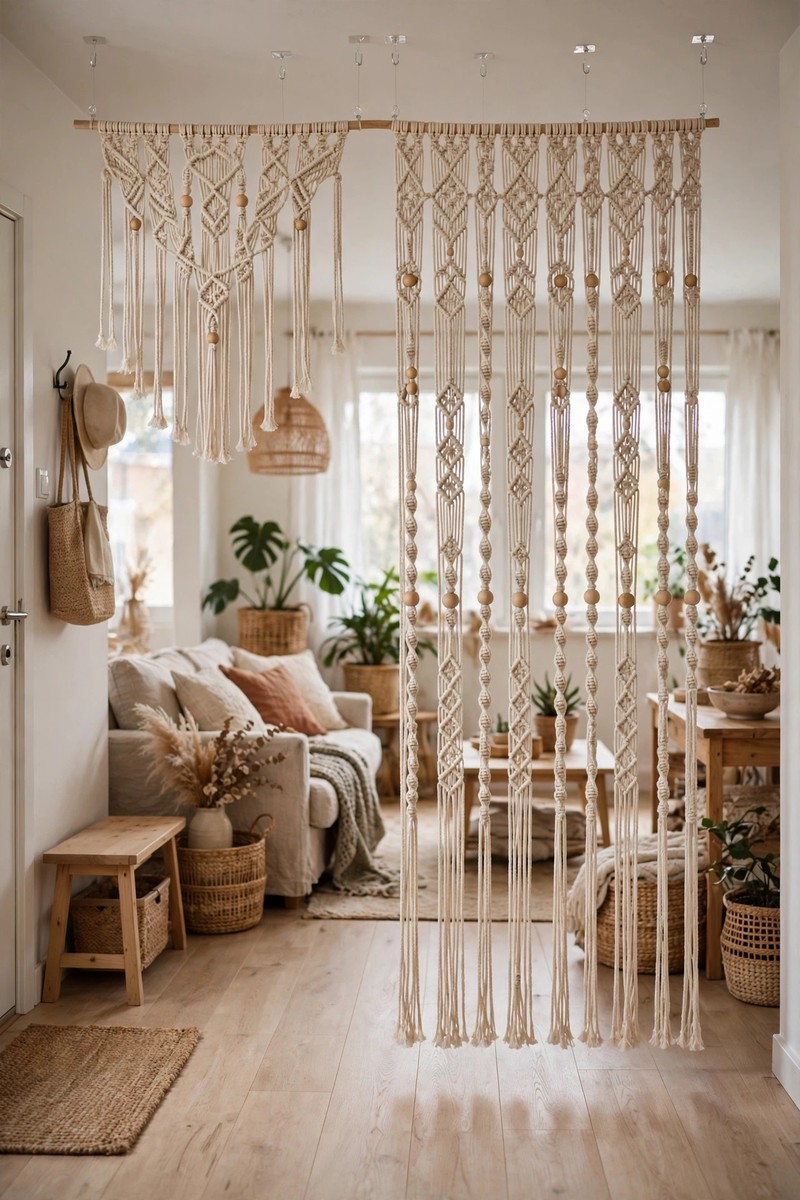
- A macrame rope screen hangs from adhesive ceiling hooks, no drilling needed.
- Cotton cords divide the entry while letting light and air pass through.
- A 3 foot wide screen costs 35 to 70 dollars and hangs in 10 minutes.
- Wooden beads add weight so the cords hang straight and still.
A macrame rope screen divides an entry with texture instead of a solid wall. Hang a 3 foot wide cotton cord screen from two adhesive ceiling hooks, and the cords mark the boundary while light and air pass straight through. The screen costs 35 to 70 dollars and hangs in about 10 minutes, with no drilling and no damage. Wooden beads woven into the cords add weight, so the screen hangs straight instead of swaying every time the door opens. Cream cotton suits most rental walls and glows softly in daylight.
Check the adhesive hooks before hanging, since a screen weighs 3 to 5 pounds and needs hooks rated for at least 7 pounds each. Press the hooks onto a clean, dry ceiling and wait a full 24 hours before hanging the screen. Vacuum the cords gently with a brush attachment between shakes. Hang the screen 1 inch above the floor so it never tangles with shoes or the vacuum. A quick shake outside once a month keeps dust from settling into the cords. When you move, the screen rolls up small and the hooks peel off, leaving the ceiling clean.
Oversized Art Anchor
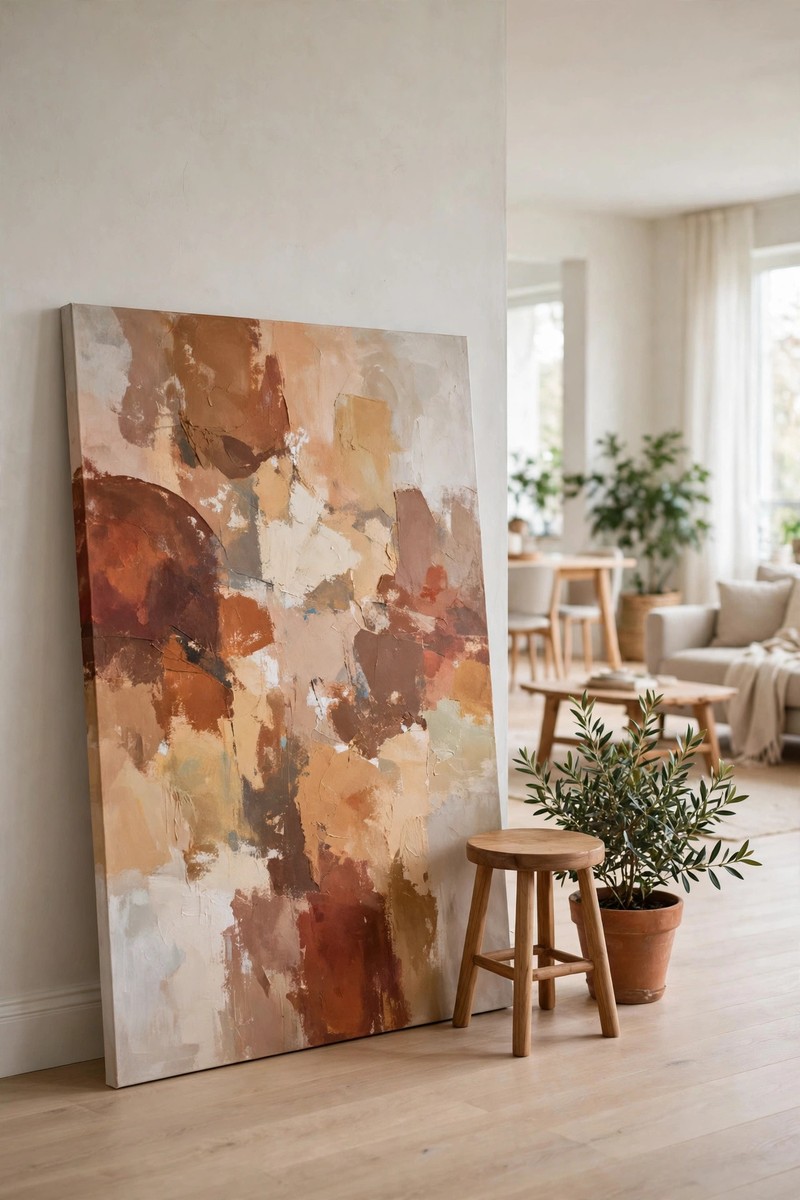
- A large canvas leaned at the zone edge reads as a wall without hanging anything.
- Art 36 inches wide or larger marks the boundary from across the room.
- A framed print this size costs 40 to 90 dollars, or stretch your own for less.
- Lean it at a slight angle against a shelf or wall so it never slips.
One large piece of art can mark an entry zone as clearly as a divider, with zero installation. Lean a canvas 36 inches wide or larger on the floor at the edge of the entry, and the eye treats it as a wall. The art costs 40 to 90 dollars framed, or less if you stretch a canvas print yourself. Lean it at a slight angle against a shelf or the wall so it never slips forward. Warm earth tones suit most rental paint, and the canvas hides the awkward empty corner where the entry meets the living room.
Size is the whole trick here, since a small print reads as decoration and a large canvas reads as architecture. Go at least 36 inches wide and 48 inches tall, or the boundary effect disappears. Add a small stool and a plant beside the canvas to ground it, so the grouping feels intentional and finished. A canvas this size weighs under 10 pounds, so leaning it is perfectly safe. Use adhesive bumpers behind the top corners to keep the canvas steady. When you move, the canvas travels flat and marks the entry zone at the next apartment too.
Floor Lamp Zone
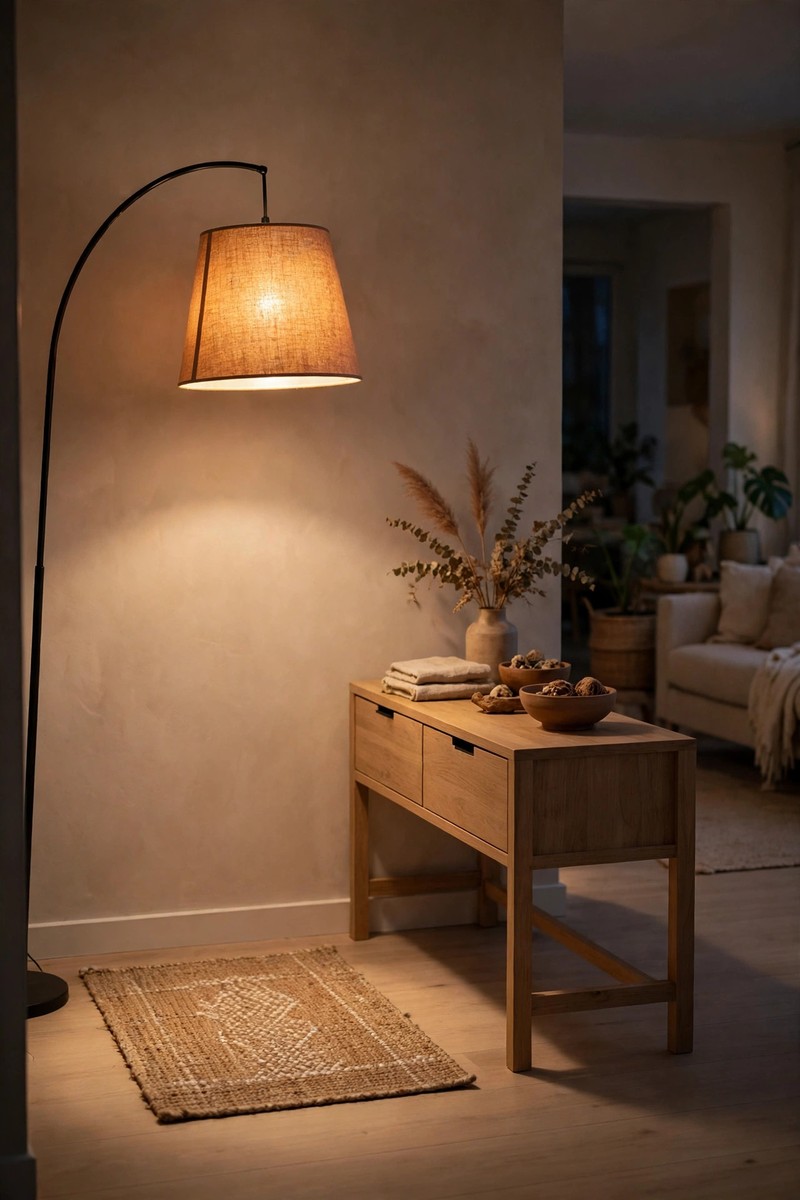
- A tall floor lamp throws a pool of light that marks the entry after dark.
- An arched lamp reaches over the zone without taking floor space.
- A good floor lamp costs 40 to 80 dollars and needs one outlet.
- Warm 2700K light keeps the entry welcoming instead of clinical.
A floor lamp marks an entry zone with light, and it works best after dark when other dividers fade away. Place a tall arched lamp beside a small rug just inside the door, and the pool of light on the floor reads as a room. An arched lamp reaches over the zone without taking up floor space, which matters in a tight entry. A good lamp costs 40 to 80 dollars, plugs into one outlet, and needs no install at all. Warm 2700K light keeps the entry welcoming instead of clinical.
Position the lamp so its light falls inside the entry zone, not across the living room. A lamp 68 to 72 inches tall throws a pool about 4 feet wide, which covers most entries. Add a smart bulb for about 12 dollars, and the lamp turns on at sunset by itself, without anyone touching a switch. Dim the bulb to half brightness for late-night arrivals. Keep the cord tucked along the baseboard with adhesive clips so nobody trips on the way in. The lamp moves to any room later, so it earns its spot long after the entry project ends.
Freestanding Sliding Panel
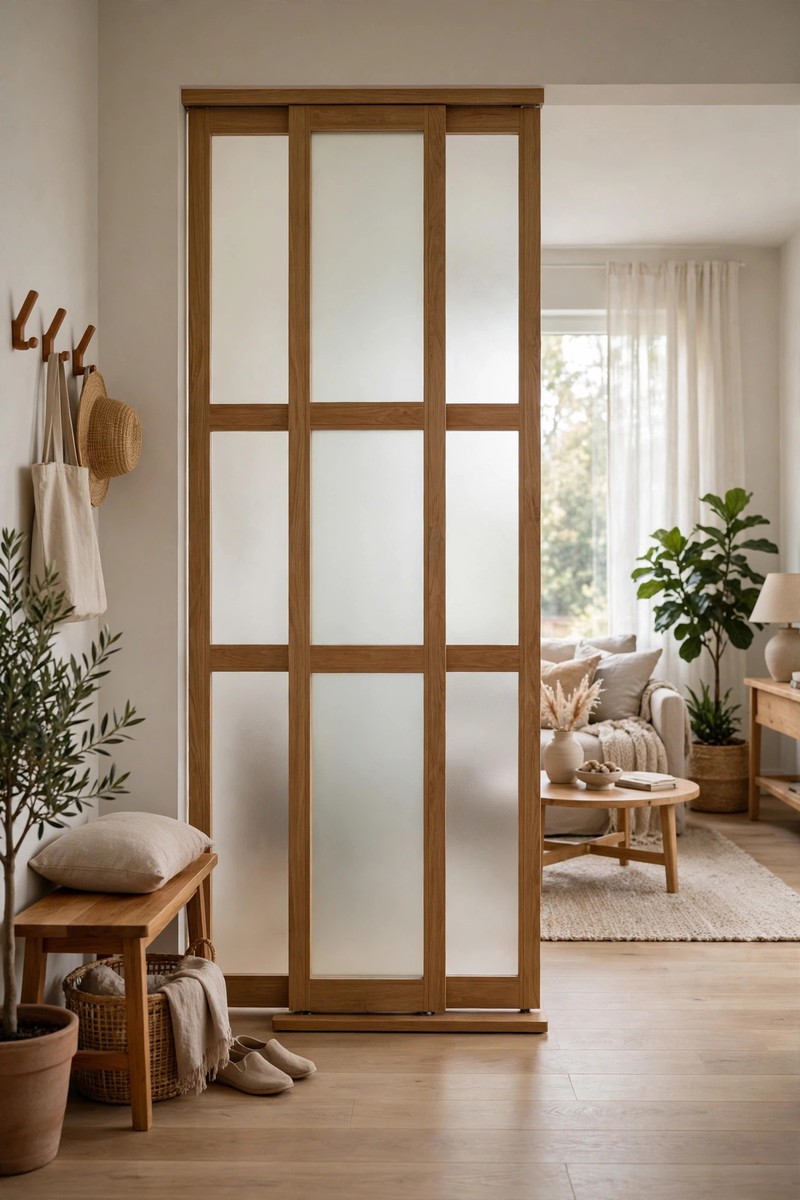
- A sliding panel on feet opens and closes the entry like a door.
- Frosted glass inserts let light through while hiding the mess behind.
- A panel costs 80 to 150 dollars and assembles in about 30 minutes.
- Slide it open for parties and closed for a calm, tidy entry.
A freestanding sliding panel gives an open entry a door without a doorway. Set the panel on its feet across the entry, and it slides open when friends visit and closed when the entry turns messy. Frosted glass inserts let daylight through while hiding shoes and bags from the living room. A panel costs 80 to 150 dollars and assembles in about 30 minutes. The sliding action feels solid and intentional, which makes the entry read as a real room instead of just a corner. Choose a panel with a smooth glide so it never sticks or squeaks.
Measure the gap before ordering, since most panels span 36 to 48 inches and stand about 72 inches tall. Lock the wheels once the panel sits where you want it, so it never drifts when the door slams. Clean the frosted glass once a month with a damp cloth, since fingerprints show fast on frosted glass. Oil the track twice a year to keep the slide smooth. If the entry is wide, buy two panels and overlap them for a full wall. The panel moves to a bedroom or studio at the next apartment, so the investment travels with you.
Planter Box Divider
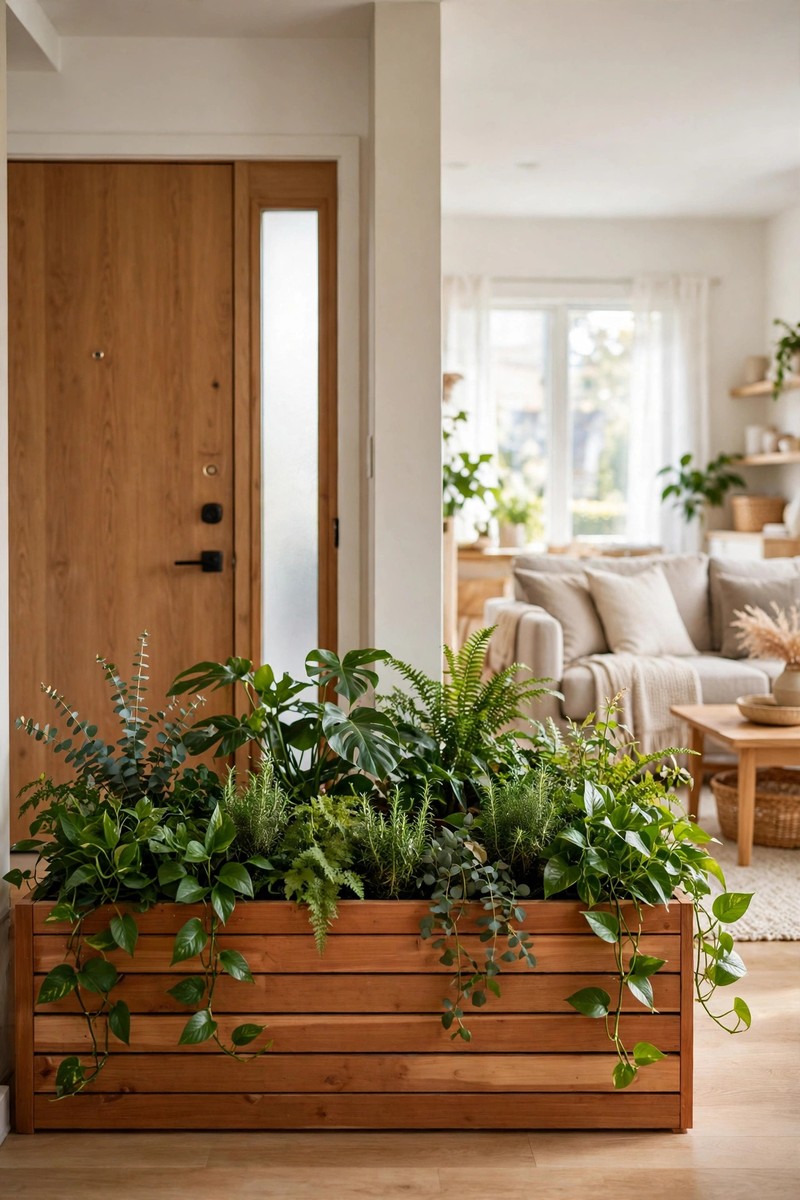
- A low planter box divides the entry and keeps the view open above it.
- Leafy plants like pothos and ferns fill the box fast and forgive neglect.
- A 36 inch cedar planter costs 40 to 80 dollars, plants included.
- A plastic liner inside protects the wood and the floor from water.
A long planter box divides an entry at knee height, which keeps the view open while still marking the zone. Fill a 36 inch cedar box with pothos, ferns, and trailing plants, and the green wall tells the eye where the entry ends. The planter costs 40 to 80 dollars with plants included, and the whole setup takes about 20 minutes. A plastic liner inside the box protects the wood and the floor from water. Pothos and ferns forgive a missed watering, so the divider stays green even in a busy week.
Keep the plants trimmed to about 12 inches above the box, or the divider turns into a jungle that blocks the path. Water once a week and check the liner for leaks after the first few waterings. Set the box on felt pads so it slides easily for cleaning underneath. If the entry gets little light, swap in snake plants and ZZ plants, which thrive in low light with almost no care. The planter moves to a balcony or a bedroom at the next apartment, and the plants keep growing.
Layered Door Mats
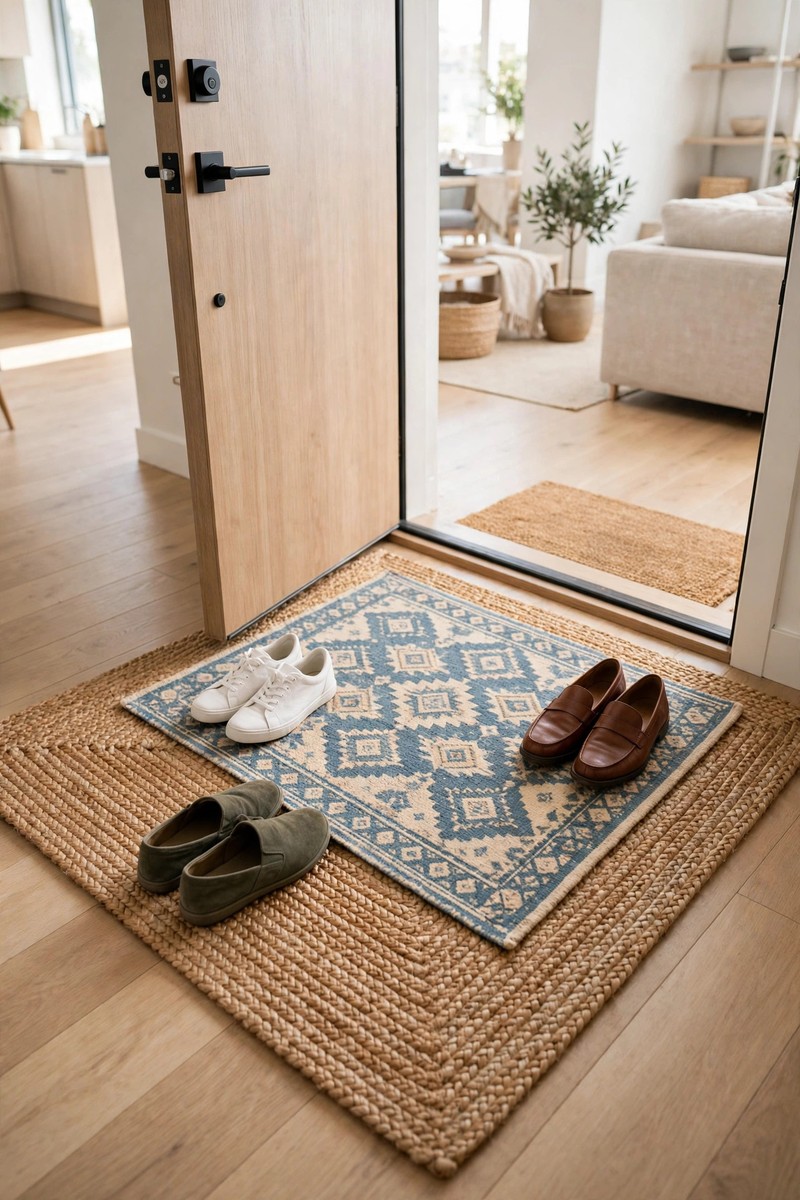
- Two mats layered together mark the threshold and catch twice the dirt.
- A large jute rug under a smaller patterned mat reads as a real entry.
- The pair costs 30 to 60 dollars and takes 2 minutes to arrange.
- Shake both mats out once a week to keep the zone fresh.
Two mats layered at the door mark the threshold better than one mat could. Lay a large jute rug down first, then center a smaller patterned mat on top, and the layered edge reads as a real zone. The pair costs 30 to 60 dollars and takes 2 minutes to arrange, the fastest idea on this list. The top mat catches dirt while the jute rug underneath catches whatever slips past. Choose a pattern that echoes the living room colors so the entry feels connected. For wet winter days, our winter entryway guide shows how to keep slush off them.
Size the bottom rug at least 3 by 5 feet so it reads as a zone, not a doormat. Shake both mats outside once a week, which takes under 2 minutes and keeps the entry fresh. A non-slip pad between the two layers stops the top mat from sliding on smooth jute. Replace the top mat when its pattern fades, usually after 12 to 18 months of daily use at the door. Layered mats travel well too, since both roll up small and rebuild the threshold at the next apartment in seconds.
Slatted Wood Screen
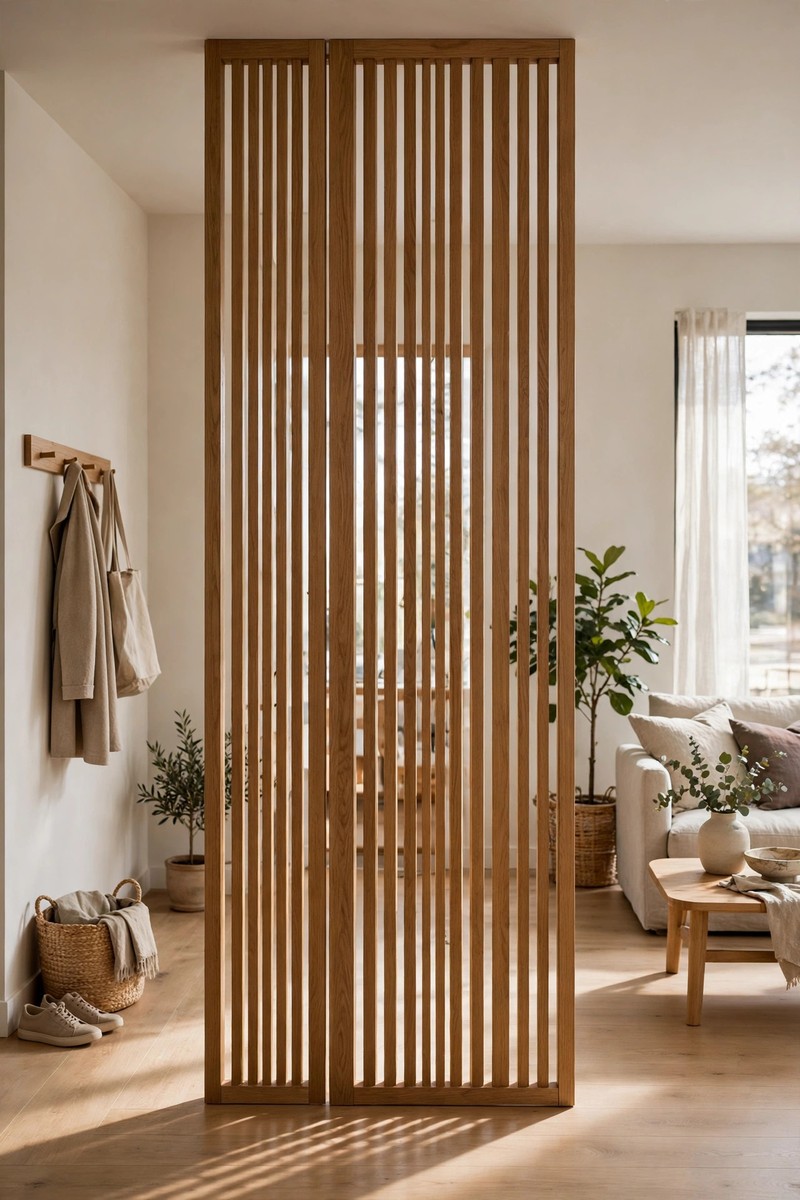
- Vertical wood slats divide the entry while letting light and air pass through.
- A 6 foot slatted screen costs 90 to 160 dollars and stands on its own feet.
- Oak and walnut finishes suit most rental decor without clashing.
- The gaps between slats keep the entry bright and the room feeling open.
A slatted wood screen is the most design-forward divider on this list, and it earns the title. Vertical oak slats divide the entry while daylight filters through the gaps, so the zone feels defined without feeling closed off. A 6 foot screen costs 90 to 160 dollars, stands on its own feet, and assembles in about 25 minutes. Oak and walnut finishes suit most rental decor, so the screen looks built in rather than temporary. Place it at a slight angle to guide foot traffic from the door toward the living room.
The gaps between slats matter as much as the wood. A 1 to 2 inch gap lets light through while still hiding shoes and bags from the living room. Wipe the slats monthly with a damp cloth, since dust settles on horizontal edges fast. Anchor the feet with adhesive pads so the screen never slides on smooth floors. If the entry is narrow, a 3 foot wide screen still marks the zone without eating the walkway. The screen moves to a bedroom or office later, where it works just as well.
Chalkboard Divider Panel
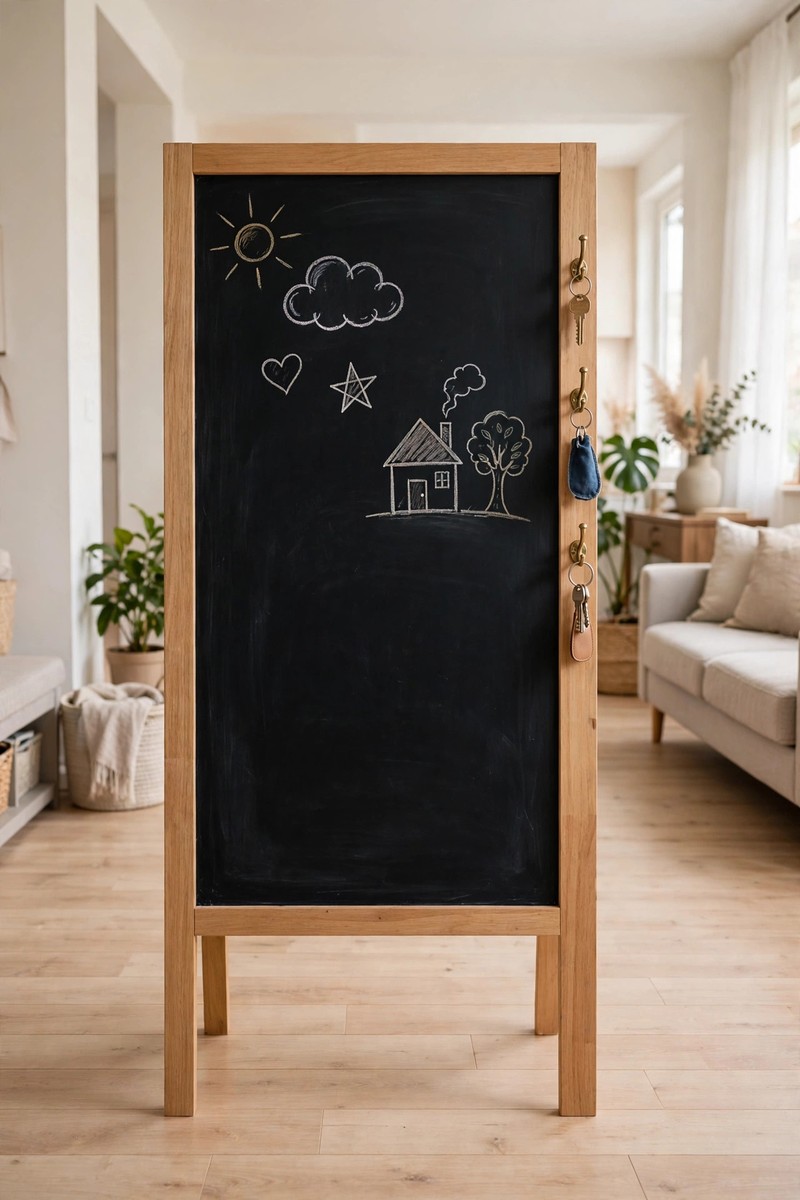
- A chalkboard panel divides the entry and works as a message board.
- Write the grocery list, a reminder, or a doodle on the way out.
- A 3 by 5 foot panel costs 45 to 80 dollars with a leg kit.
- Chalk wipes clean in seconds, so the board never looks stale.
A chalkboard panel divides the entry and gives the whole household a message board. Set a 3 by 5 foot panel on legs just inside the door, and the entry gains a wall that holds the grocery list, a reminder, or a quick doodle. The panel costs 45 to 80 dollars with a leg kit and assembles in about 20 minutes. Chalk wipes clean in seconds, so the board never looks stale. Hang keys from hooks on the side, and the divider works as a drop zone too, not just a wall.
Keep the board facing the entry side so the living room sees a clean panel instead of a list of errands. Use dustless chalk to keep the floor clean, and wipe the board once a week so old notes never pile up. A magnetic chalkboard costs a few dollars more and holds photos and takeout menus with magnets. Anchor the legs with adhesive pads so the panel never slides when someone writes on it. When you move, the panel works as a menu board in a kitchen or a planner in a home office.
Frequently Asked Questions
How do you create an entryway with no walls?
Mark the zone with one strong boundary, like a rug, a divider, or a console turned sideways. A 5 by 7 foot rug or a 6 foot folding screen tells the eye where the entry starts, even with no wall in sight. Add one storage piece behind the boundary, like a basket or a tray, and the zone works from day one. Everything here is renter-safe, so nothing needs drilling or paint.
What is the cheapest way to define an open entry?
Washi tape costs about 5 dollars and draws a floor boundary in 15 minutes. Layered door mats run 30 to 60 dollars and mark the threshold in 2 minutes. A rug you already own costs nothing to move to the door. Start with the tape outline, live with it for a week, then upgrade to a rug or a divider once you know the zone works.
How big should an entry zone be in a small apartment?
Aim for a zone about 4 feet wide and 3 feet deep, which holds shoes, a bag, and a coat without eating the living room. Leave at least 30 inches of clear walkway between the zone edge and the nearest furniture. In a studio under 400 square feet, shrink the zone to 3 feet wide and use a rug or tape outline instead of furniture.
Can you divide an entry without blocking light?
Yes, use dividers that let light through, like open-back bookshelves, slatted screens, sheer curtains, or tall plants. A solid divider darkens a small entry fast, so pick open or sheer options whenever the entry sits far from a window. A pendant or floor lamp inside the zone adds light after dark, which keeps the entry welcoming around the clock.
Conclusion
An open-plan apartment only feels chaotic at the door when the entry has no edge. Give it one clear marker, a rug, a screen, or a console turned sideways, and the whole space calms down. These open entryway ideas work because they are cheap, fast, and fully reversible, so nothing risks your deposit. Start with the marker that fits your floor plan, probably the rug, and add storage behind it as you go. Save this guide on Pinterest, try one idea this weekend, and share it with a friend whose front door opens straight into the living room.
You Might Also Like
- 25+ Small Apartment Entryway Ideas for Renters (No Foyer Needed)
- 25+ Winter Entryway Organization Ideas for Small Apartments (No Mud, No Mess)
- Start Here
- More Small Spaces Ideas
New guides land every week.